



Italy’s renewed engagement with the United Arab Emirates (UAE), sealed on 24 February 2025 with a raft of energy and economic agreements, reflects more than a simple bilateral partnership. It is a calculated gambit that ties together the Mediterranean, the Gulf, and parts of Africa, while resonating with the broader ambitions of the so-called India–Middle East–Europe Economic Corridor (IMEC). The result is a remarkable web of interests that has set observers speculating about the future balance of power not only in Southern Europe, but across several geopolitical theatres.
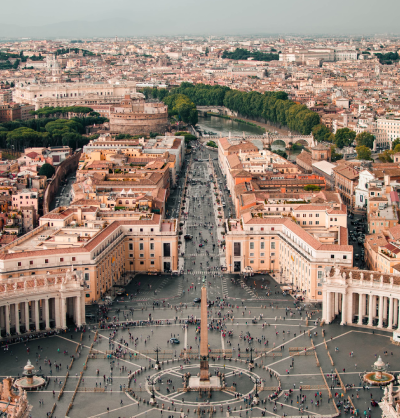
The meeting in Rome — marked by the first official state visit of President Sheikh Mohamed bin Zayed Al Nahyan and the signing of over 40 agreements — showcased Italy’s determination to reinvigorate its role in the Mediterranean. Prime Minister Giorgia Meloni, mindful of vulnerabilities attached to energy dependance on Russia and protracted instability in North Africa, has sought to transform Italy into a hub of clean power and digital infrastructure. The centrepiece is a submarine cable to transmit Albanian hydropower to Italy, co-financed by Abu Dhabi, which presents a concrete step towards diversifying energy sources. Projects focused on renewables, hydrogen, and data centres hint at a more technologically driven partnership that could give Italy new leverage within the EU. This serves a dual purpose: it boosts the country’s claim to be a go-between for the EU and the Gulf; and it strengthens the so-called Piano Mattei—an initiative intended to offer African nations an alternative to China’s Belt and Road Initiative (BRI).
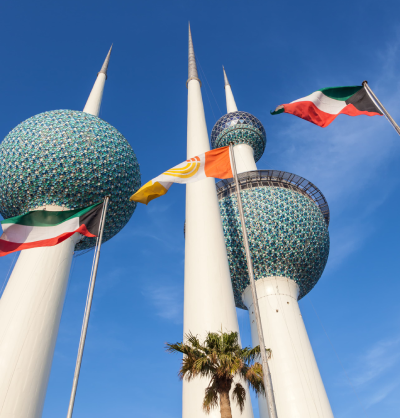
The UAE is equally keen to capitalise on this convergence. Beyond acquiring a steady foothold in a G7 economy, the UAE is demonstrating its resolve to diversify beyond hydrocarbons. Backed by an investment package of some 40 billion euros, they are banking on Italy’s industrial know-how and strategic geography to broaden their global reach. UAE seeks to project a unique profile and emphasises pragmatism and forward-looking technologies rather than continuous squabbles over regional politics. Partnering with Italy amplifies that message and sends a reminder to EU chancelleries that Abu Dhabi offers both financial investment and an outward-facing agenda encompassing Africa and the Mediterranean. This is particularly appealing at a moment when Europe, still weathering the aftershocks of the 2022 Ukraine crisis and a complicated relation with the Trump Administration, is searching for reliable energy partners that share interests.
The broader regional implications are no less intriguing. The Italy–UAE partnership dovetails with the IMEC initiative, itself conceived at the G20 in New Delhi to connect India, the Middle East, and Europe via a mesh of transport, digital, and energy links. In practice, that means forging an alternative to the BRI, strengthening shipping corridors, and knitting together electricity and data networks from the subcontinent all the way to Europe. Italy’s renewable-energy cable with Albania, along with new data centres in Bologna and the UAE’s expertise in logistics, could become essential building blocks in this corridor. Both countries have an eye to extend these chains into North Africa, turning the Mediterranean into a genuine sea of connectivity rather than merely a frontier for migrants and illicit trade. The aim, at least in theory, is to offer Africa green technologies and infrastructure that transcend the short-term extractive models of the past. By presenting themselves as co-facilitators of stable development they hope to offer a sustainable development model that does not spark competition from other foreign powers on the continent.
Such ambitions, however, are likely to face no shortage of challenges. Competition within the EU, for instance, might hamper Italy’s ability to secure a dominant role in any new corridor with the Gulf. Competition from France, for instance, whose presence in the Sahel and in parts of the Mediterranean remains considerable, might provoke political friction. Turkey, too, holds sway in the Balkans and is hardly a bystander when it comes to Mediterranean energy politics. Some also fear that Italy’s opening to the Emirates could cede excessive influence over sensitive assets, from data centres to advanced manufacturing, potentially leaving the country vulnerable to undue foreign pressure. Meanwhile, uncertainty in the Middle East — from longstanding tensions between Israel and Hamas to the turbulent relationship between GCC countries and Iran — risks throwing sand in the gears of any grand infrastructure plan, no matter how lavishly capitalised.
Yet, if these agreements are handled well, they may redefine southern Europe’s place in the world. Italy appears poised to assume the role of a crucial conduit between the Gulf and an EU anxious to fortify its energy and technological resilience. The Emirates, meanwhile, would earn recognition as an upmarket investor and logistical linchpin, a country that can facilitate the transport of goods, data, and even green energy. IMEC, hitherto an ambitious acronym in search of tangible projects, would benefit from having two strongly motivated actors pushing to turn abstract corridors into concrete cables, pipelines, and digital networks.
All this will demand no small measure of diplomacy and political intelligence. Aligning the interests of other regional centres such as Saudi Arabia or France with those of Rome and Abu Dhabi may prove complicated, particularly when investment projects spill over into politically sensitive areas like African resource extraction or the patchwork of Balkan energy grids. Nonetheless, the rewards could be enormous. A robust partnership between Italy and the UAE that feeds into the IMEC might generate the very demonstration effect Western capitals desire: a joint initiative focused on sustainability and local capacity-building, presenting a transparent and development-oriented alternative to the more opaque, debt-driven projects of China’s BRI.
Whether these lofty plans succeed or not will depend on how well each partner can navigate their respective geopolitical minefields. The Italy–UAE accord is, after all, but one node in a tangle of overlapping rivalries and alliances: US influence in the region, Chinese expansion in Africa, and Europe’s own internal tussles. Yet the stakes are high, as are the commitments, that the entire Mediterranean stands to witness a transformation of its role. With the right execution, what began in Rome on a late-winterly day could indeed reverberate in corridors stretching from the Arabian Desert to the heart of the EU—and even further east, to India’s bustling markets.