




Abstract:
Across the Gulf, governments and institutions are accelerating innovation-driven development through coordinated investments in technology, sustainability, and global partnerships. The UAE’s $1 (USD) “AI for Development” initiative positions Emirates as both a development partner for Africa and a rising global AI hub, channeling advanced technologies toward digital infrastructure and inclusive growth. In Bahrain, the Gateway Gulf Forum 2025 showcases the region’s strategic shift toward diversified, technology-enabled economies, using targeted investment platforms to attract international capital and deepen Gulf–EU collaboration. Meanwhile, Qatar University’s Sustainable Materials Research Forum highlights the Gulf’s growing emphasis on scientific research, sustainable materials, and industry–academia integration as drivers of long-term economic transformation. Together, these developments illustrate a region mobilising AI, innovation ecosystems, and sustainability research to reshape its economic model and expand its global influence.
Keywords:
AI, Digital Transformation, UAE-Africa Relations, G20, Development, Investment Platform, Economic Diversification, Digital Transformation, Foreign Investment, Renewable Energy, Innovation Ecosystems, Gulf–EU Relations, Post-Oil Economy, Sustainable Materials, Research Excellence, Nanotechnology, Industry–Academia Collaboration, Economic Diversification, Global Partnerships, Renewable Energy Technologies, Research Diplomacy
UAE’s $1 Billion (USD) “AI for Development” Push to Transform Africa
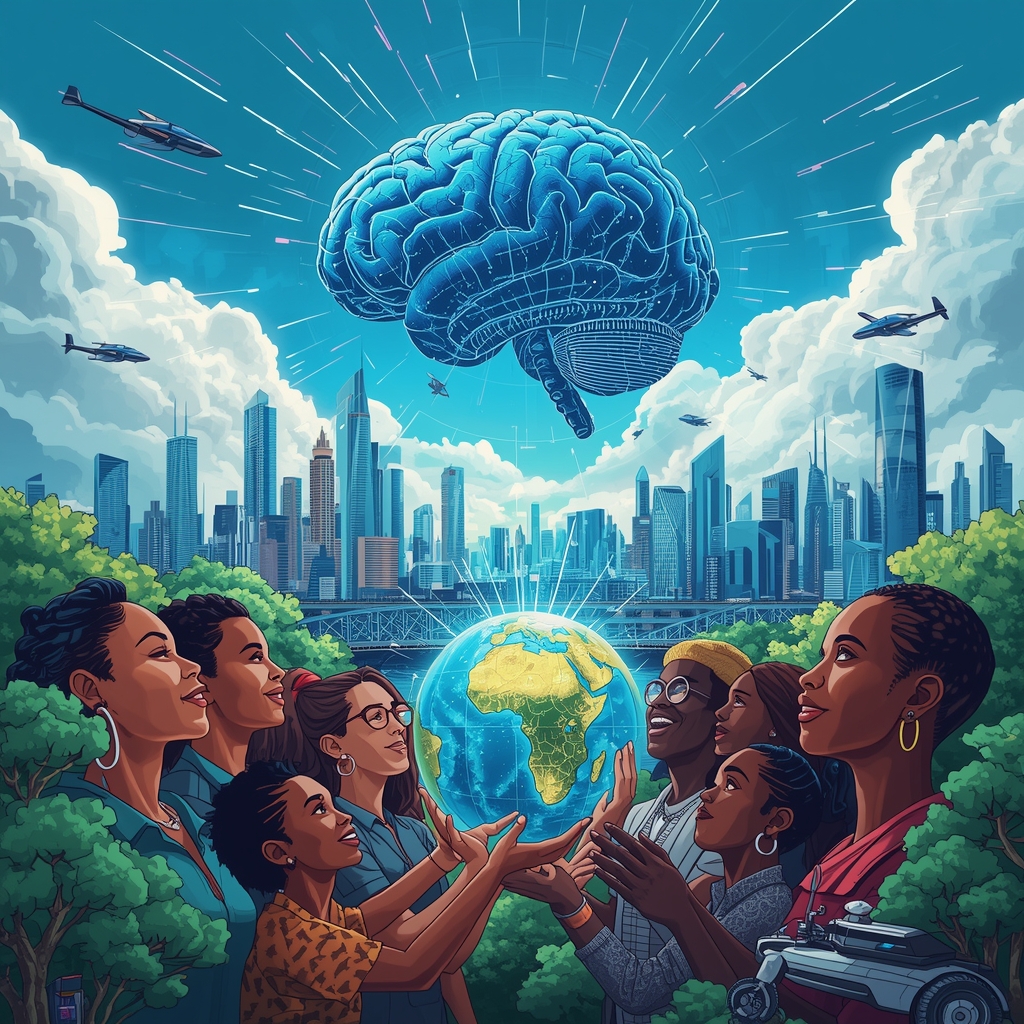
The UAE unveiled a new $1 billion (USD) “AI for Development” initiative aimed at accelerating Africa’s digital transformation. Announced by Abu Dhabi Crown Prince Sheikh Khaled bin Mohamed bin Zayed Al Nahyan at the G20 summit in Johannesburg, the programme will finance artificial-intelligence projects across the continent, with a focus on strengthening digital infrastructure, improving government services and boosting productivity in key sectors
The initiative will be implemented by Abu Dhabi Exports Office (ADEX), the export-financing arm of Abu Dhabi Fund for Development (ADFD), in cooperation with the UAE Foreign Aid Agency. Beyond funding, the scheme is designed to mobilise partnerships between Emirati companies and African governments to deploy AI solutions in education, agriculture, healthcare and critical infrastructure, supporting inclusive and sustainable growth.
UAE officials frame the fund as part of a longer-term commitment to Africa. Since 1971, the country has provided over 152 billion dirhams in aid to African nations, and between 2020 and 2024 Emirati investments on the continent exceeded $118 billion, with bilateral trade reaching about $107 billion in 2024. By directing a dedicated envelope to AI, Abu Dhabi aims to help African economies leapfrog legacy technologies and build resilience to climate and demographic pressures. The AI for Development envelope also complements wider efforts to build digital public infrastructure, from digital IDs to interoperable payment systems, across several African markets.
The “AI for Development” initiative also strengthens the UAE’s positioning as a global hub for advanced technologies. At home, the country is investing heavily in AI infrastructure, including plans for one of the world’s largest data-centre hubs, and promoting responsible and inclusive AI governance. Attention will now turn from the size of the pledge to how transparently and fairly it is delivered.
Gateway Gulf Forum 2025 in Bahrain
The Gateway Gulf Forum is a high-level, invitation-only investment platform created by the Bahrain Economic Development Board to showcase strategic opportunities in the Gulf and to connect global investors with the region’s political and business leadership. Unlike large trade fairs, the forum is deliberately intimate and curated: it brings together senior decision-makers, sovereign wealth funds, multinational CEOs, and policy architects to discuss concrete projects and long-term economic strategies. It offers access to emerging industries, government-led development plans, and the region’s broader economic vision. Its design reflects Bahrain’s long-standing aspiration to serve as a gateway to the Gulf—geographically small, but positioned to attract investment into the wider region.
The 2025 edition, held in Manama, carried particular weight. Taking place against a backdrop of shifting global trade dynamics, technological acceleration, and renewed competition for international capital, the forum aimed to send a clear signal that the Gulf is not merely weathering global uncertainty but actively reshaping its economic model. The event produced a substantial volume of investment announcements across fields such as cloud computing, financial services, logistics, advanced manufacturing, renewable energy, and tourism. Bahrain’s promotion of sovereign cloud infrastructure, digital education modernisation, large-scale solar initiatives, and urban development projects illustrated how Gulf governments are pairing national reform agendas with targeted foreign partnerships.
For the Gulf region as a whole, the forum reinforced ongoing trends: the pursuit of economic diversification, the scaling of digital transformation strategies, and a more sophisticated approach to attracting foreign investment. Gulf states increasingly view competitive regulatory environments, innovation ecosystems, and green transition frameworks as essential tools of economic statecraft. Bahrain’s hosting of Gateway Gulf complements wider regional efforts—from Saudi Arabia’s giga-projects to the UAE’s digital innovation push—showing a coordinated if competitive drive to position the Gulf as an integrated economic corridor. The event also highlighted how public-private collaboration has become central to this strategy.
In terms of Gulf–EU relations, the implications are notable. Europe has been seeking new strategic partnerships as global geopolitics become more fragmented, and the Gulf has emerged as a priority region for cooperation in investment, renewable energy, transport connectivity, and digital infrastructure. The Gateway Gulf Forum offers the EU a concrete interface to engage with the Gulf beyond traditional energy ties. For European companies, the forum’s focus on green and digital sectors mirrors EU policy priorities, making it an appealing entry point for collaboration in areas such as clean technologies, sustainable manufacturing, and data-driven services. However, the forum also illuminates the structural challenges in Gulf–EU relations. While there is clear alignment in economic interests, longstanding obstacles—such as differences over trade rules, investment protections, and regulatory transparency—remain unresolved.
The Gateway Gulf Forum thus serves as both an opportunity and a reminder: European engagement in the region will be effective only if it is proactive, strategically coherent, and matched by institutional follow-through.
Sustainable Materials Research Forum at Qatar University
Qatar University’s Center for Advanced Materials (CAM) has recently taken centre stage in convening the International Conference on Advanced and Sustainable Materials (ICASM) 2025, a global forum that brought together researchers, industry experts, policymakers, and students from over forty countries. With nearly seven hundred registered participants, hundreds of submitted abstracts, and a strong presence of student presenters, the event emphasised the important role of materials science in Qatar University’s vision for research excellence and sustainability. At its heart, the forum is not just about laboratory innovation. It is a signal that Qatar University is aligning its research trajectory with national and global sustainability goals, especially as embedded in the university’s research priorities for 2025–2030. These priorities, which cover energy, resource sustainability, health, digital technology and society, are explicitly linked to Qatar’s National Vision 2030. During the conference, CAM’s leadership emphasised key research areas: nanotechnology, energy materials, polymers, and corrosion science, thereby connecting fundamental science to urgent real-world challenges.
This gathering has significance that extends far beyond academia. It highlights the growing convergence in Qatar between scientific research and industrial transformation. Industry partners exhibited alongside academic presenters, showcasing their latest developments and suggesting that sustainable materials are increasingly recognised as a driver of innovation, economic diversification and environmental responsibility. The commitment to publishing high-quality papers in a respected international journal will further amplify the event’s potential long-term impact.
The forum supports several connected objectives. For Qatar, it helps strengthen the research ecosystem by advancing work on materials important for future industries such as renewable energy, water technologies and advanced manufacturing. It highlights Qatar University’s role in national research and its growing collaboration with global scientific networks. By encouraging links between science and industry, the forum also helps move academic ideas toward practical technologies that can support Qatar’s shift toward a more diversified, sustainable economy. Regionally, the event reflects a broader interest in sustainable materials across the Gulf, allowing Qatar to engage with international standards, attract talent and build partnerships with environmental and economic potential. For global partners—governments, companies and research institutions—the forum offers an opportunity to explore joint work in areas like energy storage, green construction and water treatment.
However, some challenges persist. Turning promising research into products that can reach the market requires steady funding, supportive regulations and strong cooperation between the public and private sectors. Commercialising advanced materials can be difficult, and regulatory processes often move more slowly than scientific progress. Additionally, there is strong global competition in materials science, and maintaining success will require long-term planning that balances local priorities with the needs of the international market.
Overall, the Sustainable Materials Research Forum at Qatar University is more than a typical academic gathering. It contributes to Qatar’s broader research and sustainability goals by focusing on advanced materials that address energy, water and environmental challenges. The forum highlights ongoing research while also pointing toward a future where scientific work, sustainability goals and economic development are closely connected.
Sources
- https://www.reuters.com/world/middle-east/uae-announces-1-billion-initiative-expand-ai-africa-2025-11-22/
- https://www.prnewswire.com/il/news-releases/uae-launches-1-billion-ai-for-development-initiative-to-advance-digital-infrastructure-across-africa-led-by-adex-the-export-financing-arm-of-adfd-and-the-uae-foreign-aid-agency-302626830
- https://www.dawan.africa/news/ai-for-development-uaes-dollar1-billion-push-to-empower-africa
- https://www.arabianbusiness.com/politics-economics/bahrain-hosts-gateway-gulf-forum-2025-for-investment-and-connectivity
- https://www.gulf-times.com/30
- https://www.bahrainedb.com/latest-news/gateway-gulf-2025-secures-over-usd-17-billion-in-announcements-partnerships-and-deals
- https://beta.bna.bh/en/article/XV7FEbQqooRYD50y
- https://gatewaygulf.com/
- https://www.gulf-times.com/article/715168/qatar/qatar-university-hosts-global-forum-on-advanced-and-sustainable-materials
- https://qna.org.qa/en/home/
- https://www.qatar-tribune.com/article/204744/nation/qatar-university-hosts-international-meet-on-advanced-and-sustainable-materials
- https://www.gulf-times.com/article/715168/qatar/qatar-university-hosts-global-forum-on-advanced-and-sustainable-materials