


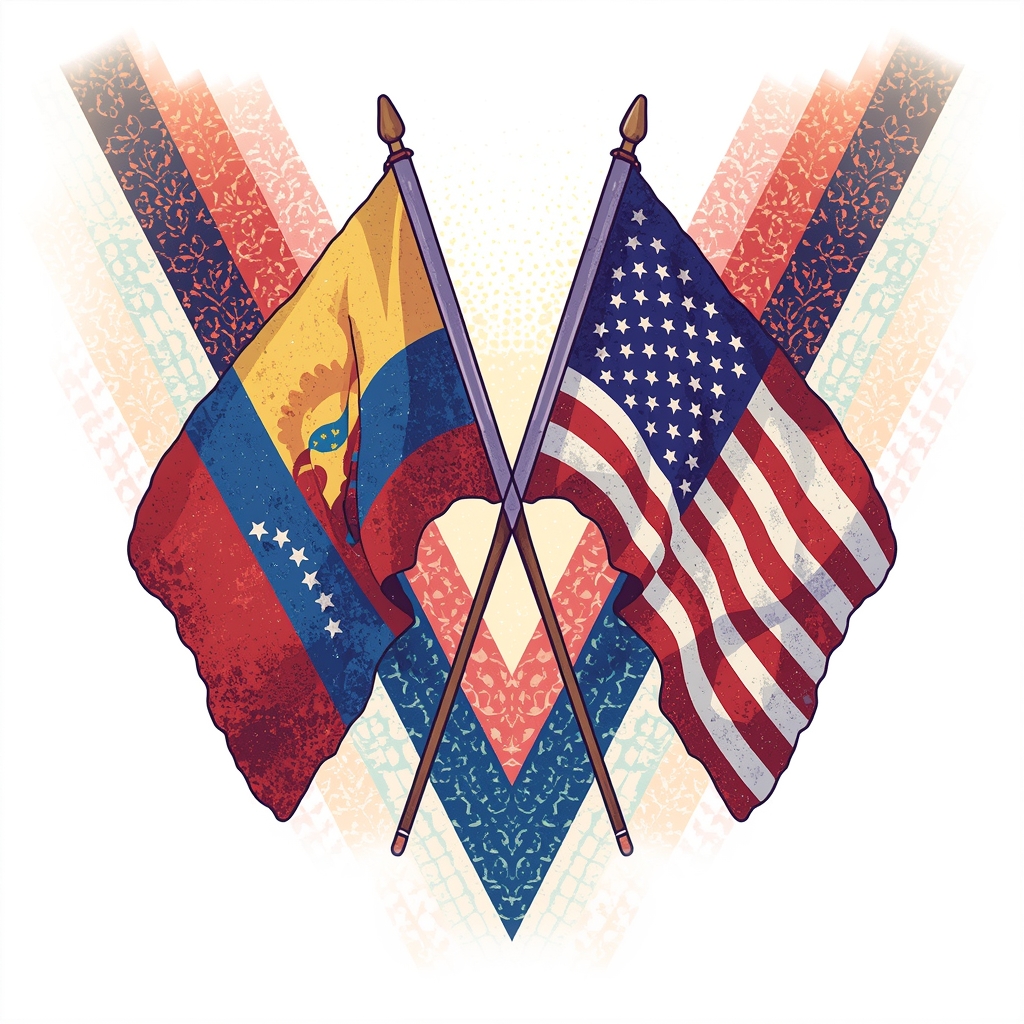


The relationship between Venezuela and the US has entered one of its most delicate phases in decades. What once seemed like a predictable cycle of diplomatic hostility and economic sanctions has transformed into a confrontation with military overtones, regional anxiety, and global geopolitical implications. The crisis no longer concerns only these two powers, it now influences the stability of Latin America and will impact global geopolitical dynamics. For over a quarter-century, tensions have defined the bilateral relationship. Since Hugo Chávez’s rise to power (1999), mutual suspicions hardened into deep-seated hostility. Each side interprets the other’s actions as proof of deeper intentions. The US views Venezuela as a destabilising actor; part of illicit networks and in lock-step with other adversaries such as Russia, Iran and Cuba. Venezuela, in turn, tends to view the US as an existential threat, seeking regime change through pressure, sanctions, and coercion. Political gestures are read in maximalist terms.
In 2025, the US-Venezuelan crisis has escalated dramatically–since the Trump administration assumed a more determined stance by deploying a substantial US naval presence to the southern Caribbean. Although officially framed as an anti-drug trafficking mission, the deployment was widely interpreted by analysts as part of a broader strategic pressure campaign. The deployment included warships, carrier strike groups, and aircraft, raising regional and international anxiety. Trump additionally declared Venezuelan airspace closed, a move signaling strong tension and complicating civilian and commercial aviation in the region. Recently, the US has begun operations in the Caribbean which have involved airstrikes against vessels suspected of drug trafficking–a clear show of force.
The crisis has been further complicated by cyberattacks and economic pressure. On 15 December, Venezuela’s state oil company PDVSA alleged a cyberattack attributed to the US, claiming disruptions to output and cargo delivery systems, though Washington has not confirmed involvement. Simultaneously, the US seized a Venezuelan oil tanker, contributing to a steep drop in crude exports and exacerbating Caracas’s economic crisis. Airspace safety has also emerged as a flashpoint: a near midair collision between a commercial flight and a US Air Force tanker in or near Venezuelan airspace underscored the growing operational risks as military activity increases. The Caribbean is now more directly involved, with Trinidad and Tobago opening its airports to US military logistical support. Nicolás Maduro has responded forcefully to these developments and portrays US military deployments and strikes as threats to national sovereignty and alleges that the US seeks regime change. Maduro, and allied, leaders repeatedly warn that US actions aim to impose a “puppet government” and seize natural resources, while also consolidating his internal control and defining dissent as complicity with foreign aggression.
The humanitarian and regional impacts of the crisis will be significant. Venezuela’s prolonged economic spiral has produced one of the largest migration crises in modern Latin American history, with migration flows continuing despite rising tensions. Neighbouring countries are under pressure due to increasing refugee movements, while regional governments must navigate the dangers posed by US operations and Venezuela’s military posturing. Even countries that traditionally maintain neutral or balanced positions are re-evaluating their exposure to the pending conflict, which highlights the broader regional stakes. Venezuela’s strategic alliances with Russia, Iran and Cuba further internationalise the confrontation by framing it within the context of a wider struggle for geopolitical supremacy. Tthese external powers have not provided direct military support – although Putin claimed that Russia would – their diplomatic and economic ties offer Venezuela an alternative defence against Western pressure. Meanwhile, the US increased economic and legal pressure by designating Venezuela’s alleged criminal syndicate, the Cartel of the Suns, as a terrorist organisation. Meanwhile, Europe continues to impose sanctions on key Venezuelan officials, exercising caution to avoid escalating the military confrontation or pushing Venezuela further into the sphere of global adversaries.
The current situation carries serious risks. The increasing presence of US naval and air forces, Venezuelan military mobilisation and the involvement of sensitive regional neighbours increases the likelihood of miscalculation. Even minor incidents, such as misidentified vessels or misinterpreted radar signals, could escalate rapidly into a broader conflict. This danger is compounded by Venezuela’s alignment with global adversaries, which could transform a regional dispute into a site of proxy competition and a global flashpoint. At the same time, the ongoing collapse of Venezuela’s economy and institutions continues to destabilise the wider region. This is achieved by strengthening criminal networks, intensifying migration flows and undermining governance structures.
Looking ahead, several trajectories remain possible, ranging from an intensifying crisis characterised by enforcing US pressure and Venezuelan mobilisation, with increased risks of direct confrontation, to a tense but stable stalemate defined by sanctions, sporadic military action and political paralysis. Another possibility is limited de-escalation through quiet diplomatic engagement, potentially mediated by regional actors or Europe. Despite entrenched narratives on both sides, internal disruption in Venezuela itself remains a possibility, where economic collapse or political fractures could trigger a leadership transition or chaotic political change. In this context, the 2025 confrontation between Venezuela and the United States is emblematic of a new era in international politics, in which military force, economic coercion and global strategic competition intersect.
Sources
- https://www.bbc.com/news/articles/c4g92dj8l3eo
- https://www.bbc.com/news/articles/c4gej5ezyypo
- https://www.bbc.com/news/articles/cy8j4ye5x0mo
- https://www.cfr.org/article/mapping-us-military-buildup-near-venezuela
- https://www.as-coa.org/articles/timeline-us-military-ramp-caribbean-raises-tensions-venezuela
- https://www.nytimes.com/2025/12/16/world/americas/trinidad-and-tobago-us-military-venezuela.html