



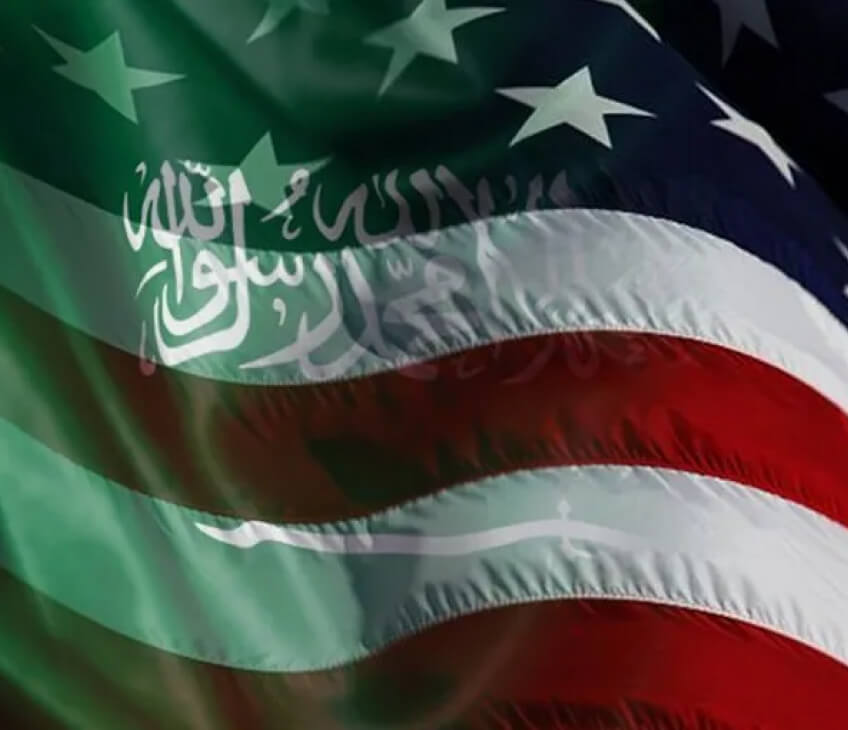


THE election of Joe Biden as President of the United States (US) in November 2020 marked the beginning of a changing of course in American foreign policy. The shift towards a new direction has resulted in the establishment of a multipolar landscape.
Indeed, the United States is undeniably one of the most powerful nations globally; however, it lacks the utmost influence, primarily due to its partisan foreign policy. This approach has resulted in the erosion of its alliances, especially in the Middle East and North Africa (MENA) region, particularly with the Gulf countries. The Democrat Party’s historical hostility towards these nations, notably during critical events like the Arab Spring, and their actions concerning Saudi Arabia, particularly with the Biden administration labeling it a “Pariah state” following the Khashoggi’s case, have had profound consequences.
In the past, whenever the US supported military endeavors, other countries rallied behind it. Nevertheless, this dynamic has changed significantly, and the Gulf countries, in particular, have adopted a more neutral stance, even amid conflicts such as the Ukraine war. As a result, the United States’ influence in global affairs has been diminished, despite its undeniable power.
Nonetheless, despite these efforts, the objectives outlined by US Secretary of State, Antony Blinken, namely countering the influence of China and Russia in the region and fostering optimism for enhancing Saudi-Israeli relations, saw no serious movement. The realisation of these goals required a long-term strategy which has been lacking.
Blinken’s visit to Saudi Arabia had two main objectives. Firstly, it aimed to address two pressing concerns: countering the growing influence of China and Russia in the region and fostering a positive environment for further developing Saudi-Israeli relations. Notably, discussions about Iran’s terrorism were not a primary focus, especially considering Saudi Arabia’s recent agreement with Iran.
Secondly, concerns arose about the Biden administration’s level of commitment to combatting the Iranian regime’s terrorism. Since the administration’s inception, there appeared to be a lack of seriousness in this regard. Instead, the administration seemed to be following a path aligned with the Obama doctrine, seeking to revive the nuclear deal with Iran and maintain a delicate balance between Saudi Arabia and Iran in the Middle East.
Whether referring to Blinken’s visit in June (2023), the US National Security Advisor, Jake Sullivan’s visit in May (2022), or even President Biden’s visit last October (2022) — the primary achievement of these visits was the cooling of rhetoric against Saudi Arabia and the pursuit of calm. Nevertheless, the desired objectives remained elusive due to the need for further strategic planning and trust-building. This analysis, to examine US-Saudi political dynamics focuses on goal articulation and attainment influenced by local, regional, and international (f)actors as represented by the most recent chapter of US-Saudi Arabia diplomacy—the visitation of Blinken.
Whether referring to Blinken’s visit in June (2023), the US National Security Advisor, Jake Sullivan’s visit in May (2022), or even President Biden’s visit last October (2022) — the primary achievement of these visits was the cooling of rhetoric against Saudi Arabia and the pursuit of calm. Nevertheless, the desired objectives remained elusive due to the need for further strategic planning and trust-building. Meeting these challenges proves particularly daunting as some objectives are firmly rooted in historical constants, while others are shaped by the complexities of local, regional, and international influences.
The essence of the demands in Blinken’s visit pertains to countering the increasing influence of China and Russia in the region and cultivating a favorable atmosphere for advancing Saudi-Israeli relations, carry substantial weight. They require strategic planning for their gradual implementation. Analysts perceive his visit as belated, a form of procrastination for dealing with core issues in the wider Middle East. Furthermore, after years of critical rhetoric from the Democratic Party caucus in Congress, and indeed from Biden himself, Blinken’s visit was viewed as a necessary step to address past frictions and shortcomings in the US-Saudi relationship. But visitations between allies should not be accompanied by stringent demands as it generates perceptions of indecision and unpredictability, which undermines trust in the bilateral relationship in crucial and sensitive matters. Meanwhile, Saudi Arabia has maintained a consistent policy towards the US and the visit of Blinken will unlikely change that.
It is interesting to anticipate Riyadh’s response to these numerous demands.(i) One thing is certain, the US should demonstrate dependable performance as the main security provider in the region. Saudi Arabia and the other Gulf Cooperation Council (GCC) members remain steadfast allies of Washington and in order for their alliance to work a greater focus on consistent communications is needed.
The world has undergone substantial transformations, particularly after the Ukrainian war and amidst the ongoing global economic crisis. States are primarily driven by self-interest, and it is important for the US to understand this reality. Secondly, the restoration of trust demands a well-designed, long-term strategy and it is crucial to carefully plan and create initiatives that will enhance trust building measures.
Indeed, that statement holds true. However, the war’s timing, coinciding with the aftermath of COVID-19, has resulted in a dual impact on the global economy. Consequently, nations are now prioritizing their local interests over international relations, emphasizing the importance of self-interest in these challenging times.
You are absolutely correct in your assessment. The tremendous display of US hypocrisy is evident in this situation. The US pursues its own interests while condemning others for engaging in similar actions. Even in this war, despite presenting the conflict as a defense of Ukrainian lands, it is clear that the underlying motive is to engage in a prolonged war of attrition against Russia. Many American analysts have pointed out that this war was premeditated for years. As a result of these actions and inconsistencies, several traditional allies of the US have lost confidence in its leadership and intentions.
Certainly, a profound lack of trust exists, and it is imperative to focus on rebuilding it, particularly concerning the Democrat Party’s relations, not just with Saudi Arabia but also with the majority of Arab countries. It would be beneficial to consider the proposal by Sobhani (7 June 2023, Washington Times) who argued in favour of inviting Saudi Arabia’s Crown Prince Mohammed bin Salman to address a joint session of Congress, aimed to promote understanding and dialogue between the two nations.
One approach to engaging with the Crown Prince, rather than making direct demands like countering the influence of China and Russia in the region or advancing Saudi-Israeli relations, involves initiating a process of trust rebuilding through a well-crafted and enduring strategy. Rob Sobhani’s article in the June 7, 2023 edition of the Washington Times offers valuable insights in this regard. Sobhani suggests extending an invitation to the Crown Prince to address a joint session of Congress, fostering understanding and dialogue between the two nations. Such a significant step could facilitate bringing the two nations closer together, instilling greater trust with US politicians, especially among Democrats and leftist factions. Moreover, this gesture would solidify the US commitment to cooperation and innovation, particularly in the realm of artificial intelligence (AI), to advance across various sectors and align with the Crown Prince’s vision for Saudi Arabia’s progress.
Other competing global actors should also be considered by the US when taking stock of their relationship with Saudi Arabia . For instance, China’s relationship with Saudi Arabia and other regional countries continues to grow in importance. An illustration of this is evident in Saudi Arabia’s reliance on China as a mediator in its agreement with Iran. For the US to become a more attractive option than China, it must continue to rebuild trust that was eroded due to, in part, an inconsistent foreign policy in recent years. The region has embraced a multipolar landscape and adopted a “positive neutrality”(ii) orientation, which can be observed in its approach to various global conflicts, including the Russian-Ukrainian war. This offers an opportunity for the US to regain its position as a trusted partner in the region, counterbalancing China’s influence.
Regarding formalising relations with Israel, Saudi Arabia emphasises obtaining US assurances at both regional and local levels. At the regional level, Saudi Arabia demands guarantees from the US before proceeding to formalise relations. Saudi Arabia has emphasised the need for a committed effort to achieve a viable and sustainable peace process for the Palestinians and the two-state solution. This objective must be achieved before any progress can be made. The question of possible diplomatic relations with Israel in the future for Saudi Arabia should be distinguished from that of other Arab or Muslim states due to its religious significance and role as a representative of the Muslim world. Engagements between Tel Aviv and Riyadh must consider the importance of the Palestinian cause to the Muslim world.
Locally, although while no Saudi official has announced the price of developing relations to Israel, Western experts and officials have outlined potential demands. First, Saudi Arabia demands security guarantees that go beyond ordinary assurances, similar to those found in NATO security agreements.(iii) Second, there is a desire for a free flow of weapons, including access to F-35 aircraft. Lastly, there is interest in uranium enrichment(iv) and a civil nuclear programme.
The question also arises whether normalisation can take place under an Israeli government that has overseen a significant expansion of settlement building and the effective, abandonment of the two-state solution. It has been noted by Saudi Arabia that current signatories of the Abraham Accords have slowed the development of their relations with Israel due to the current Israeli government’s actions in the West Bank.
Therefore, in spite of efforts to mitigate tensions and enhance US-Saudi relations, the desired significant objectives remain elusive. This can largely be attributed to the lack of comprehensive strategic planning and the urgent need to rebuild trust. In order to achieve success in the future, it is vital to embrace long-term strategies, and fulfil the necessary prerequisites for effective cooperation. Notably, valuable insights, such as extending an invitation to the Crown Prince to address a joint session of Congress, have the potential to foster understanding and dialogue between the two states. Such initiatives, coupled with consistent efforts to support mutual cooperation and trust, can pave the way for constructive and productive engagement between the countries.
Dr. Najat AlSaied is Assistant Professor at the American University in the Emirates, specializing in political media and communication. Her book ‘Twitter Diplomacy and Media Polarization’ has been classified as a bestseller in the US. She can be reached at [email protected].
Resources
- Countering the increasing influence of China and Russia in the region and cultivating a favorable atmosphere for advancing Saudi-Israeli relations.
- Over the years, the countries in the region have cultivated a distinct approach, particularly following the Obama administration and the events known as the Arab Spring. As a consequence, Arab nations lost complete trust in the US and subsequently began diversifying their alliances, seeking partnerships elsewhere
- https://www.youtube.com/watch?v=_GNPNOffpb4&t=3171
- This is the demand to normalise with Israel.