


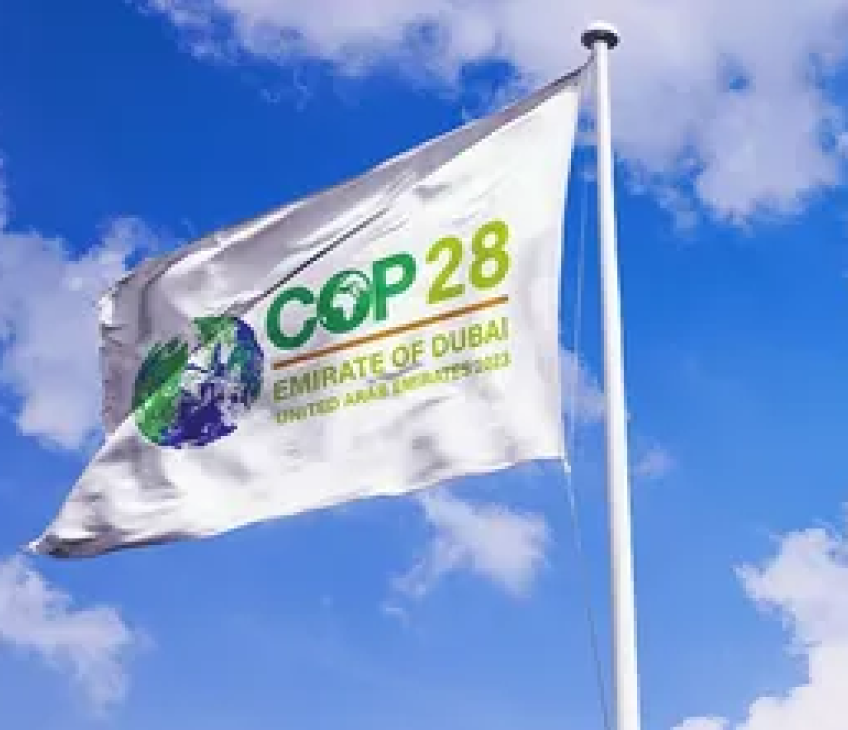


The so-called ‘green lobby’ reacted negatively to the news that COP28 was going to be held in the United Arab Emirates and that it would be led by the CEO of one of the world’s largest oil companies. Can the COP28 team make the next climate summit count?
The next climate summit, COP28, is set to be hosted in Dubai later this year and it offers the world the best opportunity in years to get the original goals of the Paris Agreement – a 43% reduction in emissions by 2030 – back on track. At the cutting edge of this transformation stands COP28’s President-Designate, Dr. Sultan Al Jaber. However, Al Jaber is also CEO of ADNOC – the world’s 12th largest oil company.
Rather than seize the unique opportunity, however, the largely Western-based critics have called for him to step down or at the very least give up his position at ADNOC. How can someone responsible for high greenhouses gas emissions possibly be a champion of climate change, they ask.
Such myopia has blinded them to the fact Al Jaber was also the co-initiator of Masdar, the UAE’s renewable energy company, for which he serves as chairman, has attended the last 10 COPs and served for more than a decade as the UAE’s climate change ambassador.
The skills and career background of Al Jaber mean he could build fundamental challenges to the United Nations Framework Convention on Climate Change process or what might be called the three Ts (Trust, Transparency, Transition). If these challenges are lost in the noise and left unaddressed, real progress will simply not be feasible before 2030. And ask any veteran watcher of key milestones for the UNFCCC process, and they will tell you: COP28 President-Designate seems to understand that better than most.
Firstly, trust is at a low point between the developed world and the Global South. While developed countries have seen living standards rise over the last two centuries of fossil-fuel-fired economic growth, the environmental losses and economic damage caused by climate change will be borne disproportionately by countries whose economic growth will be affected by cutting carbon emissions at the behest of the developed world. According to the World Bank, the G7 group of countries alone in 2019, the year before the pandemic, collectively accounted for 27% of global carbon emissions, but 53% of global GDP, or 41% and 65% if China and Russia are set aside from the global total.
In fact, developing countries initially measured the cost of moving rapidly from generating power from coal and oil in terms of the opportunity cost of lost output and had been promised that the developed world would mobilize climate support of $100 billion per year at COP15 in 2009. However, the sums provided from both public and private sources have fallen well below this target with the latest data from the OECD last year estimating $532 billion transferred against a promised $800 billion between 2013 and 2020.
The COP28 Presidency is in a good position to build bridges between the Global North and the Global South. The question of trust has been addressed by Dr Al Jaber speaking at the Petersberg Climate Dialogue summit. Having embarked on an extensive listening tour, he stated that COP28 teal had heard repeatedly from developed countries that “climate finance is simply not available, not accessible and not affordable”. In that regard, Al Jaber called for mobilization of public and private sectors to address the critical issue of climate finance.
The UAE has already played a leading role in mobilizing climate finance, punching well above its population and GDP weights, by combining state finance with private funds. Through green energy company Masdar, which means source in Arabic, it has invested over $40 billion in renewable energy projects domestically and in over 40 countries across the world. Masdar was set up in 2006 by the state-owned company Mubadala Investment Company and invested in Shams Power Company, a concentrated solar power plant whose electricity production displaces 175,000 tonnes of CO2e annually.
Secondly, one of the key priorities of COP28 will be the first global stocktake which will make transparent what countries and stakeholders are doing to meet their Paris commitments as laid down in their Nationally Determined Contributions (NDCs). Reinforcing NDCs was avoided at COP27 because of disagreements over climate finance arrangements, but Al Jaber has underlined the importance of auditing progress at COP28, which will be underpinned by a robust negotiated response to the Global Stocktake.
Finally, a road map to net zero arising from the global stocktake of each country undertaken at COP28 must look realistically at how countries can transition their energy sectors and economies to their NDCs. When it comes to transition, there are two major challenges in moving to a low-carbon economy which any realistic country roadmap must acknowledge. The first, which requires the planned obsolescence of a great deal of still-functioning coal, oil, and gas-fired capital equipment is to increase the proportion of electricity generated from renewable sources. The second is to raise the proportion of energy consumed by sectors of the economy such as the transport sector, heating homes and water, businesses, and sectors such as construction away from fossil fuels towards more renewable or self-sufficient sources.
Many large, developed countries moving rapidly to increase the proportion of electricity generated by renewables such as the United Kingdom and Germany while phasing out oil and coal have hit a roadblock because of the intermittency problem of renewables resulting in grid instability. However, it is poor planning from political climate-action rhetoric has led to insufficient investment in the distribution infrastructure and grid-level storage solutions have produced a reliance on gas.
With the right support, COP28 may offer an alternative, well thought-through action plan, which puts countries on track to meet Paris commitments with enhanced trust, transparency, and with carefully planned transitions balancing the public and private sectors. A true global turning point for climate action.