




The 2024 Paris Summer Olympics and Paralympics have brought about waves of analyses on the impact of sports throughout the world and on individual countries. Many researchers have looked towards investments that countries are making into sports teams, hosting events, sponsorships, and individual athletes. The same can be said of the Gulf Cooperation Council (GCC) countries where all six members are individually investing in sports as part of plans to diversify their economies away from dependence on hydrocarbons. The focus on the GCC countries and sports tends to be their investments into professional football and golf.[i] However, the focus may be usefully shifted to the individual athletes that compete for the states as it can bring a different wave of investments that the GCC has not broken into in a large capacity. More specifically, the GCC countries could start reinforcing women’s sports’ investments on both the national and international stages.
In the 2024 Paris Olympics, the six GCC countries received five Olympic medals between them. Bahrain received four (two gold, one silver, one bronze) and Qatar received one (bronze). The remaining countries scored no medals but had a showing of athletes in the Games.[ii] This was comparable to the previous Olympics (2020 Tokyo Olympics) where the GCC received a combined total of six medals. In the 2020 Olympics, Bahrain and Saudi Arabia received one silver each, Qatar received three medals (two gold, one bronze), and Kuwait received one bronze.[iii] These showings represent the presence that the GCC is starting to have on not only professional sports like football and golf, but also on the international stage in Olympic sports.
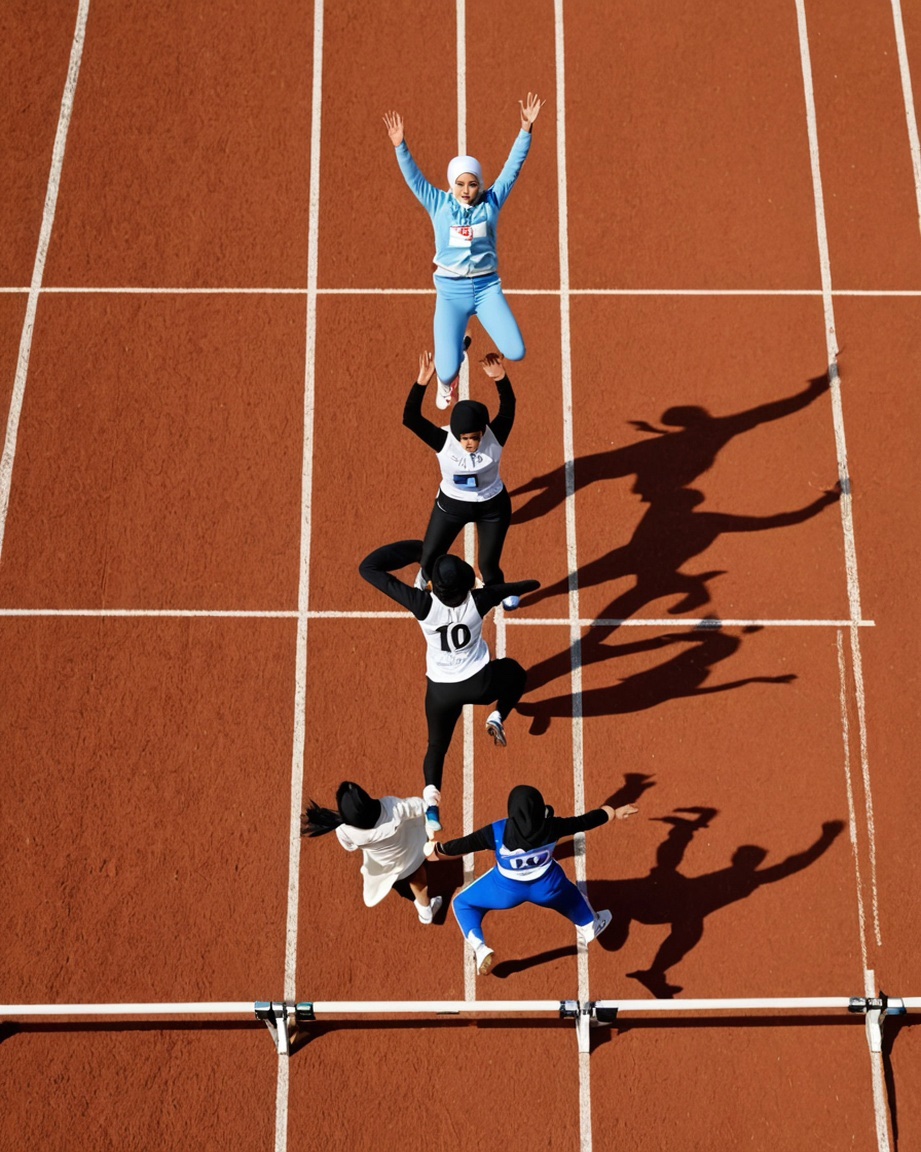
The GCC also had a good turnout in the number of athletes on their teams. Bahrain had a total of 14 athletes, with eight being female. Of the four medals the country received, two were won by female athletes. Winfred Yavi won gold in the Women’s 3,000m Steeplechase and Salwa Eid Naser won silver in the Women’s 400m.[iv] Saudi Arabia had nine athletes on their Olympic team, three of which were female. Saudi Arabia also had Mashael Al-Ayed as their first female swimmer to compete in the Olympic Games.[v] Qatar had 1 female athlete on their 13-person roster,[vi] Oman had 1 (out of 4 athletes),[vii] and Kuwait had 9 athletes with 4 being women.[viii] The country with the most female representation on their team, though, was the United Arab Emirates (UAE); it had 14 people on their roster with 9 athletes being female—64%.[ix]
Despite these showings, not enough focus has been put on women or women’s sports in the athletics world of the GCC. Huge investments into sports have been made by the members of the GCC as they are using sports diplomacy to break into the international sphere. It is also being used to build ‘social-cohesion within the bloc,’ making it more imperative that the GCC expand their interests outside their current focus.[x] The GCC has spent over $65 billion on sports development in the region and is expected to grow at the fastest rate around the world in the post-COVID-19 era. However, only a small amount of this investment is aimed at women’s sports.[xi]
The first time women competed for the GCC was in 2000 with Bahrain sending females to the Sydney Summer Olympics. From there, Kuwait sent females to the 2004 Olympics in Athens, the UAE and Oman followed by sending women to the 2008 Beijing Olympics, and Saudi Arabia and Qatar completed the GCC by sending their first female athletes to the 2012 London Olympic Games. As can be seen, women participating in sports is a relatively new phenomenon in most GCC countries.[xii]
The increase in female athletes has contributed to the effort by the GCC to increase women’s empowerment, along with sports investment. Saudi Arabia is making an attempt at these initiatives through the Vision 2030 agenda, which involves building multiple sports’ cities throughout the country. Through this agenda, women competed in Saudi Arabia’s first motor event, Rally Jameel, the 2022 Aramco Saudi Ladies International and more. The UAE — through their own sports initiatives — sent a team of female athletes to the 2022 Special Olympic Invitational Games Malta and is set to host the 9th Dubai Women’s Run and the 5th Dubai Women’s Triathlon. Bahrain had women participate in the 2021 International Mixed Martial Arts Foundation (IMMAF) World Championships, and Qatar sent women to the 2019 Asian Games in Jakarta and the 2020 Tokyo Olympics to compete in rowing. Finally, Kuwait hosted the 3rd GCC Games in 2022, making it the first Games women could compete in.[xiii]
There has also been an uptick in women holding leadership positions in the sports world. Princess Reema bint Bandar Al-Saud of Saudi Arabia assumed the position of Vice President of Women’s Affairs at the Saudi General Sports Authority. She is also a member of Saudi Arabia’s Olympic Committee and was appointed to the International Olympic Committee (IOC) for the 2032 Olympic Games in Brisbane, Australia. Sheikha Hayat Bint Abdul Aziz Al Khalifa is another prominent woman in the world of GCC sports. She is part of the Bahrain Women’s Sports Committee and was elected as Chair of the Women’s and Sports Committee of the Olympic Council of Asia (OCA). Along with these positions, she has advocated strongly for the GCC to allow women to compete in all sports in the next GCC games.[xiv]
Despite these advances, there are still obstacles women face. While Saudi Arabia’s women participation in sports has increased over 150%, gender stereotypes are still prevalent. Women are also not being afforded the same opportunities as men, with less access to training and athletic facilities. And, there has been little investment into the fundraising and sponsorship of women’s sports.[xv]
Sheikha Hayat Bint Abdul Aziz Al Khalifa’s advocacy for women to compete in all sports could prompt the next step the GCC countries take in advocating for women’s empowerment in the sports world. With women not being allowed to compete in all sports it diminishes the strides that countries have taken to further women’s rights in the region. With women’s empowerment and sports being two of the most salient topics in the GCC’s agendas, this should be an easy step for the group of six to take. Not only will it bring in more money and investments into their economies — as it will open a new world of sporting events that the GCC can host — it will also boost their standing on the international stage. Countries may be more willing to build diplomatic ties with the GCC if they are making strides in women’s rights and empowerment—further elevating the status of the GCC. Along with these, investing in women’s sports can have positive effects on the local culture of a country. It teaches women skills in the realms of teamwork, resilience, and boosts an individual’s confidence. It can also help close the gender inequality gaps that exist in a country, directly impacting the women’s empowerment initiatives.[xvi]
*****
The GCC has already created positive waves throughout the region with the current standing of women in sports. The bloc may reinforce their progress even further by allowing for more rights to be given to females wanting to compete for their country. Gender stereotypes can be challenged and access to athletic facilities and training can be pursued. These changes lead to the main topic GCC countries are concerned with—investments. By taking the next step and pursuing these initiatives, more money will flow into the GCC as the changes will create a new economic space that has not yet been pursued, creating a positive change that benefits both women and the GCC.
(15/10/2024)
Resources
[i] Mosly, Amnah. “Sports Diplomacy in the GCC.” Gulf Research Center, 2022. June 1. https://grc.net/documents/62c43cb9a4cfeSportsDiplomacyintheGCC.pdf.
[ii] Paris 2024. “Medal Table.” Paris Olympics 2024 n.d. https://olympics.com/en/paris-2024/medals.
[iii] Olympic Games Tokyo 2020. “Tokyo 2020 Medal Table.” Olympic Games Tokyo 2020 n.d. https://olympics.com/en/olympic-games/tokyo-2020/medals.
[iv] Paris 2024. “Olympic Schedule & Results: Bahrain.” Paris Olympics 2024 n.d. https://olympics.com/en/paris-2024/schedule/bahrain?day=29-july.
[v] Lomas, Mark. “A Who’s Who Guide to the Saudi Arabia 2024 Paris Olympic Team.” Al Arabiya News, 2024. July 16. https://english.alarabiya.net/News/saudi-arabia/2024/07/16/a-who-s-who-guide-to-the-saudi-arabia-2024-paris-olympic-team.
[vi] Team Qatar. “Olympics Game Paris 2024.” Qatar Olympic Committee, 2024. July 26. https://www.olympic.qa/paris-olympics.
[vii] Purohit, Ashok. “Four Athletes to Represent Oman at Paris Olympics.” Times of Oman, 2024. July 14. https://timesofoman.com/article/147786-four-athletes-to-represent-oman-at-paris-olympics.
[viii] Paris 2024. “Olympic Schedule & Results: Kuwait.” Paris Olympics 2024 n.d. https://olympics.com/en/paris-2024/schedule/kuwait?day=undefined.
[ix] Coughlin, Laura. “Meet Team UAE for the 2024 Paris Olympic Games.” What’s On, 2024. July 25. https://whatson.ae/2024/07/meet-team-uae-for-the-2024-paris-olympic-games/.
[x] Mosly, Amnah. “Sports Diplomacy in the GCC.” Gulf Research Center, 2022. June 1. https://grc.net/documents/62c43cb9a4cfeSportsDiplomacyintheGCC.pdf.
[xi] Ibid.
[xii] Ibid.
[xiii] Ibid.
[xiv] Ibid.
[xv] Venkataraman, Vaishnavi. “Arab Women Athletes Are Changing the Game, but Hurdles Remain.” Fast Company Middle East, 2023. February 23. https://fastcompanyme.com/impact/arab-women-athletes-are-changing-the-game-but-hurdles-remain/.
[xvi] UN Women. “In Focus: Women and Girls in Sport.” UN Women n.d. https://www.unwomen.org/en/news/in-focus/women-and-sport.