




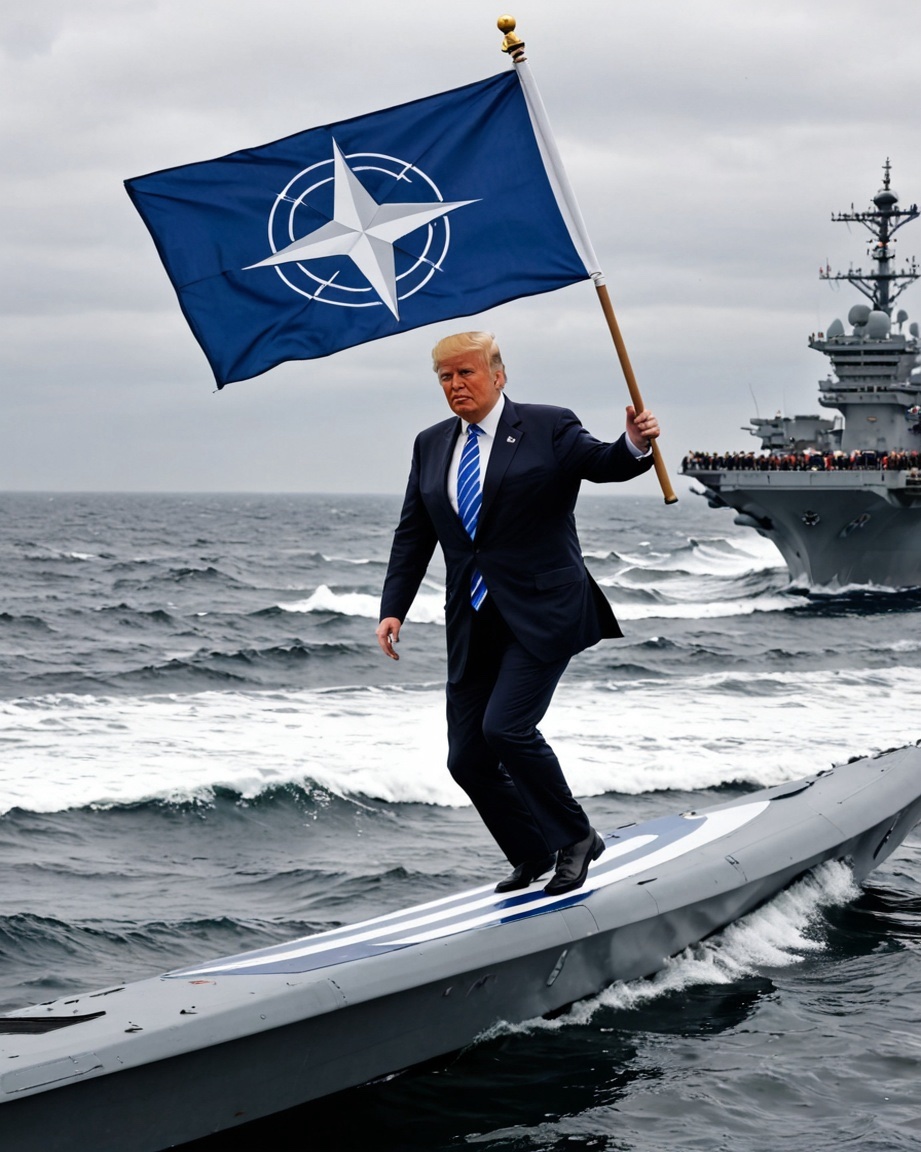


On 08 December 2024, President-elect, Donald Trump, reiterated his dissatisfaction with the North Atlantic Treaty Organization (NATO), threatening that the US might exit the Alliance if not treated “fairly.” This follows years of criticism from Trump, who has consistently questioned NATO’s structure, funding, and relevance in today’s geopolitical climate. While some dismiss these remarks as political posturing, the consequences of such a decision would be far-reaching. This article delves into the historical context, financial dynamics, legal frameworks, and potential global ramifications of a US withdrawal from NATO.
Trump’s main grievance with NATO lies in its financial structure. In 2023, the combined military spending of NATO states reached $1.341 trillion. However, the US accounted for $916 billion of this amount—approximately 68% of the total. This level of expenditure is unparalleled, reflecting the US’ role as the backbone of NATO’s defence capabilities. The remaining NATO members collectively spent about $425 billion, with significant disparities among individual countries. Only 11 of the 31 NATO members met the Alliance’s target of spending at least 2% of their GDP on defence. Major players like Germany (1.59%), Italy (1.69%) and Spain (1.23%) fell well below this threshold, despite being among the largest economies in Europe.
Trump has consistently argued that this imbalance places an unfair burden on the US. While allies like Poland (4.12%) and Estonia (3.43%) have exceeded the 2% target, the uneven contributions have fuelled Trump’s long-standing criticism of NATO as a financial liability for the US.
The 1949 establishing of NATO was based on providing collective defence against the Soviet Union during the Cold War. For decades, NATO served as a critical pillar of transatlantic security — albeit with periodic internal crises, re: 1966 [France’s withdrawal], 1974 [Cyprus Crisis] — deterring the USSR and fostering political cohesion among Western democracies.
However, the dissolution of the USSR [1991] led to questions about NATO’s purpose in a unipolar world. Critics, including Trump, argue that NATO has struggled to adapt to modern threats such as cyberattacks, terrorism and the rise of other power such as China. Additionally, Trump (among others) claim that Europe’s reliance on US military power has enabled a culture of complacency among some NATO members, undermining NATO’s long-term sustainability.
The possibility of a US withdrawal from NATO raises complex legal and constitutional issues. Article 13 of the NATO Treaty allows any member to withdraw by notifying the US government, with the withdrawal taking effect one year later. However, the US Constitution does not explicitly clarify whether the President can unilaterally terminate treaties without Congressional approval. In 2023, Congress passed legislation requiring Senate approval or an act of Congress to withdraw from NATO. This legal safeguard reflects bipartisan concerns about the consequences of such a move. If Trump were to pursue withdrawal, it would likely trigger significant legal battles, with the Supreme Court potentially playing a decisive role.
A US withdrawal from NATO would fundamentally alter the security architecture of Europe. The US provides critical capabilities that no other member can replicate, including:
- Strategic Airlift—Essential for rapid troop deployment across regions.
- Missile Defence Systems—protecting Europe against ballistic missile threats.
- Nuclear Deterrence—the US is NATO’s most formidable nuclear power with the UK and France trailing far behind in munitions, delivery systems and targeting capabilities.
Without the US, NATO’s cohesion and effectiveness would be severely compromised. European nations, already grappling with economic challenges, would face immense pressure to increase defence spending and build independent military capabilities. Europe should work to strengthen its common defence and enhance its military and strategic autonomy to address these vulnerabilities, reduce reliance on external powers, and ensure long-term security.
A diminished US role in NATO would also reverberate across the Arab Gulf, where US military power is critical for maintaining regional stability. Gulf Cooperation Council members (GCC|Bahrain, Kuwait, Oman, Qatar, Saudi Arabia and the UAE) rely on US security guarantees to deter threats and manage regional conflicts. However, US disengagement from NATO does not necessarily mean a greater focus on the Middle East. Instead, it could signal a strategic pivot to the Asia-Pacific, where the US has prioritised countering China’s growing influence since the Obama Administration. This shift might compel Gulf states to seek alternative partnerships. Such a development could also further fragment the geopolitical landscape in the Middle East, complicating efforts to maintain stability and deter aggression.
To mitigate these risks, the Gulf countries may work at strengthening their own military and strategic frameworks, focusing on greater regional cooperation to avoid fragmentation. A cohesive and autonomous defence strategy would enable these nations to navigate uncertainties and maintain stability without relying excessively on external powers.
Beyond Europe and the Gulf, a US withdrawal from NATO would have profound global consequences. Key implications include:
- Strengthening Rivals—Russia and China would likely capitalise on NATO’s weakened cohesion, expanding their influence in regions like Eastern Europe, the Indo-Pacific, and Africa.
- Shifting Alliances—Allies such as Japan, South Korea, and Australia might question the reliability of US commitments, potentially seeking alternative security arrangements.
- Erosion of Multilateralism—A US exit from NATO would undermine the broader concept of multilateral security alliances, emboldening isolationist policies worldwide.
Trump’s NATO exit rhetoric is part of a broader critique of multilateralism that has defined his political identity. By threatening withdrawal, he seeks to pressure allies into increasing their defence spending and taking greater responsibility for collective security. While this approach resonates with portions of the US electorate, particularly those favoring an “America First” strategy, it risks alienating traditional allies and weakening America’s global leadership.
At the same time, NATO faces significant internal challenges. Disputes over burden-sharing, differing threat perceptions, and political fragmentation have strained the Alliance. Trump’s declaration adds urgency to addressing these issues, forcing NATO to reassess its priorities and rebuild trust among its members.
Trump’s declaration about potentially withdrawing the US from NATO underscores a contentious debate over the Alliance’s future and the fairness of its financial structure. While the likelihood of such a move remains uncertain, the consequences would be profound, reshaping global security dynamics from Europe to the Arab Gulf and beyond. As NATO faces growing challenges and shifting priorities, Europe must strengthen its autonomy, and the Gulf states should build cohesive defence strategies to adapt to a changing world. The stakes have never been higher.