



Since their rapid return to power in 2021, the Taliban have been reshaping Afghanistan according to their strict interpretation of Sharia law. Despite their promises to the international community, particularly Western leaders, that they would not reinstate the policies in place before the 2001 US-led invasion, it seems that the feared conditions of the past are gradually returning.
The shift began with the re-establishment of the Ministry for the Propagation of Virtue and the Prevention of Vice, which replaced the Ministry of Women’s Affairs from the previous US-backed administration and now oversees the religious police. The majority of these new and strict policies are affecting women, whose rights have been significantly tackled soon after the Taliban takeover. First, female education has been restricted to religious primary schools, de facto banning Afghan women and girls from attending college and university. Although the full veil, commonly known as the “burqa,” was not initially mandated, female TV presenters have been required to cover their faces while on air, with a face mask being deemed sufficient. Additionally, beauty salons have been ordered to close for allegedly ‘offering services forbidden by Islam and causing economic hardship for the families of grooms during wedding festivities’ (Associated Press).
While women have even been discouraged from ‘speaking (or singing) loudly’ in public, men have also faced requirements. Growing a beard has again been made mandatory in Afghanistan, as it was in the late 1990s. Despite widespread opposition, particularly from human rights activists, many Afghan women have taken to the streets to protest. However, the Taliban have been swiftly suppressed these protests, emphasing the claimed ‘Islamic nature’ of such laws.
During an exclusive interview with Western media, Taliban government Deputy Spokesman, Hamdullah Fitrat, defended the Supreme Leader’s decisions, stating that they were ‘in accordance with Sharia law” and that “every Muslim scholar can check its references’ (BBC). The Taliban also attributed music of contributing to moral corruption, leading to its nationwide ban and the symbolic burning of dozens of musical instruments in Herat by Taliban officials. Therefore, every public event from military parades to TV and radio emissions is now completely music free.
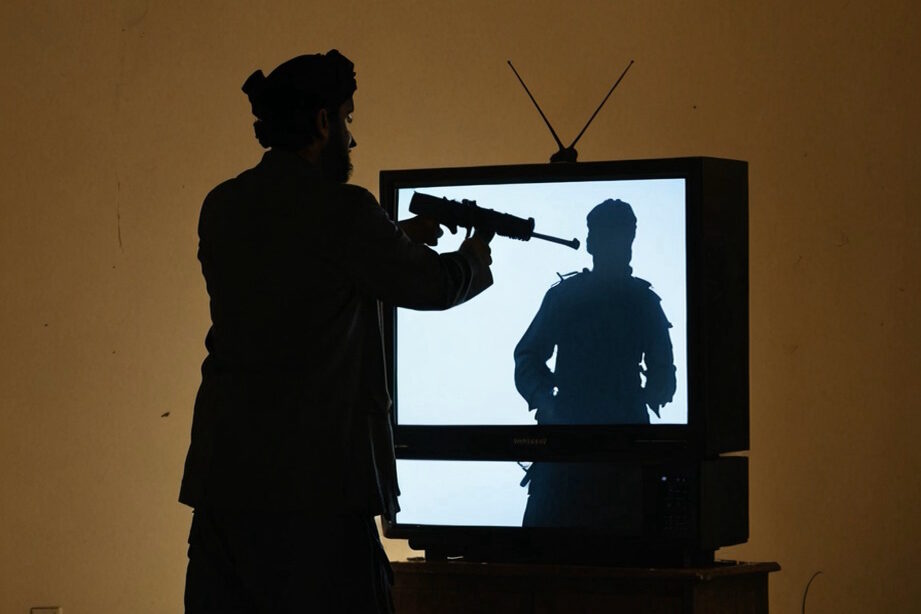
The latest controversial restriction seems to affect both men and women working in the media: broadcasting live images of living creatures has been deemed as being against Islamic principles, converting TV stations into radio-only outlets. This ‘advice,’ as described by the acting Afghan authorities, is currently enforced on a local level, in Helmand province, but it is expected to be gradually extended to the rest of the country. The Afghanistan Journalists Centre (AJC) — an independent non-governmental organisation dedicated to promoting and defending press freedom in the country — described this move as extremely regressive. They have called for a reconsideration of the amendment, which many Afghan reporters view as a serious threat to press freedom. This ban on TV, which was enforced during the first Taliban administration from 1996 to 2001, is extremely unusual in the Muslim world, as no other Sharia-based country has ever adopted it. This may also explain why few Islamic countries, including GCC States, have officially recognised the Taliban’s rule yet. However, both the Taliban and regional powers are keen to establish bilateral relations. Qatar has always played a significant role in the negotiations that led to the historic US-Taliban deal, the ‘Doha Agreement,’ signed by US diplomat Zalmay Khalilzad and his Taliban counterpart Abdul Ghani Baradar and put and end to the 20-year NATO presence in Afghanistan. Qatar has recently urged the Taliban to uplift the ban on female education and has offered scholarships for Afghan girls to study in Indonesia, as part of a bilateral deal between Doha and Jakarta. The Qatari capital has also hosted an official Taliban political bureau since 2013, and the Taliban see the Gulf country as a key mediator for the re-integration of Afghanistan into the international community.
While Qatar plays a crucial geopolitical role, the United Arab Emirates (UAE) is using its technology and financial support to expand its influence on Kabul. In 2022, the Islamic Emirate joined a joint preliminary airport security deal with Qatar and Türkiye. However, the disagreements with both parties benefited the Emirati State-linked company GAAC Holding, which secured a ten-year contract to manage airports in Kabul, Herat and Qandahar. Bilateral ties have recently boosted following Taliban Foreign Minister Amir Khan Muttaqi’s official visit to the UAE, where he met with his counterpart, Sheikh Abdullah bin Zayed al-Nahyan. Talks have been focused on possible ways to strengthen bilateral relations between the two countries and renewed Abu Dhabi’s commitment to support reconstruction and development plans in Afghanistan.
Abu Dhabi has delivered food and relief supplies to Afghanistan soon after the Taliban takeover in 2021 and helped Western powers to evacuate foreign diplomats and thousands of Afghan civilians. Despite being one of the only three countries—alongside Pakistan and Saudi Arabia—to recognise the first Taliban Emirate nearly two decades ago, the UAE has so far refrained from establishing formal ties with Kabul’s new rulers. Instead, it appears to be focused on limiting the other regional powers’ influence, as Qatar and Iran. This also seems to be Saudi Arabia’s main concern.
Saudi Arabia so far retains only limited contact with the Taliban, while still supporting the country’s civil population and Riyadh is strengthening its soft power through its humanitarian organisations such as the King Salman Humanitarian and Relief Centre and the Saudi Fund. Riyadh’s position stems largely from its new moderate approach towards the bond between Islam and politics. Saudi Arabia’s Vision 2030 agenda strongly differs from the radical ideology of the Taliban, but one of its top priorities is regional stability, which is crucial for the success of its ambitious reform plan. Instead of supporting rival moderate groups, the Gulf States are apparently trying to persuade the Taliban with their soft power in a country which is globally considered a pariah. So far, the Taliban appear largely unconcerned about their international isolation, instead focusing on adhering to their interpretation of divine commandments. However, the Gulf States may continue to leverage their influence through strategic investments and diplomatic engagement, hoping that economic incentives and regional stability could gradually encourage the Taliban to adopt more pragmatic policies. The challenge lies in balancing this approach with international pressure, as the evolving situation will require careful navigation to avoid both alienating global stakeholders and enabling further entrenchment of the Taliban’s hardline stance.