


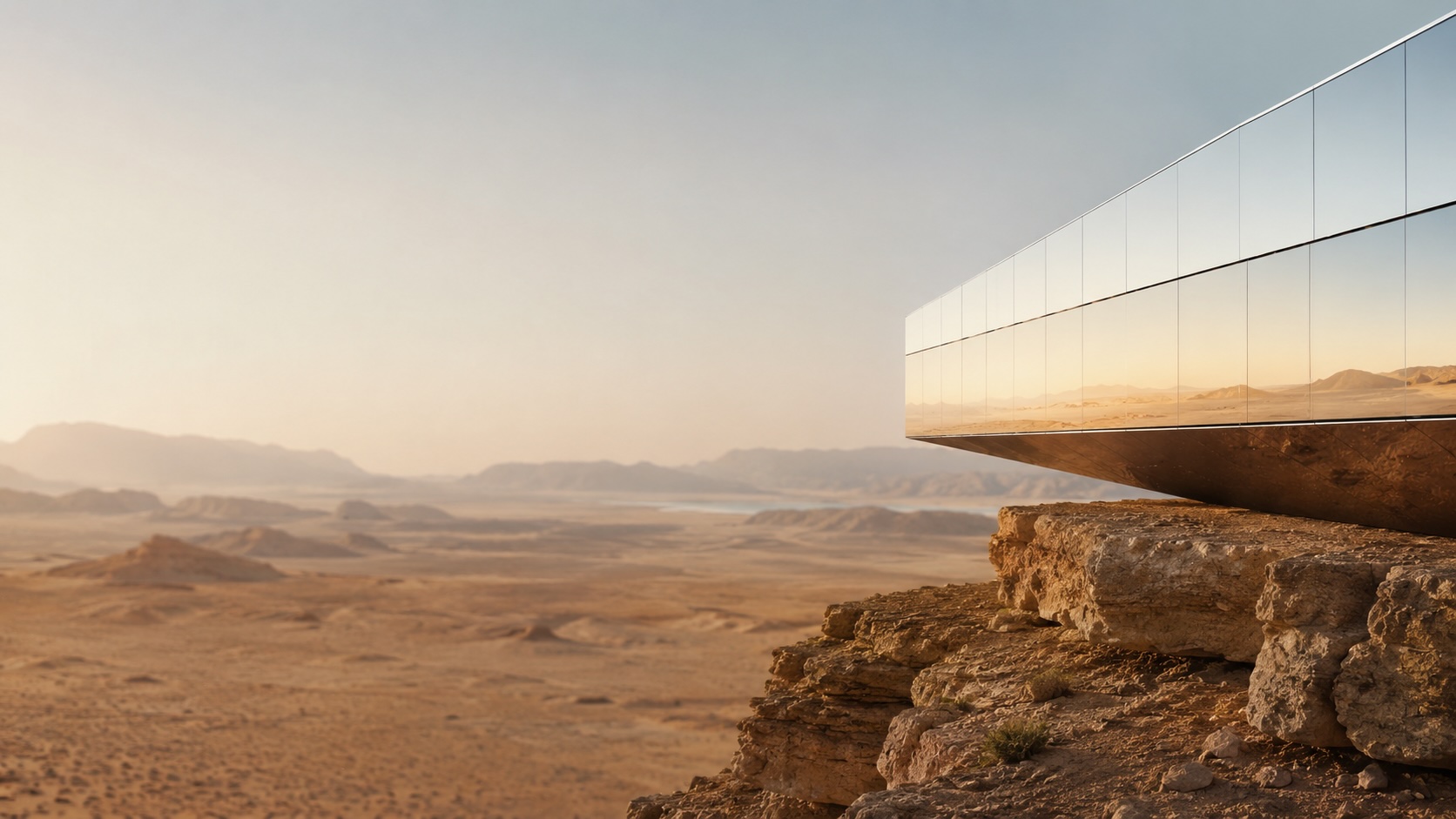


Beyond military and diplomatic consequences, the Iran war may have also influenced Saudi Arabia’s long-term economic planning. While Riyadh remains committed to Vision 2030, recent reports suggest that investment priorities within NEOM have shifted away from symbolic projects such as The Line and toward projects with more immediate strategic value, including the Port of NEOM, logistics infrastructure, AI data centres, and Red Sea connectivity (Arab News, 2026). This raises an important question: has the Iran war changed what Saudi Arabia considers most strategically valuable within NEOM?
Saudi Arabia launched Vision 2030 in April 2016 with the goal of diversifying its economy and reducing its dependence on oil (Vision 2030, 2025). Announced in 2017 under the umbrella of Vision 2030, NEOM is a mega-project focused on technology, sustainability, and development, particularly in renewable energy (Cole, 2026). Like Vision 2030 itself, NEOM is funded primarily through the Public Investment Fund (PIF) and consists of five major developments: Sindalah, The Line, Oxagon, Trojena, and Magna (Cole, 2026). Although the Iran war did not fundamentally change Saudi Arabia’s commitment to NEOM, it appears to have accelerated a shift in its priorities. Rather than emphasising developments such as The Line, Saudi Arabia appears to be focusing on projects that strengthen economic resilience, strategic infrastructure, and regional connectivity.
Following the Iran war, reports indicated that work on The Line was paused until after 2030, while investment increasingly focused on other NEOM components, including Oxagon, the Port of NEOM, Red Sea infrastructure, and AI-related projects (Martin, 2026). This suggests that the Iran war did not initiate NEOM’s changing priorities but instead accelerated an existing shift. The shift is significant because the projects receiving greater attention serve different strategic purposes than The Line. While The Line was designed primarily to symbolise Saudi Arabia’s economic transformation and attract tourism and foreign investment, projects such as Oxagon, the Port of NEOM, and Red Sea infrastructure strengthen the industrial capacity, logistics network, and access to international trade routes (NEOM 2022; The Executive Centre 2025). The Iran war highlighted how regional instability, disruptions to maritime trade, and uncertainty surrounding the Strait of Hormuz could threaten Saudi Arabia’s long-term economic ambitions (Quilliam, 2026; Saba & Rashad, 2026). As a result, infrastructure that improves resilience and connectivity may now offer greater strategic value than projects centred primarily on building a global brand.
Oxagon and the Port of NEOM’s Growing Strategic Importance
Beginning with Oxagon, NEOM’s advanced industrial district, which is designed for clean manufacturing and logistics innovation, Saudi Arabia has plans for it to be an industrial centre and a liveable urban environment (The Executive Centre, 2025). The key transformations Oxagon brings to Vision 2030 are: economic diversification, job creation, sustainable development, and industrial innovation (The Executive Centre, 2025). While The Line was designed as a flagship urban development intended to attract investment, talent, and tourism, Oxagon is designed to strengthen Saudi Arabia’s industrial base through manufacturing, logistics, and technological innovation (NEOM, 2022). Although The Line remains central to Vision 2030, Oxagon has gained greater strategic importance because of its immediate contribution to industrial development, logistics, and economic diversification (NEOM, 2022; The Executive Centre, 2025). Its emphasis on cross-border supply chains and regional economic cooperation also aligns with broader GCC ambitions to strengthen regional connectivity and reduce dependence on oil-driven growth (The Executive Centre, 2025). During periods of regional instability, projects focused on industrial production and logistics may become more valuable because they strengthen long-term economic resilience rather than relying primarily on international tourism or symbolic developments (Saba & Rashad, 2026).
The Red Sea’s Increasing Strategic Value
The Strait of Hormuz is very important to international oil trade as 20% of the world’s oil and liquefied natural gas pass through the strait (US Energy Information Administration, 2025). When shipping was disrupted in the strait in March 2026, the global oil, natural gas, fertiliser, and critical metal market prices shot up (Saba & Rashad, 2026). The war demonstrated how vulnerable the Strait of Hormuz is to regional instability (Quilliam, 2026; Saba & Rashad, 2026). For Saudi Arabia, whose Vision 2030 depends on attracting investment and expanding trade, disruptions to maritime commerce highlighted the importance of developing alternative transport routes and strengthening economic resilience (Quilliam, 2026; Saba & Rashad, 2026). The conflict strengthened the importance of reducing dependence on any single maritime route (Quilliam, 2026; Saba & Rashad, 2026).
NEOM’s location on the Red Sea gives it strategic importance beyond its role as an economic megaproject (NEOM, 2022). By connecting Europe, Asia, and Africa, the Port of NEOM has the potential to strengthen regional supply chains and complement Saudi Arabia’s broader effort to diversify trade routes (NEOM, 2022). As concerns surrounding the Strait of Hormuz have increased, infrastructure on the Red Sea has become more valuable specifically for long-term strategic resilience (Saba & Rashad, 2026).
Taken together, these developments suggest that Saudi Arabia may be redefining what success looks like within NEOM. Previously, NEOM’s success was largely measured by flagship developments such as The Line, its ability to attract tourism and foreign investment, and its futuristic vision. Today, success increasingly appears to include industrial production, logistics, Red Sea connectivity, resilient supply chains, and AI infrastructure. This does not suggest that Saudi Arabia has abandoned its original vision. Rather, it indicates that it may prioritise projects capable of delivering immediate economic and strategic benefits alongside long-term flagship developments.
Whether this shift proves temporary or permanent will depend on the regional security environment. However, the Iran war appears to have demonstrated that economic transformation cannot be separated from geopolitical stability. As a result, NEOM’s future may begin to be defined more by its ability to strengthen Saudi Arabia’s industrial capacity, trade resilience, and strategic connectivity.
Sources
- All Arab News. (2026, May 26). Saudi Arabia stops work on NEOM’s The Line, shifts focus to Red Sea infrastructure amid Iran war. All Arab News. https://allarab.news/saudi-arabia-stops-work-on-neoms-the-line-shifts-focus-to-red-sea-infrastructure-amid-iran-war
- Cole, R. (2026, March 11). Neom. Encyclopedia Britannica. https://www.britannica.com/place/Neom
- NEOM. (2022). About NEOM. Neom. https://www.neom.com/en-us/about
- Martin, M. (2026, May 22). Saudi’s NEOM halts work on The Line until after 2030. Semafor. https://www.semafor.com/article/05/22/2026/saudis-neom-halts-work-on-the-lineuntil-after-2030
- Quilliam, N. (2026, May 5). How the Iran war is reshaping Saudi strategy: From Hormuz and Houthis to the UAE’s OPEC exit. Chatham House. https://www.chathamhouse.org/2026/05/how-iran-war-reshaping-saudi-strategy-hormuz-and-houthis-uaes-opec-exit
- Saba, Y., & Rashad, M. (2026, July 7). Saudi Arabia considers expansion of oil pipeline to Red Sea, sources say. Reuters https://www.reuters.com/business/energy/saudi-arabia-considers-expansion-oil-pipeline-red-sea-sources-say-2026-07-07/
- The Executive Centre. (2025). Oxagon NEOM: Redefining Industry and Innovation on the Red Sea. The Executive Centre. https://executivecentre.sa/blog/oxagon-neom-industrial-hub
- U.S. Energy Information Administration. (2025, June 16). Amid regional conflict, the Strait of Hormuz remains critical oil chokepoint. https://www.eia.gov/todayinenergy/detail.php?id=65504
- Vision 2030. (2025). Vision 2030. Vision2030. https://www.vision2030.gov.sa/en/overview