


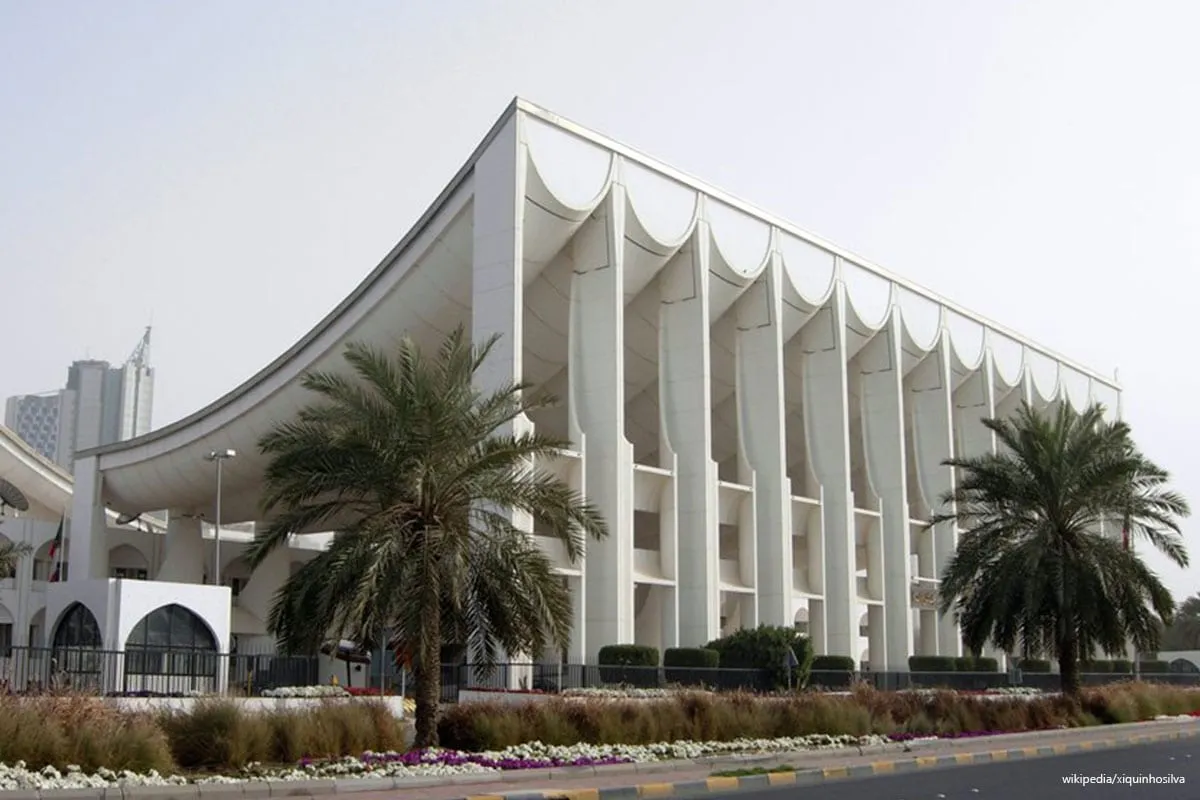


On 29 September 2022, Kuwaitis headed to the polls to elect 50 members of the parliament, the National Assembly, for the second time in less than two years. It has been classed as one of the most inclusive elections in a decade with opposition groups ending their 10-year boycott after the country’s Crown Prince Meshal Al-Ahmad Al-Jaber Al-Sabah vowed there would be no interference by the authorities in the election or the activities of the new National Assembly.[i] Results showed that 23 members were re-elected while 27 new members were elected (although, 11 of these have previously sat in the parliament).[ii] Opposition candidates made considerable gains, winning 28 out of the 50 seats. This includes the Islamic Constitutional Movement (affiliated with the Muslim Brotherhood), as well as the Salafist movement, who consolidated their seats, while the Shiite bloc also made gains. Two women were also elected, making a return to parliament after not winning any seats in the last elections in 2020.
The results signal a continuation of the 2020 elections, with a more conservative, Islamist opposition gaining further ground.[iii] This time around, the campaign focused on issues such as corruption, governance reform and the economic situation, including improving public services, supporting the private sector, and resolving the public debt crisis. Ideological affiliations also dominated as individuals often vote along sectarian and tribal lines.
A Deepening Political Crisis
The election came after the Crown Prince dissolved the National Assembly earlier this year following a sit-in led by the opposition lawmakers as a result of the inability to form a new Cabinet.[iv] Such disputes between the Cabinet and elected members of parliament and subsequent dissolutions are nothing new to Kuwait, which is considered to have the most active parliament in the Gulf region. Indeed, since the formation of the National Assembly in 1963, 9 out of the 19 elections held have been a result of dissolution by the Emir.[v] While political parties remain outlawed, candidates can align with political associations, such as the Liberals, Muslim Brotherhood, Salafis, and Shiite Islamists, as well as tribes, although most run as independents. Accordingly, the composition of the National Assembly presents a diverse set of views with pronounced ideological divisions.
Against this backdrop a number of increasingly pressing issues have yet to be resolved including several economic issues. The state budget for the fiscal year 2022/2023 has yet to be approved. In fact, its public debt law – which expired in 2017 – has not been renewed meaning that Kuwait has not been able to access its sovereign wealth fund or borrow—a growing concern given its 12% budget deficit (2021).[vi] Kuwait has also failed to introduce reforms that would improve public services and support the private sector. In terms of the former, public services, including education and health, as well as infrastructure, require pressing investment to update and improve the current systems.[vii] Regarding the latter, the private sector in Kuwait is still in its nascency as further reforms are required to create a more conducive business environment and maximise its potential. For instance, Kuwait’s regulatory environment and the Kuwaitisation quotas — re: the hiring of nationals — are seen as cumbersome to private industries.[viii] And, Kuwaitis view private sector employment as unappealing given the public sector’s extensive welfare benefits and higher wages.[ix] In addition, Kuwait still remains heavily reliant on fossil fuel revenues, falling behind in its diversification efforts that would support the sustainability of its revenue.[x]
On another note, lawmakers have frequently been calling for measures to address corruption. Some effects have been made to address this. For example, this round of elections marked the first time that voters had to register in the electoral districts based on the residential addresses that appeared on their civil IDs to enable a fairer distribution of votes and avoid vote buying.[xi]
A Rocky Start?
The newly elected National Assembly evidently has a big task ahead of it. However, it has not gotten off to the best start. As is usual protocol, a new Cabinet was appointed shortly after the elections under the (reappointed) Prime Minister Ahmad Nawaf Al-Sabah, the ruling Emir’s son, who was initially appointed in July after the sit-in by opposition members.[xii] However, with few new faces in the Cabinet, new lawmakers objected to the government line-up, criticising the fact that the composition did not ‘reflect’ the results of the elections in September, in which opposition members made significant gains.[xiii] While this initially prompted a delay in parliament opening,[xiv] Kuwait’s Crown Prince came out later to announce a Cabinet reshuffle in a bid to end the standstill with lawmakers.[xv] The new Cabinet notably includes a new Foreign Minister, Salem Abdullah Al-Sabah, a former Ambassador to the United States (2001-2022), South Korea (1998) and the country’s delegation to the United Nations (1997-1998), and a new Oil Minister, Badr Al-Mulla, a lawmaker who had headed parliament’s budget committee.[xvi] On that basis, the new Cabinet was sworn in on 17 October, a day before the Parliament held its first session, which saw Ahmad Al-Saadoun[xvii] elected as the new Speaker of the National Assembly, a position he held in 1985, 1992 and 1996.[xviii]
While a new government has now been sworn in, there still appears to not be too much optimism in the air for resolving the seemingly never-ending political crisis. Big tasks remain ahead for the Cabinet and the National Assembly with no simple solution in sight. An economic crisis is still looming without an approved budget or economic reforms that address the longstanding deficit, as well as the outdated public services and bloated public sector. This, in turn, will undoubtedly spill over to heighten public unrest and disillusionment. Although only time will tell if the government can reconcile and address these pressing issues, it seems more likely that this cycle of inaction may continue into the near future.
Resources
- France24. ‘Kuwait goes to polls, yet again, as opposition groups return.’ France24, September 28, 2022. https://www.france24.com/en/live-news/20220928-kuwait-goes-to-polls-yet-again-as-opposition-groups-return.
- Abdullah Al-Mudhaf. ‘Profiles of election winners.’ Kuwait Times, October 2022. https://www.kuwaittimes.com/profiles-of-election-winners/.
- Nikola Zukalová. ‘Kuwait’s 2020 Election Results and the New Government.’ EGIC, December 14, 2020. https://www.egic.info/kuwait-2020-elections-results.
- B. Izzak. ‘Parliament dissolved over ‘threats to national unity.’ Kuwait Times, August 2, 2022. https://www.kuwaittimes.com/parliament-dissolved-over-threats-to-national-unity/.
- Nikola Zukalová. ‘Kuwait Elections 2022: Infographic.’ EGIC, September 12, 2022. https://www.egic.info/kuwait-elections-2022-infographic.
- Ministry of Finance. 23/22 Budget. Kuwait: Ministry of Finance, 2022. https://www.mof.gov.kw/MofBudget/PDF/Budget22-23presentation-eng.pdf.
- Times of Kuwait, ‘Heavy rains once again bring Kuwait to a halt,’ Times of Kuwait, January 3, 2022. https://www.timeskuwait.com/news/heavy-rains-once-again-bring-kuwait-to-a-halt/; Kuwait Times, ‘Health situation in Kuwait,’ Kuwait Times, August 30, 2015. https://www.kuwaittimes.com/health-situation-in-kuwait/; Arab Times, ‘Education standard in Kuwait low despite KD2.4bn budget,’ Arab Times, July 11, 2021. https://www.arabtimesonline.com/news/education-standard-in-kuwait-low-despite-kd2-4bn-budget/.
- Sophie Smith. ‘Kuwait’s Shift towards the Private Sector.’ EGIC, June 14, 2021. https://www.egic.info/kuwait-s-shift-towards-the-private-sector.
- Government of Kuwait, Kuwait Voluntary National Review 2019 (Kuwait City: Government of Kuwait, 2019). https://sustainabledevelopment.un.org/content/documents/23384Kuwait_VNR_FINAL.PDF.
- Sophie Smith. ‘The Deepening Political Crisis: Kuwait’s Government Resigns Again.’ EGIC, April 14, 2022. https://www.egic.info/kuwait-government-resigns-again.
- B. Izzak. ‘Nod to voting with civil IDs as constituencies expanded.’ Kuwait Times, August 17, 2022. https://www.kuwaittimes.com/nod-to-voting-with-civil-ids-as-constituencies-expanded/.
- KUNA. ‘Kuwait forms 41st gov’t within 60 years.’ KUNA, October 5, 2022. https://www.kuna.net.kw/ArticleDetails.aspx?id=3057693&Language=en.
- KUNA. ‘Government Spokesperson: A decree to postpone the convening of the National Assembly meeting for the first regular session from the 17th legislative term to the 18th October.’ KUNA, October 10, 2022. https://www.kuna.net.kw/ArticleDetails.aspx?id=3057981&Language=ar; B Izzak. ‘Decree delaying Assembly opening becomes effective.’ Kuwait Times, October 9, 2022. https://www.kuwaittimes.com/decree-delaying-assembly-opening-becomes-effective/.
- KUNA. ‘Government Spokesperson: A decree to postpone the convening of the National Assembly meeting for the first regular session from the 17th legislative term to the 18th October.’ KUNA, October 10, 2022. https://www.kuna.net.kw/ArticleDetails.aspx?id=3057981&Language=ar; B Izzak. ‘Decree delaying Assembly opening becomes effective.’ Kuwait Times, October 9, 2022. https://www.kuwaittimes.com/decree-delaying-assembly-opening-becomes-effective/.
- KUNA. ‘Kuwait Deputy Amir approves Cabinet reshuffle decree.’ KUNA, October 16, 2022. https://www.kuna.net.kw/ArticleDetails.aspx?id=3059870&Language=en.
- KUNA. ‘Kuwait Deputy Amir approves Cabinet reshuffle decree.’
- Ahmad Al-Sadoun has previously served as the speaker in 1985, 1992 and 1996 after being a lawmaker for 10 years since 1975.
- KUNA. ‘Kuwait Cabinet holds first meeting after oath taking.’ KUNA, October 17, 2022 https://www.kuna.net.kw/ArticleDetails.aspx?id=3060042&Language=en; KUNA. ‘Kuwait Deputy Amir opens parliament’s 17th legislative term.’ KUNA, October 18, 2022. https://www.kuna.net.kw/ArticleDetails.aspx?id=3060088&Language=en.