


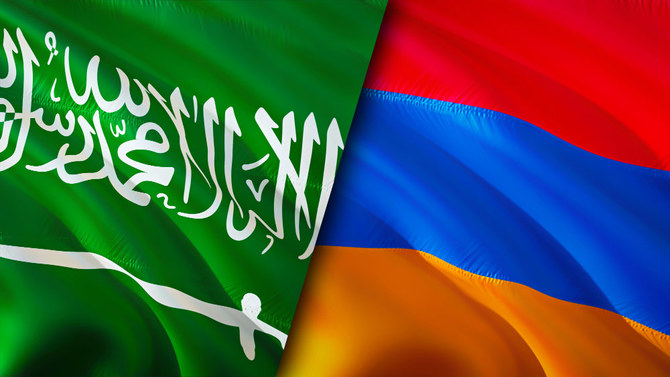


The recent establishment of diplomatic relations between Saudi Arabia and Armenia marks a notable shift in international relations for both countries, historically marked by Armenia’s conflict with Azerbaijan and strained relations between Saudi Arabia and Armenia’s traditional regional ally, Russia. At the same time, it represents a significant development in Euro-Gulf relations, introducing a new dimension to the diplomatic and economic engagements between the wider European community and the Gulf Cooperation Council (GCC), as well as a symbolic bridge between one of the oldest Christian countries in the world and the birthplace of Islam.
This diplomatic milestone was formally inaugurated on 25 November 2023, when the Armenian and Saudi Ambassadors to the United Arab Emirates (UAE) signed a protocol in Abu Dhabi, pledging to enhance cooperation across various sectors including politics, economy, technology, development, trade, and culture.
(1) This agreement ends decades of non-recognition by Saudi Arabia, largely due to Armenia’s ongoing conflict with Azerbaijan over the Nagorno-Karabakh region and past alignment with regional rivalries.
The evolving dynamics of Saudi relations with Turkey have helped enable the creation of new pathways for diplomatic engagement between Riyadh and Yerevan. This was notably apparent during (then) President Armen Sarkissian’s visit to Riyadh in 2021, where he joined Crown Prince Mohammed bin Salman at a significant international conference. This visit underscores the potential for expanded collaboration and partnership between the countries. In addition to diplomatic engagement, there have been tangible advancements in bilateral cooperation. For instance, the initiation of direct flights by Saudi airline Flynas to Yerevan in June 2023 aims to boost tourism and personal exchanges. Furthermore, Armenia’s supportive stance towards Saudi Arabia’s bid to host Expo 2030 indicates a growing alignment in international forums.
During a recent visit to Saudi Arabia, Armenian Minister for Foreign Affairs Ararat Mirzoyan presented to his Arab counterparts the so-called Crossroads of Peace, an infrastructural initiative aimed at fostering stability and peace through the enhancement of transport infrastructure across the South Caucasus. By advocating for the unblocking of roads and railways that connect Armenia with neighbouring Azerbaijan and Turkey, the initiative seeks to bolster economic benefits and ensure regional peace. Mirzoyan emphasized the importance of respecting national sovereignty, jurisdiction, and reciprocity in these efforts, suggesting that such infrastructure developments should remain under the control of their respective countries and abide by national laws. This approach not only seeks to improve economic interconnectivity but also positions transportation as a foundational element for sustained peace in the region. According to Mirzoyan, the initiative could have global impact, as several countries could be interested in connecting, for instance, the Arab Gulf with the Black Sea region.
(2) These developments suggest a strategic pivot for Armenia as it seeks to diversify its international partnerships beyond its traditional ally Russia. For Saudi Arabia, it reflects a broader strategy of enhancing regional influence by engaging with a diverse array of states, aligning with its Vision 2030 goals of economic diversification and enhanced international cooperation. This new chapter in Armenian-Saudi relations could also potentially contribute to broader peace and stability in the region, given the complex interplay of geopolitical interests in the Middle East and the South Caucasus.This evolving partnership could potentially contribute to greater peace and stability in the Middle East and the South Caucasus, illustrating the complex interplay of geopolitical interests that shape global diplomacy. This new chapter in Armenian-Saudi relations marks not only a significant diplomatic achievement but also a promising foundation for future cooperation on a variety of global issues.