


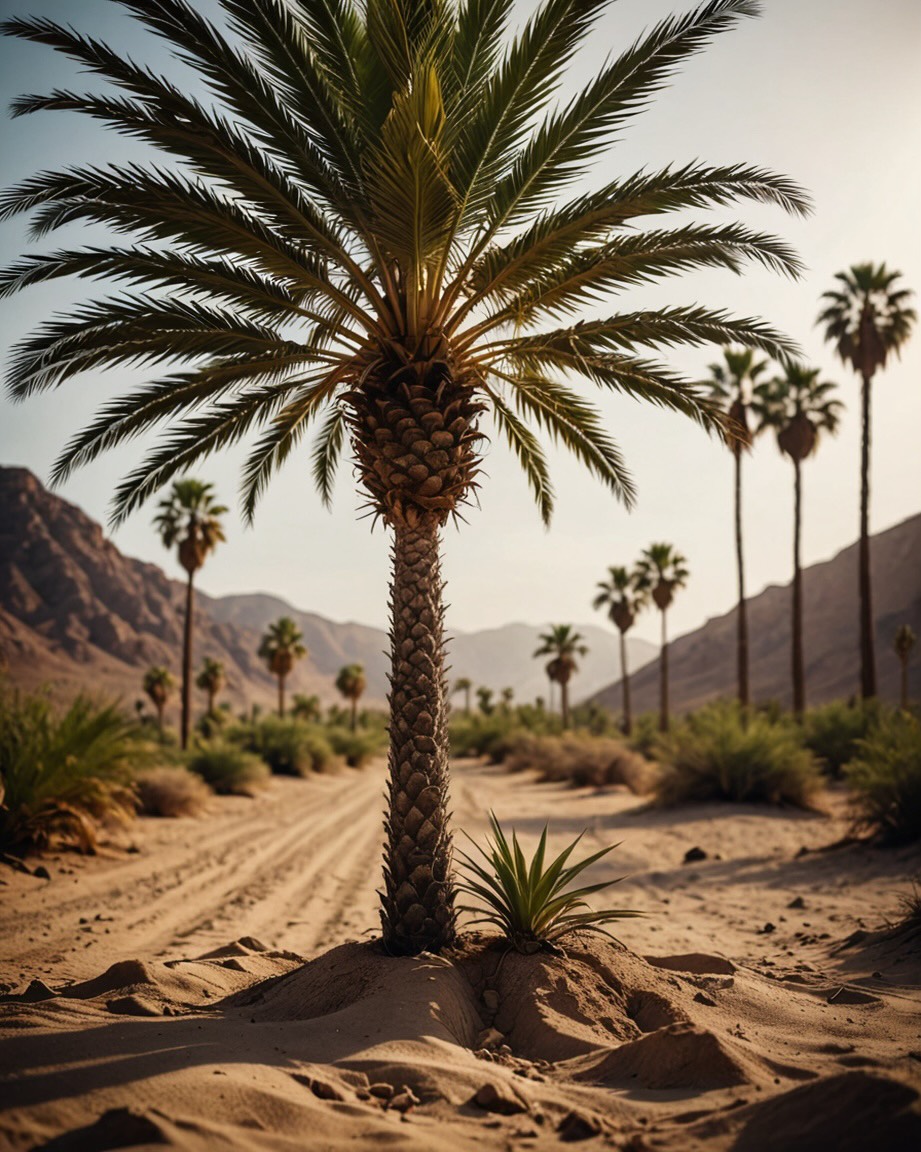


For centuries, the deserts of Arabian have symbolised wild nature where the sun blazes unchallenged and life exists in a perpetual struggle for survival. Today, Saudi Arabia is rewriting that narrative and aims to flip the script on one of the harshest environments on Earth. The ambition is to turn sand into greenery, lifeless expanse into flourishing ecosystems and to halt the process of desertification. The implications are monumental—not just for the country but for a world grappling with the intertwined crises of climate change, water scarcity, and food insecurity.
Desert greening is more than an environmental endeavour, it’s also a strategic necessity. To address urgent ecological and economic challenges, Saudi Arabia has launched bold initiatives like the Saudi Green Initiative and the Riyadh Green Project. These are not symbolic tree-planting campaigns but calculated moves to restore ecological balance, boost resilience against climate change and secure long-term sustainability. What sets Saudi Arabia’s strategy aside is its scale as it aims to plant 10 billion trees. Getting this right means threading a needle between bold ambition and scientific precision, choosing the right plants, implementing the right irrigation systems, and ensuring long-term viability in a landscape notorious for reclaiming its own.
Desert Greening: The New Environmental Frontier
Desert greening is not only about survival, but redefining possibilities. For decades, deserts were seen as wastelands but science now reveals them to be frontiers for environmental restoration and innovation. Transforming deserts into thriving spaces is no longer a dream, but a vital tool against climate change, biodiversity loss, and food insecurity. Desert greening is a delicate balancing act involving cutting-edge technology to restore ecosystems degraded by centuries of overuse and neglect and is therefore far beyond simply planting trees. In Saudi Arabia, this means rethinking every step of the process, from studying soil microbes to using water management systems that maximise efficiency.
Globally, desert greening proves even hostile environments can support life with the right mix of innovation and respect for local conditions. Africa’s Great Green Wall has demonstrated how large-scale afforestation can stabilise soil and combat desertification, while Israel’s precision irrigation has turned arid land into fertile ground.
Inspired by China’s Loess Plateau restoration, Saudi Arabia is creating a detailed soil atlas to identify areas best suited for reforestation and agriculture. By combining global insights with local expertise, it is crafting a tailored strategy that respects its unique environment while advancing arid land management. So Saudi Arabia is not only taking notes, but it’s also charting its own path, leveraging AI, biotech, and indigenous knowledge to create a uniquely Saudi solution to a global challenge.
The true innovation in desert greening lies underground. Healthy soil is the foundation of Saudi Arabia’s ambitious plans—without it, planting and irrigation efforts would fail. At KAUST, scientists are pioneering research into the microbial ecosystems that sustain desert soils, actually beneath the arid surface lies a network of microbes, fungi, and bacteria essential for plant growth. By restoring these depleted communities, researchers “reboot” the soil, enabling it to retain water and nourish plants.
A groundbreaking initiative is the creation of a desert biobank, housing microbial species native to arid regions. These microbes, studied for their ability to support plants in harsh conditions, also show promise in sequestering carbon as stable compounds like calcium carbonate. KAUST researchers are also using advanced AI to map plant-microbe interactions, predicting the best microbial combinations for specific plants and soils. This precision approach maximises success and minimises waste, enhancing the efficiency of desert greening efforts. By focusing on the invisible ecosystems beneath the sands, Saudi Arabia is building the foundations of a sustainable future.
The Saudi Green Initiative: A Bold Vision with Big Numbers
Saudi Arabia’s ambition shines through the Saudi Green Initiative, a cornerstone of Vision 2030. This massive project aims to plant 10 billion trees within the country and contribute to a regional goal of 50 billion. Beyond the impressive numbers, the initiative represents a shift in how humanity interacts with the environment. From urban greening projects like the Riyadh Green Project — set to plant 7.5 million trees in the capital — to green corridors linking fragile ecosystems, the initiative envisions a resilient, biodiverse future. The plan extends regionally, fostering cooperation on afforestation to address shared challenges such as dust storms and water scarcity. With billions invested and global partnerships underway, the Saudi Green Initiative positions itself as a model for tackling desertification and climate change on a global scale.
Challenges, Opportunities, and the Road Ahead
Desert greening in Saudi Arabia is ambitious but comes with significant challenges, particularly water scarcity. The country receives minimal rainfall and relies heavily on energy-intensive desalination. To address these issues, the Saudi Green Initiative prioritises drought-resistant native species like acacia, which require less water, stabilise soil, and support biodiversity. Innovative water solutions, such as fog nets and treated wastewater for irrigation, further enhance sustainability. Climate change adds complexity, with rising temperatures and erratic rainfall threatening fragile ecosystems. Expanding vegetation cover could help mitigate these impacts by cooling urban areas and reducing dust storms, transforming the desert into a climate adaptation tool.
Economically, desert greening aligns with Vision 2030 by creating jobs, boosting tourism and enhancing food security. Projects like the Riyadh Green Project, which aims to plant 7.5 million trees, provides employment in planting and maintenance while offering environmental benefits. Sustainability also depends on community engagement. Public outreach and environmental education foster a culture of responsibility, encouraging citizens to actively participate in tree planting and care, ensuring long-term success.
Saudi Arabia’s vision extends to a future where, by 2050, barren sands give way to lush oases and green corridors. Cities like Riyadh, once plagued by dust storms and heat, now feature vibrant parks and shaded streets. At the heart of this transformation is the goal of carbon neutrality by 2060, with desert greening playing a critical role. Vegetation captures CO₂, and research into plant-microbe symbiosis is further enhancing this process, turning deserts into carbon sinks. Greening efforts also aim to restore biodiversity, reintroduce endangered species, and revitalise agriculture. Urban greening projects promise cooler, cleaner cities, while restored ecosystems could boost food security by improving local agriculture.
Saudi Arabia is also positioning itself as a leader in regional environmental restoration, with plans to plant 40 billion trees across the Middle East. This initiative not only combats desertification but also fosters regional cooperation and stability. Despite critics questioning Saudi Arabia’s ability to pivot from a fossil-fuel-driven economy to sustainability, investments in renewable energy, such as solar and wind, demonstrate commitment. However, the transition must be managed to ensure that water resources are sustainably used.
Ultimately, Saudi Arabia’s desert greening is not just about transforming landscapes; it’s about inspiring global change. Success here could offer a blueprint for restoring arid regions worldwide, demonstrating resilience, innovation, and hope. This bold vision reimagines deserts not just as places to endure but as spaces where life can thrive, essential for the planet’s future.
Bibliography
- EarthBlue, ‘Transforming the Desert: A Guide to Desert Greening in Saudi Arabia,’ EarthBlue, 06 March 2024. Available at: https://www.earthsblueaura.com/desert-greening-in-saudi-arabia/.
- UNEP, ‘Saudi Arabia strives to regreen deserts to tackle drought and land degradation,’ UNEP Website, 2024. Available at: https://www.unep.org/news-and-stories/story/saudi-arabia-strives-regreen-deserts-tackle-drought-and-land-degradation.
- Saudi Vision 2030, ‘Green Saudi Initiative,’ Vision 2030 Official Website, 2024. Available at: https://www.vision2030.gov.sa/en/explore/projects/saudi-green-initiative.
- Hirt, Heribert, ‘Pioneering Plant Projects Promise Regeneration,’ KAUST Insight, 16 February 2024. Available at: https://insight.kaust.edu.sa/2024/02/16/pioneering-plant-projects-promise-regeneration.
- Freethink, ‘Desertification is destroying fertile land. Here’s how we can reverse it,’ Freethink, 2024. Available at: https://www.freethink.com/energy/desertification-desert-greening.
- NEOM, ‘NEOM launches Regreening Initiative for planting 100 million trees,’ NEOM Official Website, 2024. Available at: https://www.neom.com/en-us/newsroom/neom-regreening-initiative.
- Rijksoverheid, ‘Desertification in the Gulf region: initiatives to facilitate green transformation,’ AgroSpecials, 2024. Available at: https://magazines.rijksoverheid.nl/lnv/agrospecials/2024/04/saudi-arabia.
- MDPI, ‘A Tree-Planting Vehicle for Promoting the Sustainable Development of Desert Greening,’ MDPI Sustainability Journal, Vol. 14, No. 15, 2024. Available at: https://www.mdpi.com/2071-1050/14/15/9171.
- Boell Foundation, ‘Regreening the desert: land and water management in the Middle East,’ Boell Foundation, 2024. Available at: https://www.boell.de/en/2024/03/15/regreening-desert-land-and-water-management-middle-east.