




The autumn 2024 Party Conference season is underway for the British political establishment, with the UK’s new centre-left Labour Government hosting their first conference in power in 15 years.
This summer Keir Starmer successfully led his Party through a bruising election campaign and brought to an end a decade and a half of Conservative Party rule. However, unlike the 1980s and Thatcherism, or the turn of the Millennium and the era of Tony Blair and New Labour, there has been no dominant personality, or apparent coherent ideological and political thread in this period. In part this is due constant leadership kaleidoscopic with five Prime Ministers David Cameron, Theresa May, Boris Johnson, Liz Truss, and Rishi Sunak. This was further compounded by two financial crises, the massive constitutional shift resulting from the UK’s exit from the European Union (EU), a once-in-a-century global pandemic, the passing of the beloved monarch, Queen Elizabeth II, and the war in Ukraine. It has regrettably led to a drift, at times, as to the UK’s prowess on the world stage.
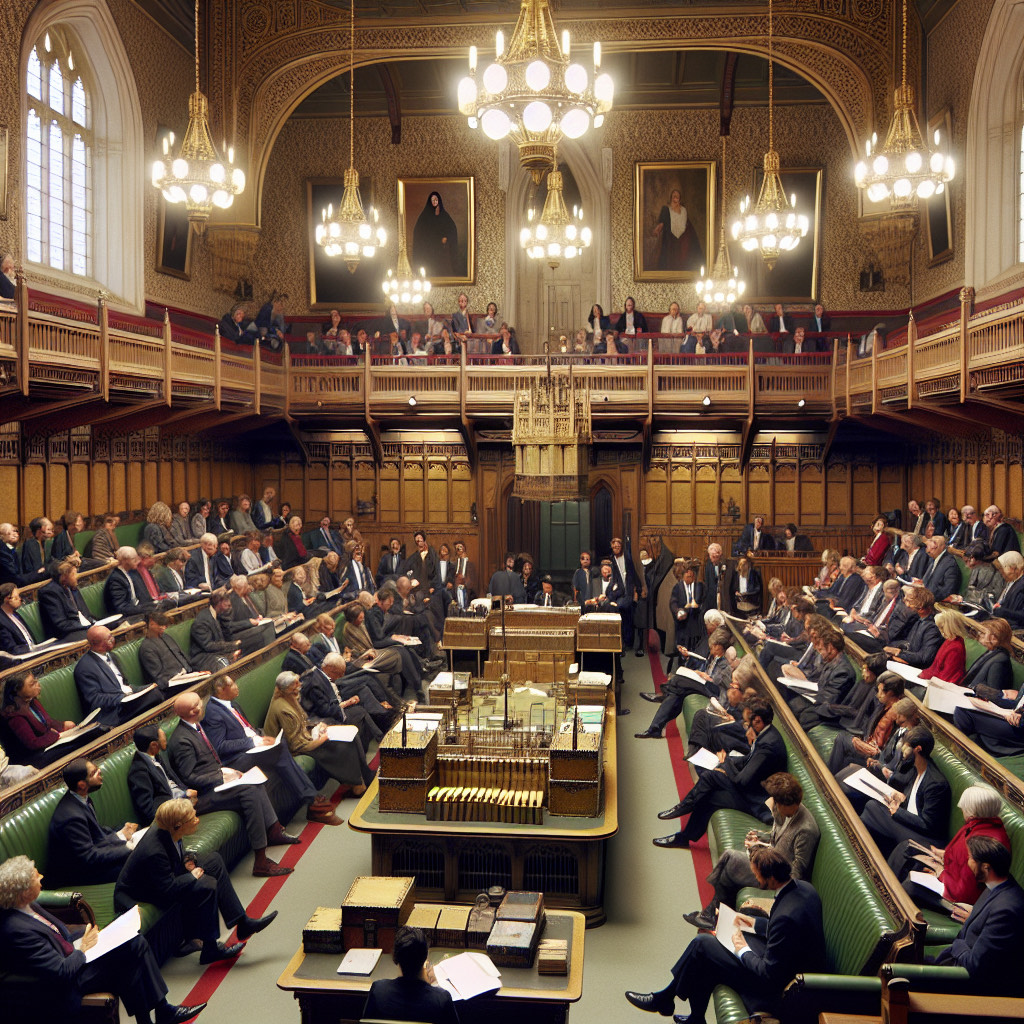
The new political reality, while far from perfect, affords the UK a period of potential stability, at least in terms of parliamentary governance. With 411 seats, the Labour Party enjoy a massive 172 seat majority in the House of Commons, the Conservatives far behind with their lowest ever seat total at 119 and consigned to irrelevance, for now. Prime 1 Minister Keir Starmer wields immense power both domestically and abroad with this degree of parliamentary control and the agenda is his to exercise as he sees fit.
Within days of taking the keys to 10 Downing Street, Starmer made his first appearance on the global stage as the leaders of 32 NATO Allies gathered in Washington, D.C. to mark the 75th anniversary of the signing of the North Atlantic Treaty. The eyes of the world, including of the UK’s allies in the Arabian Gulf region, had an opportunity to begin their assessment of one of the international community’s newest leaders. The stability of Starmer’s government stands in stark contrast to the political zeitgeist encapsulated by many other major powers. Looking across the ocean to the United States (US), the lame- duck Biden administration enters its final months in office, after the incumbent President was somewhat ungraciously forced out of the presidential race. The uncertainty of a second Trump term looms large with polls in the major swing states within the margin-of-error between himself and Vice President Harris.
As to the other two major actors in the UK’s regional European neighbourhood, Germany and France, their respective governments are far from firm-footed. President Emmanuel Macron’s snap-election ahead of the Paris Olympics led to a broadly deadlocked National Assembly with the populist-left on top, followed by his own centrist liberal bloc, and the right’s National Rally and its allies closely behind. Veteran centre-right French politician and the European Commission’s former Brexit Chief Negotiator Michel Barnier now serves as French Prime Minister in an entirely unstable and weak government.
In Germany the future of their traffic-light coalition government between the Social Democrats, Greens and Liberal looks entirely in-doubt. Chancellor Olaf Scholz’s position weakens by the day as he’s force to harden migration policy in part due to the political pressures of the populist-right AfD’s series of successful regional election results and the centre-right CDU/CSU upward surge in the polls.
In the midst of disarray elsewhere, can the energy of a new government and Starmer’s relative political stability translate beyond the shores of the British Isles? The Prime Minister’s supposed ‘reset’ in relations with the EU seems be little more than rhetoric for now. The European Commission’s expectation that the new Labour Government would reverse its predecessor’s decisions and establish a youth mobility scheme with the EU and rejoin Erasmus has proven misguided. For the most part it appears Starmer is leaning into the former Conservative Government’s post-Brexit mantra of ‘Global Britain’ with a continued emphasis on pursuing international free-trade agreements. While some in the halls of Brussels would prefer a little more attention from its British neighbours, it would appear the GCC could benefit this continuity trade policy.
Shortly after taking office in July, the new UK Government announced its intention to deliver a high-quality trade deal with the GCC. This commitment has since materialised into action. Ahead of the UK hosting the International Investment Summit on 14 October, Business and Trade Secretary Jonathan Reynolds and Trade Policy Minister Douglas Alexander choose the Arabian Gulf for their first joint international visit since taking office and met their GCC counterparts in Riyadh to discuss how to boost trade between both sides. With some UK governmental estimates suggesting a trade deal with the GCC could benefit the British economy in the tune of £1.6 billion in the long term , it clear why the 2 new government prioritised their Gulf partners ahead of next month’s major summit.
A new dawn has broken in Britain, a seismic political change, but how or even if this will comprehensively translate geopolitically, and specifically to the GCC has yet to be seen. One thing is certain though, the Labour administration is here to stay in Britain for the foreseeable future.
Resources
- General election 2024 results, House of Commons Library, 7 July 2024, https://commonslibrary.parliament.uk/research-briefings/cbp-10009/
- UK ministers visit Gulf to boost trade and investment, UK Government, 16 September 2024, https://www.gov.uk/government/news/uk-ministers-visit-gulf-to-boost-trade-and-investment