





Abstract—There is a growing competition to acquire microchips and semiconductors. With the US and China locked in an enduring rivalry many other states and blocs are being impacted in their own quest to obtain the amounts needed for their AI and downstream security interests. The GCC states are among those that now face an importation restriction from the US. This article looks at the competitive world of microchips and semiconductors and assesses how the GCC states are coping.
Keywords—AI, semiconductors, microchips, GCC, US, China, Nvidia, defence
The Gulf Cooperation Council (GCC) countries have a growing interest in gaining access to Artificial Intelligence (AI) technologies. More specifically, the GCC has been looking to break into the semiconductor and microchip industry to achieve further economic diversity and stay internationally competitive. To do this, the GCC has attempted to gain partnerships with both China and the United States (US) to have access to these technologies. However, US export controls on semiconductors have made this a difficult endeavour, prompting diplomatic talks to curb the effects these export controls will have on GCC advancements in the sector. If the GCC were to advance AI diplomacy initiatives, it would generate a new industry in the region — contributing to economic diversification — but also create a strengthened diplomatic partnership with either China or the US.
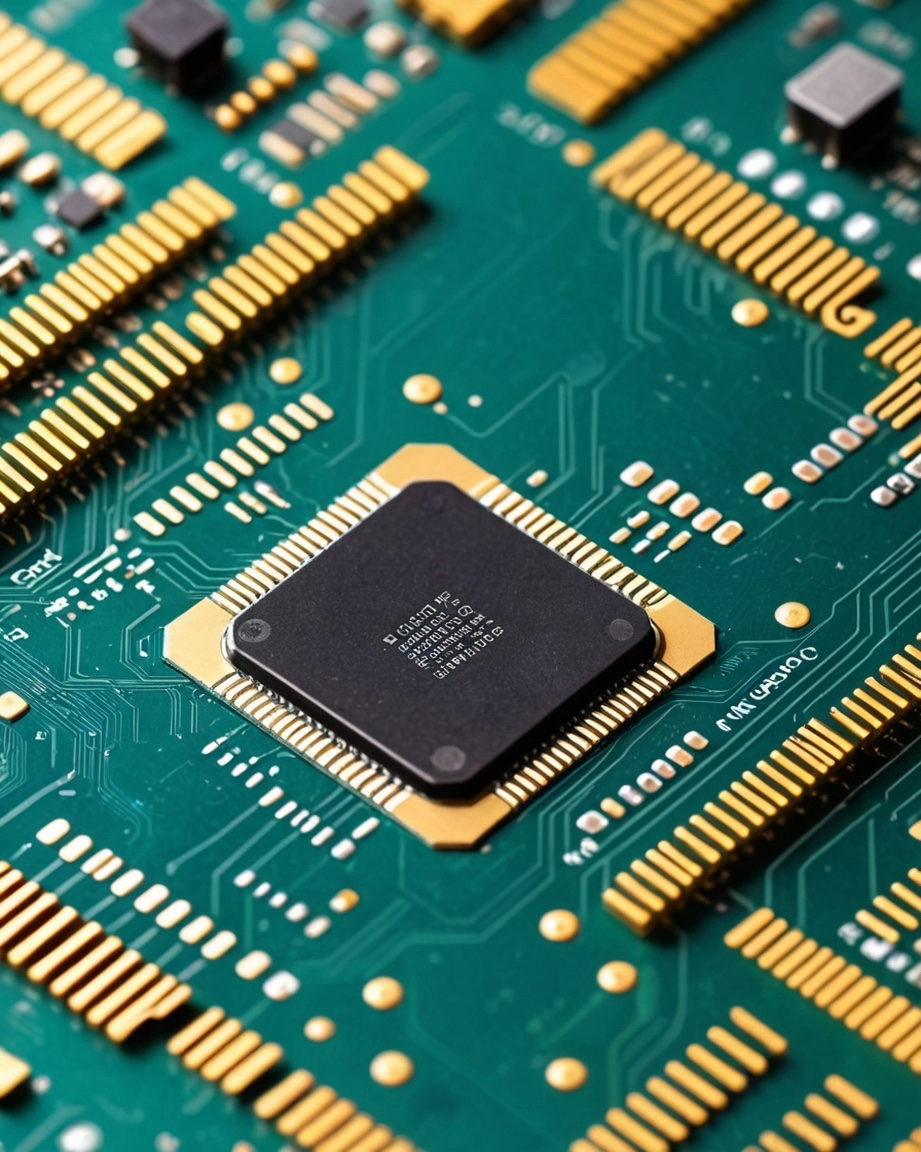
The words “microchips” and “semiconductors” have been used more frequently in mainstream media and politics. Microchips are pieces of technology that have multiple electronic circuits and allow an electronic device to operate. Semiconductors are different from microchips, but the two technologies function together. Semiconductors refer to the material that is used for microchips, which prompts the electronic circuit on the microchip to work. A microchip, therefore, is the result of placing the electronic components on the semiconductor, which makes the entire circuit complete. In 2022 the global semiconductor industry sold 573.5 billion euro, signifying the global reach these technologies have had within the world.
Microchips and semiconductors are highly sought after because the materials can be used for any piece of technology, including a country’s defence system. All the defence systems in the US, for example, use semiconductors. If a country’s capacity for microelectronics weakens, it puts the state in a position where its capabilities are diminished and is no longer able to defend itself or its allies as effectively. The growing importance of these chips prompted China to join the race for AI and microchip technologies, causing tension with the US. China has started to build up its own capabilities for semiconductors in its own national defence strategies and is looking to beat its competitor in production. In 2022 the US placed export controls on semiconductors to curb China’s advancement. Since the placement of the export controls, China’s output of semiconductors dropped by around 17% in early 2023. All six GCC countries, as well, were placed under the US export control of chips “under country group D:4 (Missile Technology),” contributing to the bloc’s difficulties in breaking into the AI sector.
Nvidia is one company that has been highly successful in the creation of AI chips and technologies. It has become the third largest company in the world–passing Saudi ARAMCO and slightly behind Microsoft and Apple–and is valued at $2.6 trillion (USD) as of May 2024. The success of this company has prompted both the United Arab Emirates (UAE) and Saudi Arabia to develop partnerships with Nvidia. Saudi Arabia has partnered with Nvidia under the Saudi Data and AI Authority (SDAIA) to create a centre for generative AI and test a version of the Arabic Large Language Model application (Allam). The Saudi Government has also purchased around 3,000 units of Nvidia’s graphics processing units (GPUs), costing around $40,000 (USD) per unit. The UAE, on the other hand, has already “secured thousands” of these units. Outside of Nvidia, Saudi ARAMCO has created the Aramco Metabrain AI, and A1 Moammar Informations Systems invested $5 million (USD) in Anthropic–the creator of Large Language Model (LLM) Claude.
The UAE is making moves of its own in the realm of AI. The UAE’s AI technology company, G42, has partnered with Nvidia on climate technologies, with a focus on developing AI solutions for weather forecasting accuracy. This includes the creation of a climate tech lab in Abu Dhabi. G42 has also partnered with U.S. based companies like Microsoft., which announced that it will be investing $1.5 billion (USD) into G42, along with opening two centres in Abu Dhabi. Furthermore, the investment company MGX (which is backed by Abu Dhabi) will be partnering with BlackRock and Microsoft to invest $30 billion (USD) in AI infrastructure. These partnerships came before the President of the UAE, Sheikh Mohamed bin Zayed al-Nahyan, met with US President, Joe Biden, in Washington to discuss these advancements.
The meeting between President Biden and President Sheikh Mohamed bin Zayed al-Nahyan was the UAE President’s first official trip to the US in seven years, signifying the UAE’s push for a relationship over AI with the US. The meeting requested instructions for a memorandum of understanding on AI cooperation, bilateral investments in AI, and licensing changes. President Biden announced that the UAE would now have “major defence partner” status like India, along with a strengthening of security ties through joint military training and exercises. The meeting did not change the status of US export controls, though.
According to the Middle East Council on Global Affairs, if the GCC countries wish to be successful in AI expansion and competition, the countries should choose a policy direction that would be the most beneficial for the nations. The actions by the UAE could be a sign that the Emirati Government is signalling its next policy direction as moving towards the US, instead of China. The GCC countries have originally used China’s Huawei 5G technologies, but the export controls have changed the supply chain routes and blocked China from accessing chips. This, in turn, blocks the GCC from advancing their own technologies. Saudi Arabia and the UAE being end-users on the supply chain, and not producers, creates even larger barriers to entry. Therefore, the shift towards working with the USmay be more beneficial for the GCC, as the United States is controlling a large majority of AI technologies.
If the GCC were to continue diplomacy talks on AI technologies, it would benefit not only the technology sector, but economic diversification. Diplomatic talks can also help a nation decide which policy directions are most beneficial for growth and where it would best fit into the supply chain–advancing the possibility for the GCC to become producers in AI, instead of end-users. The tensions between China and the United States are continuing to grow. While there are many factors at play in these tensions, diplomacy is still a route. The result will be beneficial both for the GCC, and the international community. The Gulf can use this strategy to advance relations and solidify the group’s status in AI technologies before more barriers to entry are set and the opportunity to advance will not be available anymore.
Resources
[i] ASML. “The Basics of Microchips.” ASML n.d. https://www.asml.com/en/technology/all-about-microchips/microchip-basics.
[ii] Richard Electronics. “Semiconductor vs Microchip vs Integrated Circuit: Unraveling the Differences.” Richard Electronics, 2024. January 11. https://www.richardelectronics.com/blog/news/other/semiconductor-vs-microchip-vs-integrated-circuit-unraveling-the-differences.
[iii] ASML. “The Basics of Microchips.” ASML n.d. https://www.asml.com/en/technology/all-about-microchips/microchip-basics.
[iv] Shivakumar, Sujai, and Charles Wessner. “Semiconductors and National Defense: What Are the Stakes?” Center for Strategic & International Studies, 2022. June 8. https://www.csis.org/analysis/semiconductors-and-national-defense-what-are-stakes.
[v] Tan, Catherine. “Breaking the Circuit: U.S.-China Semiconductor Controls.” Foreign Policy Research Institute, 2024. September 16. https://www.fpri.org/article/2024/09/breaking-the-circuit-us-china-semiconductor-controls/#:~:text=In%20October%202022%2C%20the%20Biden,superiority%20and%20address%20security%20concerns.
[vi] Park, June. “AI Competition amid Expansion of U.S. AI Chip Export Controls into the Gulf.” Middle East Council on Global Affairs, 2024. June 30. https://mecouncil.org/publication/ai-competition-amid-expansion-of-u-s-ai-chip-export-controls-into-the-gulf/.
[vii] Park, June. “AI Competition amid Expansion of U.S. AI Chip Export Controls into the Gulf.”
[viii] Ibid.
[ix] Maccioni, Federico. “UAE’s AI Firm G42 and Nvidia to Team up on Climate Tech.” Reuters, 2024. September 20. https://www.reuters.com/technology/artificial-intelligence/uaes-ai-firm-g42-nvidia-team-up-climate-tech-2024-09-20/.
[x] Wheeler, Kitty. “UAE Pushes for More US AI Technology in Presidential Meeting.” Technology Magazine, 2024. September 24. https://technologymagazine.com/ai-and-machine-learning/uae-pushes-for-more-us-ai-technology-in-presidential-meeting.
[xi] Park, June. “AI Competition amid Expansion of U.S. AI Chip Export Controls into the Gulf.” Middle East Council on Global Affairs, 2024. June 30. https://mecouncil.org/publication/ai-competition-amid-expansion-of-u-s-ai-chip-export-controls-into-the-gulf/.
[xii] Park, June. “AI Competition amid Expansion of U.S. AI Chip Export Controls into the Gulf.”