


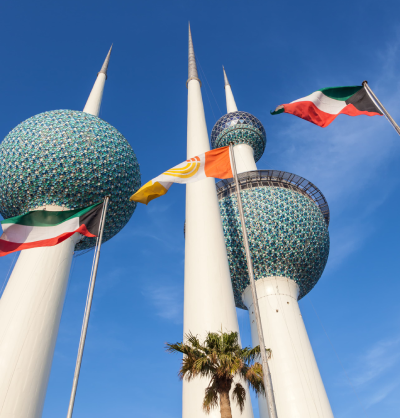

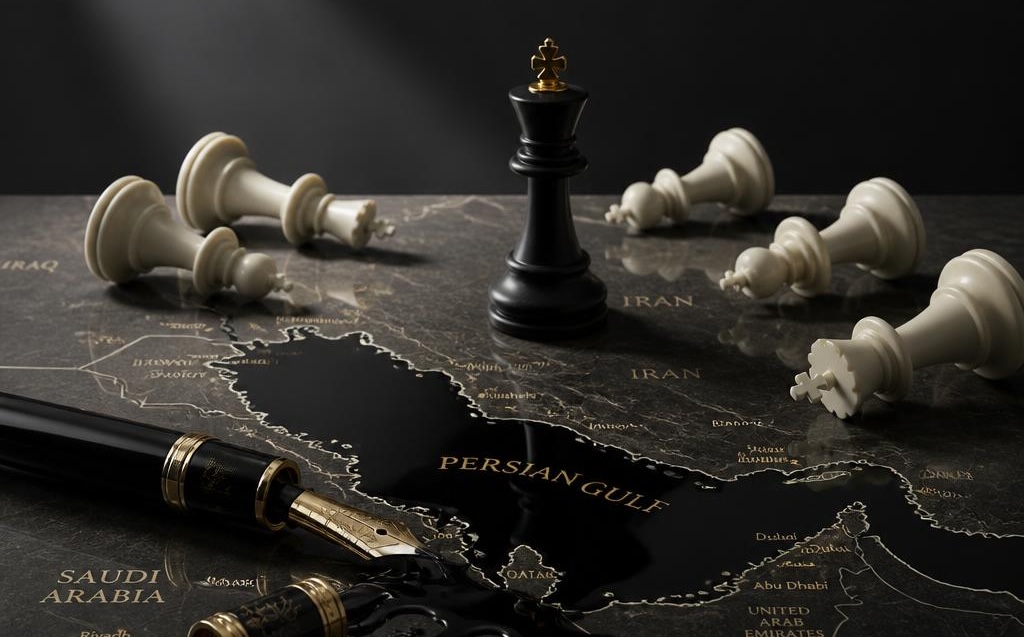


Iranian forces have sharply escalated hostilities in the region by striking key civilian infrastructure and alleged US-linked military installations across Bahrain and Kuwait. Beyond the immediate destruction, these strikes have sent shockwaves through global energy markets, spiking risk premiums for maritime shipping and threatening the stability of critical trade corridors. This assault marks not just a breach but the definitive burial of Washington’s fragile Memorandum of Understanding. Intended as a vehicle for de-escalation, the agreement has now been shattered, exposing both its structural emptiness and the absence of any durable peace framework in the Gulf.
The collapse of the MoU was virtually predetermined by its design flaws. From inception, it lacked a commencement date, structured sequencing, and concrete deadlines. Without a timeline, there were no objective benchmarks to measure compliance, rendering the agreement unenforceable from day one. This procedural weakness was compounded by the absence of enforcement mechanisms; the text contained no penalties or escalation clauses if commitments were broken, leaving Iran with zero deterrent against violating the spirit of the deal.
Equally damaging was the MoU’s avoidance of the region’s core disputes. By sidestepping Iran’s advancing nuclear programme, its ballistic missile arsenal, and its extensive proxy networks, negotiators settled for a superficial ceasefire rather than a substantive security settlement. In effect, the MoU was a tactical pause to reopen maritime traffic and mitigate immediate risks, not a foundation for lasting peace. A genuine framework would have required binding commitments, verification, and enforcement—none of which were present. As a result, the agreement remained highly vulnerable to collapse the moment Tehran recalculated its strategic interests.
Deep-seated mistrust among Iran, Washington, Israel and Gulf states ensured that even minor frictions were interpreted as proof of bad faith. For Gulf capitals, the MoU was already viewed with scepticism—seen less as a genuine security guarantee and more as an American attempt to temporarily manage tensions. Iran’s renewed aggression has validated these anxieties, reinforcing the perception of US unreliability and leaving Washington caught in a dangerous strategic trap; the US must now either launch a kinetic military retaliation that risks the wider war it sought to avoid or stand down and finalise the erosion of its regional credibility.
Moving forward, the collapse of this framework is a stark reminder that loosely defined arrangements cannot substitute for enforceable treaties. For Gulf states, the assault confirms that Tehran remains committed to projecting power through coercion and that US-brokered frameworks without teeth offer no real protection. The strategic consequence will likely be accelerated Gulf-Israel defense coordination, deeper intra-Gulf military cooperation, and a search for alternative security guarantees beyond Washington. This vacuum opens a critical door for Beijing and Moscow, both eager to position themselves as alternative diplomatic and defense partners. The illusion of de-escalation is over; deterrence, not dialogue, will now define the Gulf’s strategic calculus.