

On 22 April 2024, the first European Union (EU)-Gulf Cooperation Council (GCC) High Level Forum on Regional Security and Cooperation brought EU Foreign Affairs Ministers and their GCC counterparts together in Luxembourg. Co-chaired by EU High Representative, Josep Borrell, and Qatari Prime Minister and Minister of Foreign Affairs, Mohammed bin Abdulrahman Al-Thani, the meeting was a timely opportunity for an exchange of views between the two regions on ways to coordinate on issues related to regional and global stability and security. While the spotlight was clearly on Gaza, the Red Sea, and the wider Middle East, discussions also touched upon Ukraine.
The Forum was part of ongoing efforts to forge closer ties between the two blocs. The shift in the EU’s approach to the GCC became more apparent following Russia’s invasion of Ukraine (February 2022) with the subsequent search for partners to alleviate its energetic and economic impact on European countries and revelations about Iran’s drone supplies to Russia for use in Ukraine. At the same time, the Arab Gulf countries have been seeking to enhance their international partnerships beyond Washington. With many GCC countries set on advancing their development and socio-economic strategies, they have become increasingly active internationally, looking for ways to calm regional tensions.
The EU’s previous approach to the Gulf was inefficient; it overemphasised its diplomatic efforts to limit Iran’s nuclear ambitions, ignoring wider security dynamics that included the proliferation of militias and terror groups under Tehran’s control, Iran’s vast missile and drone programmes, and engaging the GCC, and its members, only as a footnote to its Iran policy. This strategic error has contributed to the current state of affairs and the EU is forced to play catch-up especially as Brussels now recognises that empowering Iran worked against European interests at the expense of the GCC countries which, for the most part, support the status quo and the rules-based international system.
Turning a new page, the EU released its ‘Strategic Partnership with the Gulf’ document in May 2022, outlining the steps to strengthen relations with the GCC countries. It also appointed its first Special Representative for the Gulf (2023), and intensified exchanges and high-level engagements with the GCC countries through various initiatives, such as the Young Leaders in Regional Diplomacy Programme. Focus is increasingly on regional security with several key events preceding the 22 April High Level Forum, including the first EU-GCC Regional Security Dialogue (January) and the launch of GCC’s Regional Security Vision (March), with more to come. Building trust and understanding will be essential along with identifying areas of cooperation and recognising that although EU-GCC priorities will not always align, there are common security challenges — from maritime security to counter-terrorism and cyber security — that affect both EU and GCC security, challenges that can only be properly addressed through robust joint action. High level forums are a good starting point to encourage understanding and coordinating joint responses to shared issues, but they must be followed up with concrete initiatives to avoid the photoshoot phenomenon where, once the lights go out on the stage, so does the cooperation.
Health and Safety Week in Dubai
The Dubai Municipality’s recent initiative to launch a Health and Safety Week demonstrates the Emirates’ proactive attitude to promoting a different health culture among its population. This comes against the backdrop of a global push to live healthier lives in a more sustainable fashion. Although the main objective of the event was to raise awareness, it is also important to gauge the economics of healthy living because it reduces healthcare costs and increases happiness and, with it, efficiency. Importantly, this may be regarded as a strategy to complement other aspects of UAE, and indeed the regions, development strategy. Consider that the entire region is experiencing a general rethink of their urbanisation plans; they are all moving towards smarter cities… and smarter citizens. But people need to be healthy in order to be smart—a healthy mind requires a healthy body and vice versa.
The idea of the Health and Safety Week is not new and the manner in which it has been implemented, as a platform for best practices and lessons learned can certainly help the next generation get ready for the challenges ahead. The UAE has long sought to provide innovative solutions to combat health related ailments. For instance, in 2013, the UAE developed a scheme to combat obesity by offering one grams of gold for each kilogram lost. Apparently, the scheme ended in 2018 and the results were mixed. However, this shows the lengths that the UAE is willing to go in order to encourage more healthy living among the population.
With the COVID-19 pandemic still fresh in people’s minds, no may be the optimal time, globally, to rethink strategies of health for people and societies in general. After all, just like in war where generals struggle against doctrines built on past wars, it is important to look into the future and develop policies on what may be over the horizon. While it is impossible to predict the future with any degree of certainty, it is highly likely that the intersection between individual health and national health and sustainability is intimately linked.
A Technology Revolution is Underway
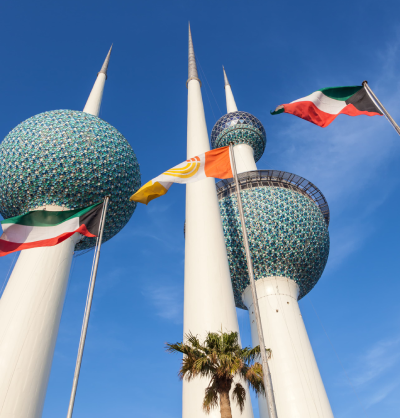
It is difficult to keep track of all the technological innovations unfolding around the Gulf region. Each country may have its own strategy, but they share the common ambition to — at warp speed — embrace a tech-driven reality. For this segment of the stratEGIC monthly, a small snapshot of Kuwait and Oman is taken to demonstrate this shift.
Consider that Kuwait’s rollout of its domestic biometric fingerprinting represents a key moment in the field of digital security and public administration. Through this new initiative, Kuwait aims to ensure more secure and efficient identification methods, reducing fraud and improving the accuracy of citizen and resident records. The technological upgrade proposed through this initiative shows the urgency of making consistent verifications and adjustments in all fields. The beginning of this practice will become part of a larger trend that will surely encourage the GCC to adopt more specific and sophisticated security measures to protect its citizens, thus achieving its dual goals of protecting and governing at the same time.
In Oman, there is a established plan to debut its first, domestically built, electric car later this year marking a turning point for new sustainable technologies and environmental protection in the country. The introduction of electric vehicles (EVs) is expected to accelerate the development of green infrastructure, like the implementation of charging stations in the country and new renewable and sustainable transports – useful to create an aware ecosystem. This initiative certainly represents a pivotal moment in automotive investment, as it will stimulate healthier economic growth while creating new jobs which is essential after the Covid-19 pandemic.
These developments in Kuwait and Oman are part of a wider technological revolution sweeping across the GCC. Countries in the region are increasingly investing in advanced technologies to transform their economies and societies. Artificial intelligence that is increasingly present in more and more areas, the promotion and use of new energies, and the creation of real smart metropolises are undoubtedly behind why the GCC is increasingly positioning itself as a centre of innovation and technological progress.