


5 Top Points
- President of the European Council visited Kuwait and Bahrain to discuss security and economic cooperation ahead of the EU-GCC Summit.
- The EU High Representative travelled to the UAE.
- Spain hosted a meeting of high-level officials on a two-state solution to the Israeli-Palestinian conflict.
- The UAE and Australia finalised negotiations on a Comprehensive Economic Partnership Agreement.
- Saudi Arabia and the UK discussed industrial and mining cooperation.
‘Round and About the Gulf’
Kingdom of Bahrain
Monday, 16 September—Saudi Arabia’s state-owned mining company, Ma’aden, and Aluminum Bahrain (Alba) agreed on non-binding terms for pursuing the formation of a global aluminium business to expand their presence across the world. As part of the proposed business agreement, Ma’aden has agreed to buy shares in Alba in exchange for the entire share capital of two of its subsidiaries, Ma’aden Aluminium and Ma’aden Bauxite and Alumina, both part of a joint venture with US aluminium producer Alcoa.
State of Kuwait
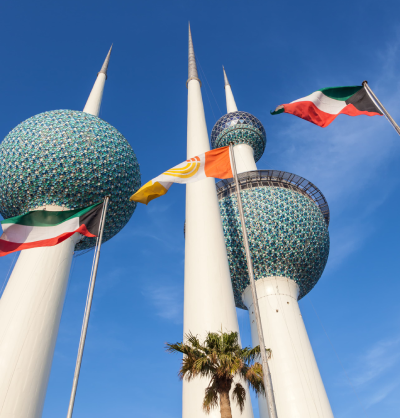
Monday, 16 September—Kuwait’s Foreign Minister, Abdullah Al-Yahya, confirmed that the ongoing talks to finalise the Schengen visa liberalisation agreement with the EU will be on the agenda of the upcoming EU-GCC Summit on 16 October in Brussels. It comes a year after the European Commission eased the Schengen visa application rules for Kuwaiti citizens.
Sultanate of Oman
Thursday, 12 September—The Oman Investment Authority (OIA), Oman’s sovereign wealth fund, plans to launch initial public offerings (IPOs) in key sectors, such as energy, services, and logistics, from 2024 to 2028 as part of its divestment strategy to boost revenues. It comes after the OIA raised 1 billion OMR between 2022-2023 with its divestment plan.
State of Qatar
Monday, 16 September—Qatar Energy and the Italian energy engineering company, Saipem, agreed on a $4 billion offshore engineering, procurement, and construction contract that will support the expansion of Qatar’s North Field and help to nearly double the country’s LNG output to 142 million tonnes per annum by 2030. The contract involves Saipem installing six offshore platforms and more than 100 kilometres of subsea pipelines, composite cables, and fibre optic cables.
Kingdom of Saudi Arabia
Monday, 16 September—Saudi Arabia announced plans to replace the Small Quantities Protocol agreement currently in place with the International Atomic Energy Agency (IAEA) with a Comprehensive Safeguards Agreement by the end of 2024. This development will give the IAEA access to stronger monitoring mechanisms over Saudi Arabia’s nascent nuclear energy sector.
United Arab Emirates
Tuesday, 17 September—The UAE and Australia finalised negotiations on a bilateral Comprehensive Economic Partnership Agreement (CEPA), Australia’s first trade deal with a country in the Middle East.
EU Corner
Monday, 16 September—Doha hosted the 13th GCC-EU Macroeconomic Dialogue which aimed to strengthen EU-GCC collaboration and tackle economic challenges and policy priorities, including investment strategies, the green economy, and economic diversification. The dialogue was co-chaired by Qatar’s Assistant Undersecretary for Economic Affairs at the Ministry of Finance, Saud bin Abdullah Al-Attiyah, the GCC Assistant Secretary General for Political Affairs and Negotiations, Abdel Aziz Aluwaisheq, EU Ambassador to Qatar, Christian Tudor, and European Commission’s Director of International Economic, Financial Relations and Global Governance (ECFIN), Annika Eriksgaard.
Monday, 16 September—The High Representative for EU Foreign and Security Policy, Josep Borrell, travelled to the UAE for talks with Minister of Foreign Affairs, Abdullah Zayed Al-Nahyan, Minister of State for Defence Affairs, Mohamed bin Mubarak Fadhel Al-Mazrouei, and Diplomatic Advisor to the UAE President, Anwar Gargash, to discuss the strategic relations between the EU and the UAE in preparation for the upcoming EU-GCC Summit to be held on 16 October in Brussels.
Friday, 13 September—President of the European Council, Charles Michel, visited Kuwait and Bahrain to discuss security and economic cooperation with the EU ahead of the upcoming EU-GCC Summit in Brussels. During the visits he met with numerous officials, most notably Kuwait’s Emir, Meshal Al-Ahmad Al-Jaber Al-Sabah, and Bahrain’s King, Hamad bin Isa Al-Khalifa.
Key Official Visits& Contacts
Wednesday, 11 September—UAE’s President, Mohamed bin Zayed Al-Nahyan, hosted the President of Cyprus, Nikos Christodoulides, in Abu Dhabi to discuss bilateral cooperation and explored opportunities to strengthen strategic relations, particularly in economy, trade, investments, and energy. They also focused on ways to de-escalate tensions in the region and cooperation on delivering humanitarian aid to the Gaza Strip.
Wednesday, 11 September—China’s Premier, Li Qiang, called for accelerating the China-GCC free trade agreement negotiations during his meeting with the GCC Secretary General, Jasem Al- Budaiwi, in Riyadh. On the occasion, the Chinese Prime Minister met with Saudi Arabia’s Crown Prince and Prime Minister, Mohammed bin Salman Al-Saud, to discuss cooperation in several fields, notably in energy, investment and trade.
Thursday, 12 September—The UAE President, Mohamed bin Zayed Al-Nahyan, and Chinese Prime Minister, Li Qiang, met in Abu Dhabi to discuss ways to expand the bilateral Comprehensive Strategic Partnership beyond energy cooperation. The UAE President reaffirmed his country’s support for China’s Belt and Road Initiative and both leaders emphasised the importance of pursuing a two-state solution to resolve the Palestinian issue.
Thursday, 12 September—Bahrain’s Chief of Human Rights Affairs, Ambassador Arwa Hassan Al-Sayed, met with a number of officials in the Netherlands, including the Ambassador for Human Rights Affairs, Vim Gert; the Director for North Africa and the Middle East, Josey Cortelas Teis; the Special Envoy for Religious Freedom, Bia Toscher; and the Ambassador for Women’s Affairs, Pieter Derk Hof, to discuss the Kingdom’s achievements in the field of human rights, exchanging experiences, and exploring opportunities for future cooperation between the two countries in this field.
Friday, 13 September—Spain’s Minister of Foreign Affairs, José Manual Albares Bueno, hosted a meeting on the implementation of the two-state solution in Madrid. It was attended by the foreign ministers and high-level representatives from Bahrain, Egypt, Ireland, Jordan, Norway, Palestine, Qatar, Saudi Arabia, Slovenia, Turkey and Qatar, as well the High Representative for the EU Foreign and Security Policy, Josep Borrell, the Secretary-General of the Arab League, Ahmed Aboul Gheit, and the Secretary-General of the Organisation of Islamic Cooperation, Hissein Brahim Taha.
Friday, 13 September—Saudi Arabia’s Minister of Foreign Affairs, Faisal bin Farhan Al-Saud, held talks with his Spanish counterpart, Jose Manuel Albares, in Madrid on the sidelines of the ministerial meeting on the two-state solution. They discussed bilateral ties and the latest regional and international developments, notably the Gaza war, and the preparations for the associated high-level event on the sidelines of the 79th session of the UN General Assembly.
Friday, 13 September—Bahrain’s Undersecretary of the Ministry of Foreign Affairs for Political Affairs, Abdullah bin Ahmed Al-Khalifa, met with the High Representative of the EU for Foreign Affairs and Security Policy, Josep Borrell, in Madrid, on the sidelines of the coordination ministerial meeting regarding the situation in the Gaza Strip. During the meeting, they reviewed the Bahrain-EU strategic partnership and cooperation and ways to enhance them. Additionally, the discussion included regional and international efforts to achieve a ceasefire in the Gaza Strip, protect civilians, deliver humanitarian and relief aid, and prospects for a just and comprehensive peace process in the Middle East.
Monday, 16 September—Oman’s Foreign Minister, Badr Al-Busaidi, and Iraq’s Deputy Prime Minister and Minister of Foreign Affairs, Fuad Hussein, held political talks in Muscat, Oman. The two discussed mutual cooperation in political, economic, trade and cultural sectors and the situation in the Gaza strip.
Monday, 16 September—The first meeting of the UAE-Kuwait military cooperation committee was held at the Operations and Planning Authority in Kuwait.
Tuesday, 17 September—Saudi Arabia’s Minister of Industry and Mineral Resources, Bandar Alkhorayef, received the visiting UK Secretary of State for Business and Trade, Jonathan Reynolds, to talk about ways to strengthen the Saudi-British economic partnership and the industrial and mining cooperation, particularly regarding critical minerals, and investment opportunities for British companies in those sectors.