



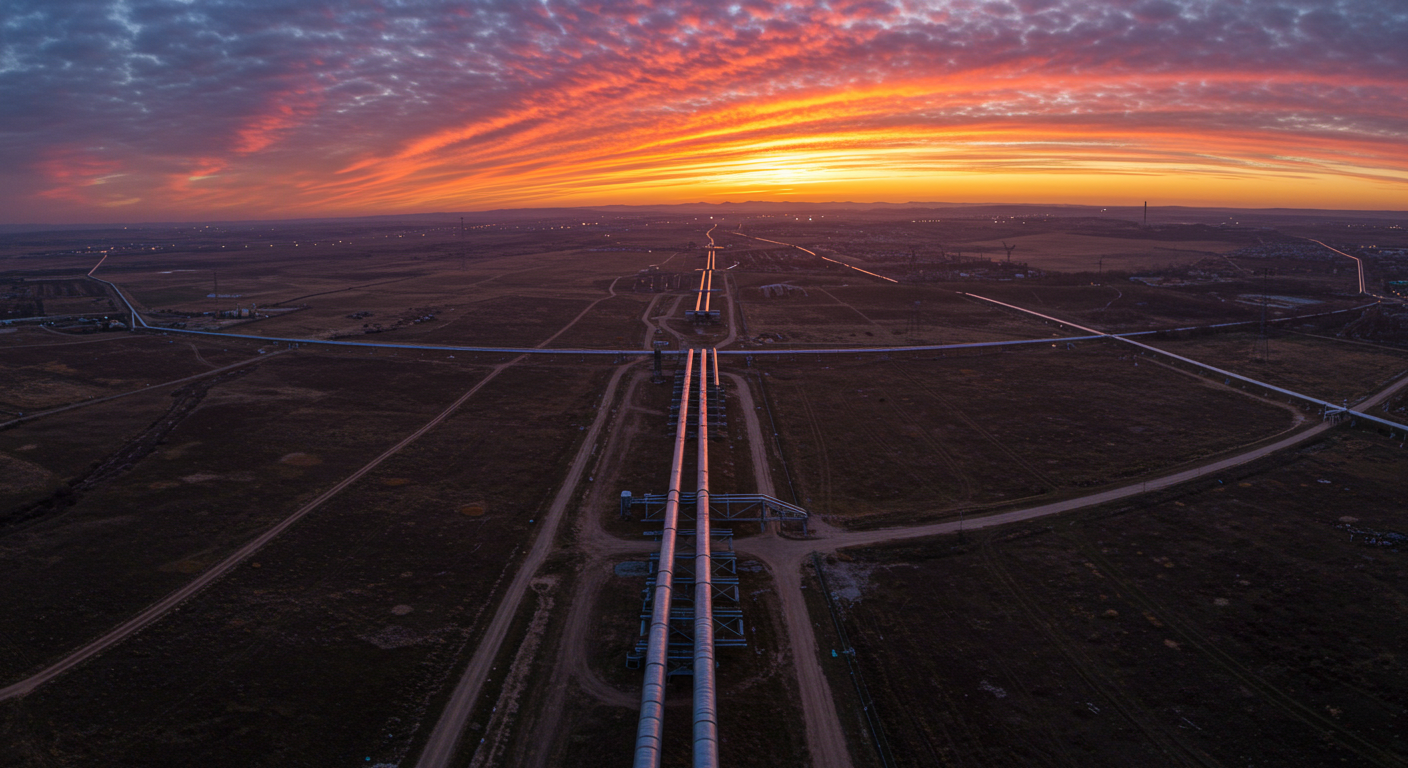


Russia’s 2022 invasion of Ukraine (2022) disrupted traditional gas trade routes, intensified the EU’s need to diversify its natural gas supply mix, and ushered in a new, complex, geopolitical reality in which Azerbaijan has rapidly ascended to lofty heights.
Of course, the renewed EU-Azerbaijan relationship is not without potential challenges and gas can be deployed — as seen with Russia — as a foreign policy tool especially as countries become dependant on each other for gas resources and the money derived from it. And, the gas trade requires stability. With the embers in Nagorno-Karabakh still burning, some in Brussels may question the reliability of the supply. Allegations have already been made in the past by Baku against Yerevan, as the latter has been accused of disrupting oil and gas pipelines [1] For this reason, the EU should seek a solution between Azerbaijan and Armenia to better ensure the reliability of Azerbaijan’s gas supplies.
Recognising an opportunity, the Gulf Cooperation Council (GCC) countries seek to increase their influence in the South Caucasus region, mainly because Russia’s departure — due to its over-extension in Ukraine — has opened a void. And, the GCC countries are actively seeking an additional route to the EU and European countries in order to increase their already growing international role. Their growing interest in the South Caucasus is well received by Azerbaijan, which is interested in pursuing a more flexible foreign policy and see, in the GCC high investment potential and general strategic parity. Additionally, the two share the interest in containing Iran in the area, Azerbaijan firstly, given the enmity towards Russia and Armenia, which are part of a strategic axis with Tehran, whilst the GCC countries have the interest in containing Iran’s influence in the Gulf area, aside the security concern over Iran’s nuclear proliferation. Hence, the relationship to be forged by the Gulf and Azerbaijan is economically and geostrategically driven.
Another point of interest in GCC’s strategy is the blossoming bilateral relationships between Azerbaijan and Turkey and Azerbaijan and Israel. The relationship between Turkey and Azerbaijan is rooted in deep historic ties — the Azerbaijani language is of Turkic root, that highly resonates with modern Turkish. Additionally, the two countries share a high economic interest in mainly energy infrastructure, being Turkey the main transition state through which Azerbaijani gas and oil pipelines pass to reach the West. Finally, there is a high level of military cooperation between the two countries. [2]
In terms of Baku’s relationship with Tel Aviv it is crucial to underline that Israel is highly reliant on Azerbaijan in the energy sector, with 43% of its crude oil coming from Baku as of 2023 [3]. The two share a common enmity with Iran, hence their relationship is highly strategic, for Israel to have a friendly country on the border with Iran, and for Azerbaijan to have a counterweight on the Middle Eastern chessboard to counter Iran as well. The GCC is currently working to strike a balance and limit Turkey’s regional influence without compromising the fruitful economic ties with Ankara. Additionally, after the 2020 process of normalisation between Israel and the GCC, the 07 October 2023 attacks and the subsequent war in Gaza have marked a critical redirection in the relationship between Tel Aviv and the GCC, pushing the latter to review the process of normalisation. The risk that Azerbaijan might continue to deepen its engagement with Turkey and Israel is relevant for the GCC.
Taken together, the EU, GCC, Turkey and Israel share a collective interest in safeguarding their economic and geo-strategic interests in Azerbaijan and cooperation between them could prove to be crucial in the area. The baseline in this relationship is based on reducing Tehran’s area of influence [4]—Israel, Turkey and the GCC for strategic reasons and the EU because of the nuclear portfolio .
Economic cooperation bolsters the strategic paradigm that these actors engage from since it ties them together in defence of Azerbaijani stability. Energy sits atop of this cooperation and both the EU and the GCC are operating in Azerbaijan to implement renewable energy, in fact the former has signed a Memorandum of Understanding (MoU) on wind energy cooperation in March 2024 to help push forward the clean energy transition in the region, and to potentially generate new renewable energy supplies for Europe [5]. The GCC is currently investing in solar parks and wind parks, an example can be the UAE-based Masdar company that already operates three solar parks and a wind park [6]. A collaboration between the two in this field can be highly fruitful for both the two, for Europe to acquire new energy supplies, for the GCC it can be an occasion to implement their energy revenue in the area.
All in all, Azerbaijan is emerging as a lynchpin in the geo-economics and geopolitics of the wider Middle East and it is imperative to include Baku at the table of any future regional security architecture.
Endnotes
[1] Eurasianet. “Azerbaijan-Armenia Conflict Poses Threat to Regional Energy Corridor.” Eurasianet, October 9, 2020.
https://eurasianet.org/azerbaijan-armenia-conflict-poses-threat-to-regional-energy-corridor
[2] ISPI. “Azerbaijan and Turkey’s Fraternity Reshaping Regional Power Dynamics” ISPI, February 6, 2024.
https://www.ispionline.it/en/publication/azerbaijan-and-turkeys-fraternity-reshaping-regional-power-dynamics-162723
[3] The Observatory of Economic Complexity. “Crude petroleum in Israel” The Observatory of Economic Complexity.
https://oec.world/en/profile/bilateral-product/crude-petroleum/reporter/isr
[4] Gulf Research Centre. “The Strategic Outlook for Gulf-Iran Relations” Gulf Research Centre, January 23, 2025.
https://www.grc.net/single-commentary/222
[5] European Commission. “EU steps up renewable energy cooperation with Azerbaijan” European Commission, March 4, 2024.
https://energy.ec.europa.eu/news/eu-steps-renewable-energy-cooperation-azerbaijan-2024-03-04_en
[6] Bourse & Bazaar. “Central Asia Relies on Gulf as it Targets Energy Transition” Bourse & Bazaar, January 22, 2025.
https://www.bourseandbazaar.org/articles/2025/1/22/central-asia-relies-on-gulf-investment-as-it-targets-energy-transition