

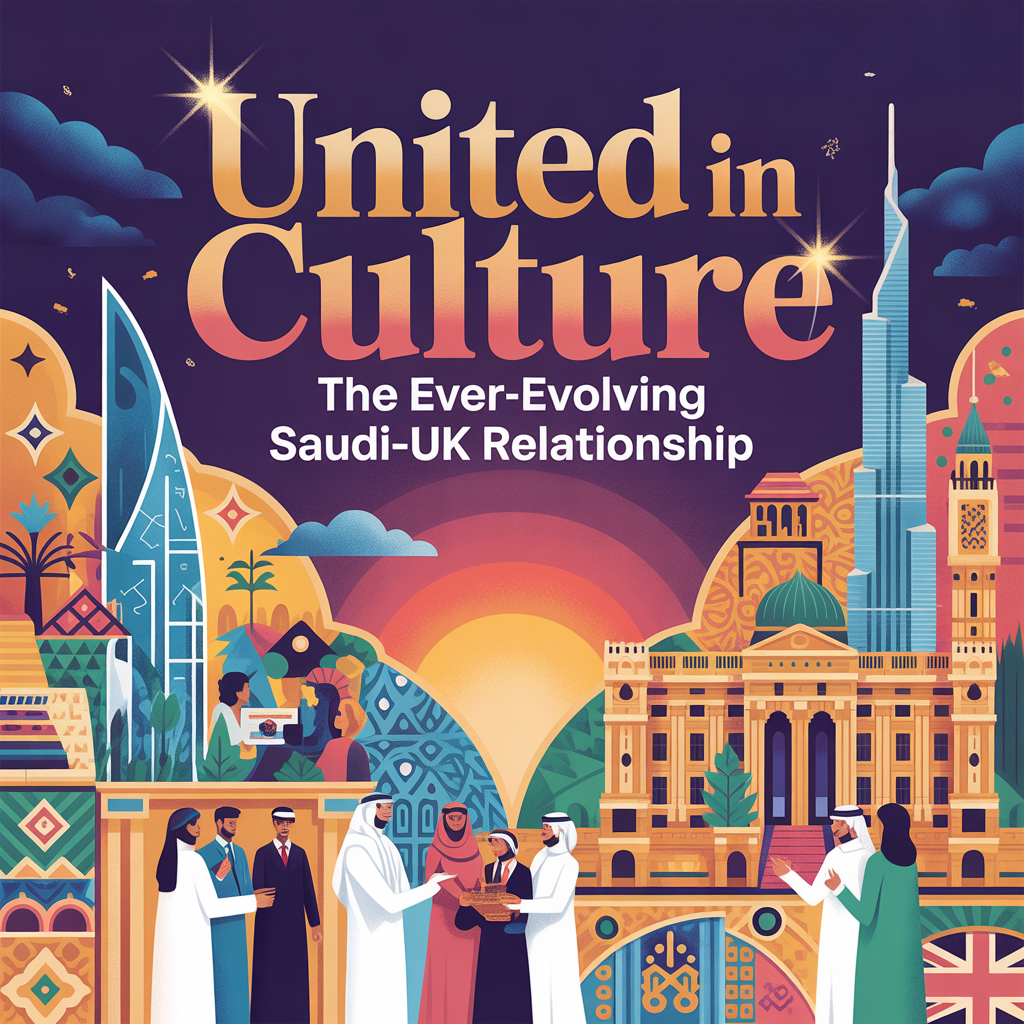


Relations between the United Kingdom and the Kingdom of Saudi Arabia have gone from strength to strength in recent years, individually and as part of wider UK-GCC engagements. Saudi Arabia – then the Emirate of Najd – established relations with the UK in 1848 and have long since been close allies. The UK was one of the first states to recognise the Saudi Arabia as a country in 1926 and the second official Saudi embassy was opened in London in 1930–a testament to the depth of the diplomatic relations between the two.
The long-standing relations between the two have transformed into a mutually beneficial partnership in recent years as the UK searches for new trade partners following Brexit and as Saudi Arabia aims to achieve its Vision 2030, a project to diversify the Saudi economy from oil and promote social and cultural progress.
The two countries already maintain a strong trade relationship, even outside of the UK-GCC free trade agreement. Economically, Saudi Arabia is the UK’s 24thlargest trading partner (2025), and its largest in the Middle East, while the UK is Saudi Arabia’s largest European trading partner. In the four quarters to the end of Q2 in 2025, trade between the two countries was worth £17.2 billion. According to the British government, the main exports from Saudi Arabia are refined oil, mechanical power generators and plastics, while top exports from the UK include mechanical power generators, medicinal and pharmaceutical products, and cars. The two countries also share more than 200 joint ventures between British and Saudi companies, estimated to be valued at USD $17.5 billion.
While trade is a cornerstone of the rapport between the two countries, the relationship runs deeper than surface-level trade. Economic investment brings cultural investment and geopolitical soft power. Relations between the UK and Saudi Arabia span from sports to tourism – cornerstones of culture where the two countries can meet and influence one another.
The Saudi soft power presence in the UK is perhaps most evident with the acquisition of Newcastle United football club. In 2021, the Saudi Arabian Public Investment Fund (PIF) bought an 80% stake worth £300 billion. It was an investment that aligned with Vision 2030, as it diversifies the PIF’s investments and encourages global integration. For both Saudi Arabia and Newcastle fans, the investment has paid off. Since the Saudi takeover, after several years of mid-table performances and relegation battles, Newcastle United has performed to a high level, participating in the UEFA Champions League and winning the Carabao Cup in 2025 after 70 years without a domestic trophy. This has improved Saudi Arabia’s reception in the UK, especially in the north-east of England, and has diversified the country’s image abroad as it is now linked to football. Club success has previously been linked to economic growth and consumer spending, generating both revenue for the club and local business, helping Tyneside’s economy, which further boosts Saudi Arabia’s positive image in the region.
The PIF’s investment in Newcastle extends further than football, as their purchases include the redevelopment of the area surrounding St James’ Park and the creation of 2,000 new jobs in the North-East with investments worth £3 billion. This further encourages foreign direct investment for the region.
Tourism between the two countries is also blossoming. Riyadh Air, a PIF company, began operations in 2025, with daily flights running between Riyadh and London Heathrow. Another Saudi airline, Saudia, runs flights from Riyadh, Jeddah, Medina and Neom Bay to Gatwick, Heathrow, Birmingham and Manchester, with a new route between Heathrow and Dammam opened in 2025. In 2024, a record number of tourists from Saudi Arabia visited the UK, with 344,000 visits and a total expenditure of £771 million. This reflects the increasing cultural ties between the two countries.
Most notable is the UK’s expansion into Saudi Arabia’s tourism sector. A partnership deal between Historic England and Saudi Heritage Commission will see experts from the UK help preserve landmarks and train conservationists in Saudi Arabia. A separate deal was agreed with AlUla UNESCO World Heritage Site which will see British expertise help develop hotels, restaurants and leisure activities, while also working to preserve heritage. These deals, both agreed at the end of 2024, are beneficial for both countries. They position the UK as a world expert in tourism, increase the UK’s visibility abroad and provide opportunities for UK businesses to open in Saudi Arabia. The agreements encourage tourism in Saudi Arabia, helping the country work towards its Vision 2030 goal of 70 million tourists visiting the Kingdom by 2030. Saudi Arabia received 30 million tourists in 2024, with tourists visiting mainly for religious reasons. With the United Kingdom’s help, Saudi Arabia is not only able to increase tourism but diversify the sector and encourage visits for non-religious reasons. According to the British government, this partnership between AlUla and the UK is expected to generate $32 billion for the Saudi Arabian economy and attract two million tourists annually.
There has been some mixed reaction to the growing relationship between the two countries, notably in the United Kingdom, limiting the extent to which soft power is exerted. The main criticism relates to Saudi Arabia’s alleged human right violations, and the arms trade between the two countries, which is reported to have generated over USD $5 billion in the last year. Premier League fans, including Newcastle fans, have criticised Saudi Arabia for “sportswashing”. Despite this, the two countries have undeniably improved relationships and public image in recent years through soft power.
Recent developments, focused on strengthening an old partnership, show that Saudi Arabia and the UK’s relationship is one much deeper than just economics and trade, it is one that is ever developing, promoting cultural exchange between the two and forging new opportunities for both countries. The promotion of culture, from sport to tourism, also encourages economic growth for both countries, especially in regions which have previously been less developed, such as the North-East of England. The relationship between the UK and Saudi Arabia is one of the most promising relations between a European country and a Gulf country, helping pave the way for other promising diplomatic relations to come.
Sources
- https://assets.publishing.service.gov.uk/media/69135c491fcc92b3f34963d7/saudi-ara bia-trade-and-investment-factsheet-2025-10-31.pdf
- https://www.bbc.co.uk/sport/football/articles/cpde5776pv9o
- https://www.itv.com/news/tyne-tees/2024-05-15/government-champions-3billion-saudi -arabian-north-east-investment
- https://www.arabnews.com/node/2509806/business-economy
- https://www.visitbritain.org/research-insights/inbound-markets/saudi-arabia.
- https://www.gov.uk/government/news/british-expertise-enlisted-to-promote-cultural-he ritage-and-creativity-in-saudi-arabia#:~:text=Historic%20England%20will%20help%2 0to,the%20Kingdom%20of%20Saudi%20Arabia
- https://tradingeconomics.com/united-kingdom/exports/saudi-arabia