




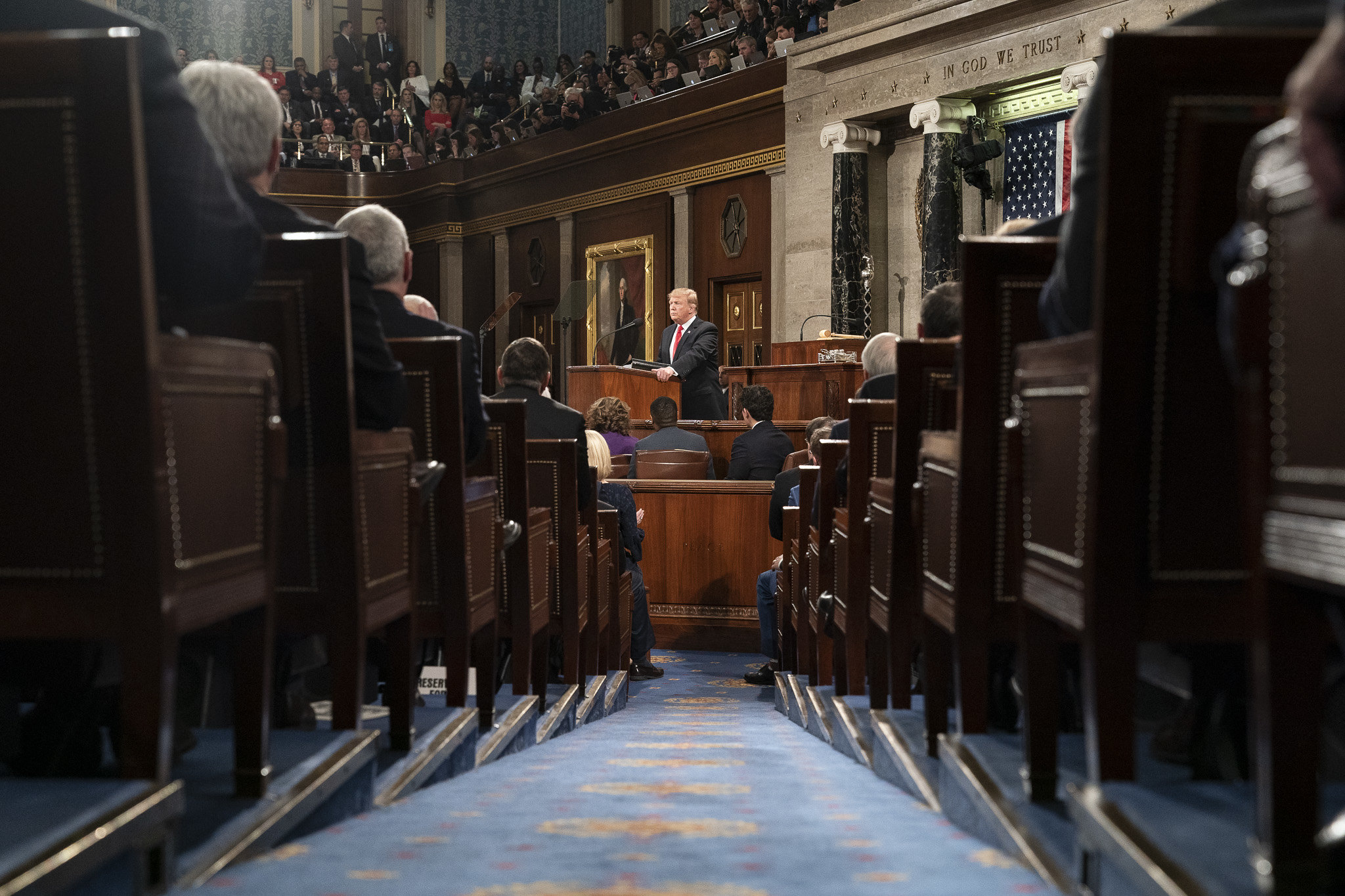


The Iran war is no longer just a foreign-policy crisis for President Donald Trump. On Capitol Hill, it is growingly becoming a wedge-issue for internal friction within the GOP. The House vote (4 June) to curtail Trump’s controls over the Iran war, 215-208, four Republicans voting with Democrats, was not sufficient by itself to end the war. It mattered however politically because it demonstrated that Republican discipline on Iran is no longer the default. The anger of Trump, branding the opponents of the vote as ‘unpatriotic,’ has merely highlighted the chasm between presidential certainty of tone and strategic uncertainty of its foreign policy direction.
The deeper problem is that the Republican Party now comprises two foreign-policy ideological wings. One is the MAGA, America First, anti-interventionist wing of the party, suspicious of open-ended wars, nation-building and elite national-security consensus, the very mantra Trump campaigned on. Vice President JD Vance is the quintessentially clear national figure in that camp. He has developed his brand in favour of scepticism about overseas entanglements, and, on Iran, he has sought to keep some distance from some of the most hawkish arguments. The other is the older Republican interventionist tradition, pro-Israel, pro-deterrence, comfortable with military pressure, and much more apt to look at Iran through the eyes of regime threat and regional order. Secretary of State Marco Rubio embodies that side most naturally, despite operating inside Trump’s intensely personalised policy machine. Disseminating the Vance-Rubio divide has positioned the Iran war as a stress-test of competing versions of post-Trump conservatism for both men.
This is important because Trump has failed to give the Party he leads a clear direction-of-travel in this regard. Is the aim that of regime-change in Iran, reopening the Strait of Hormuz, protecting Israel and Gulf partners, maximising sections of the nuclear programme, or reaching a new settlement entirely? Various factions hear different answers. That ambiguity would have been tolerable when the war seemed short and contained. It is less likely to be so after months of strikes, energy disruption, ambiguity over ceasefires and a series of congressional attempts to reestablish war-making powers.
For this reason, the Senate is now a deciding battleground. Republicans retain only a 53 seat majority with 45 Democrats and two independents in caucus. That means four Republican defections can have a profound effect on parliamentary arithmetic, so long as Democrats are relatively united. The Senate has already moved farther than it had earlier in the war, a motion to pursue an Iran war-powers resolution (19 May) passed 50-47, with Susan Collins (Maine), Lisa Murkowski (Alaska), Rand Paul (Kentucky) and Bill Cassidy (Louisiana) joining most Democrats.
The potential for more Republican rebels is becoming a real risk for the White House, across different political coalitions. Rand Paul’s rebellion is ideological and constitutional, for decades he has insisted that Congress, not the president, must authorise war. Lisa Murkowski and Susan Collins are institutional moderates who have been more than willing to break with Trump. Collins, under a re-election challenge in Maine this November, has a clear political incentive to show independence. Both Bill Cassidy and John Cornyn, who lost their Louisiana and Texas primaries respectively to Trump backed candidates, make them well-poised to seek further political retribution against the President, freed from the yoke of MAGA.
Then there is the lame-duck factor (the current Class II Senator term finishes on 3 January 2027). Retiring Republicans are also more amenable to speaking out regarding what serving members think privately. Mitch McConnell (Kentucky), Joni Ernst (Iowa) and Thom Tillis (North Carolina) no longer have to depend on the whims of Trump’s support and his grassroots support base. These Senators may not be anti-war purists, but they can turn into process hawks, demanding that the President obtain authorisation, explain aims and explain an endgame in Iran.
For US allies in Europe or the Gulf, this domestic political battleground and division for Trump makes the American message and planning around the Iran war highly unpredictable. Trump can still of course veto any war-powers measure that may come to his desk, and Congress is not going to be able to override him by getting a two-thirds majority. But the political direction is undeniable, the longer the Iran war goes on without an objective, the longer the Republicans will view it not as Trump’s strength, but as his weakness ahead of the Midterms this autumn.
The Iran war has revealed a fundamental contradiction of Trump’s second-term, a President who speaks in populist, isolationist-terms, yet conducts foreign policy as a Bush-era neoconservative. The immediate threat to the White House does not lie in losing this week’s House vote, it is rather the storm clouds gathering regarding Republican scepticism over Trump’s Iran strategy, whether that be for ideological, electoral or personal reasoning. Every vote counts and Trump cannot afford to lose many more on his side of the aisle.