





Beginning in the 1930s, escalating through the Cold War, and continuing to the modern day, American foreign policy has historically relied on stability in the Middle East – specifically, the Arabian Peninsula and Gulf. For a variety of reasons, countries in the region have become critical actors on the world stage, especially those in the Gulf Cooperation Council (GCC) – Bahrain, Kuwait, Oman, Qatar, Saudi Arabia, and the United Arab Emirates. Ongoing armed conflicts, technological development, economic growth, and climate change have propelled several Gulf states to be key actors in an increasingly multipolar world. Currently, American public opinion finds itself at a point of division which not only goes for a partisan or ideological lens, but also from a cross-generational standpoint, as American youth below the age of 35 share far different views from their older peers. With the Gulf states playing pivotal roles in current and future global issues, US engagement with these countries is something that warrants attention. Therefore, what is the general attitude amongst American youth towards the GCC? How do young people in the US see the Gulf States? More importantly, what influences these views, and how can understanding them create future opportunities for closer ties?
While examining the current existent data, namely previously-held surveys and questionnaires, primarily from online websites and not independently-conducted surveys, two fils rouges can be defined when analysing American Gen Z’s perceptions towards Gulf countries: on one hand, Bahrain-Kuwait-Oman as the lesser known countries; while on the other Saudi Arabia-United Arab Emirates-Qatar as the countries that create mixed feelings amongst America’s youth.
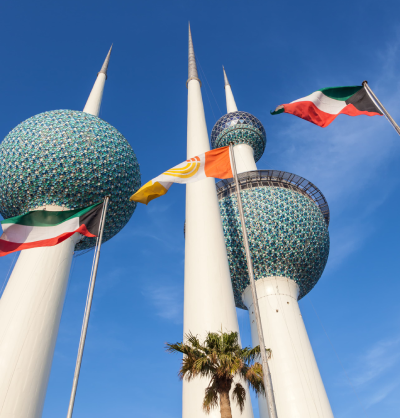
More in depth, Bahrain has been seen positively by successive US governments and from a strategic lens, while the American population’s views may generally be unaware of the country. In this sense, Bahrain’s policymakers could engage younger Americans so that the next generations of policymakers may cultivate understanding and relationships. Kuwait’s perception, on the other hand, has historically shifted, as sentiments towards Kuwait skew positive out of persistent sympathy for the Iraq invasion. Though polling past 2001, a decade after liberation, effectively ended regarding Kuwait, these sentiments among older Americans may still ring true. However, for younger Americans the memory of Operation Desert Storm is completely distant if not forgotten about. Hence, amongst American youth, Kuwait has a similar perception as Bahrain. However, low public attention on the country may present it with an opportunity to maintain strong relations with the US Government. Oman can be found in the same lane, as American relations with the Sultanate of Oman have been relatively strong throughout its history. Still, Oman is among the nations in the GCC and wider region that is relatively unknown to Americans, especially younger generations. With public opinion being so important for policymakers in the US, negotiating through Oman in times of tension could be viewed as less controversial than other regional actors.
The other macrogroup refers to more visible countries for the US’s public opinion. The Kingdom of Saudi Arabia is the largest country territorially in the Middle East, and is perhaps one of the most crucial countries in US foreign policy. Public opinion polls regarding the relationship between the US and Saudi Arabia reveal a generally unfavorable view on the part of an American audience. An October 2022 National Tracking Poll by Politico indicates that 35% of adults aged 18-35 did not know whether Saudi Arabia was a friend or ally, or did not have an opinion. While 24% said that it was unfriendly, but not an enemy, 17% said that it was an enemy [1]. In the current moment, neutral to negative public opinion on Saudi Arabia may not present a significant challenge, but enough public pressure may lead to diplomatic ruptures. Similarly, US-UAE relations have historically been friendly across presidential administrations. Much excitement in recent years has led Americans to be attracted to the public image that Dubai has created. Its brand as a luxury tourist destination, financial hub, and technologically-advanced city is the principal image for most Americans below the age of 35. Still, recent years issues have faced the Emirates’ public image in the US. For close ties with the US to continue into the future, policymakers in the UAE must consider the delicate balance between securing geopolitical interests and good will in the next generation of American policymakers. To conclude, Qatar faces similar challenges as Saudi Arabia and the UAE: it is considered an important ally of the US, as it hosts a number of critical American military bases. Nonetheless, polls among Americans did not suggest a favorable view of Qatar – despite Americans holding the highest net favourable view towards Qatar hosting the World Cup, this only translated to a 24% support rate [2]. In fact, Qatar will likely have difficulty managing future generations of American policymakers.
It can be said that American foreign policy and grand strategy, which strongly values members of the GCC as allies and partners, is not completely aligned with the views of younger Americans. The information gathered reveals that Americans below the age of 35 are typically ambivalent towards countries in the GCC. Whether due to ignorance from a lack of education, a lack of priority, or genuinely mixed views, younger Millennials and Gen Z are statistically unlikely to have either a net favourable or net unfavourable view towards most of the Gulf states. As the US/Israeli–Iran conflict picks up again and circumstances evolve, how might public opinion change and why? Thus far, US/Israeli operations have targeted the leaders of the Islamic Republic, military targets, and the industrial base. As long as this remains the case, it is possible support could increase for the effort against Iran due to civilian casualties in the Gulf. To conclude, regardless of whether the two regions are engaged in conflict or not, fostering strong ties between the future leadership in both the US and Persian Gulf requires understanding leaders and voters in the US. With attention on the Gulf at this moment, researchers now have an excellent opportunity to take advantage of piqued interest. A lack of knowledge among people aged 18-35 allows room for ample research questions, educational opportunities, and cross-regional interactions, to foster interest in America’s youth and eventually to deepen understanding and socio-cultural cooperation between the two regions.
Resources
[1] “National Tracking Poll 2210098.” Morning Consult and Politico, October 14-16, 2022. https://pro-assets.morningconsult.com/wp-uploads/2022/10/26124941/2210098_
[2] Smith, Matthew. “What Countries Do Americans Like Most?” YouGov, October 26, 2020. https://yougov.com/en-us/articles/32598-what-countries-do-americans-most