



Art has always been a powerful tool used to express cultural identities and individual perspectives. In fact, it is a key resource for contemporary society, as it has the power to enrich people’s lives, promote dialogue and social inclusion, contribute to economic progress, and shape the thinking of future generations. Art can be a soft-power tool that can subtly, yet powerfully, tackle some of the most pressing issues in society, like gender equity.
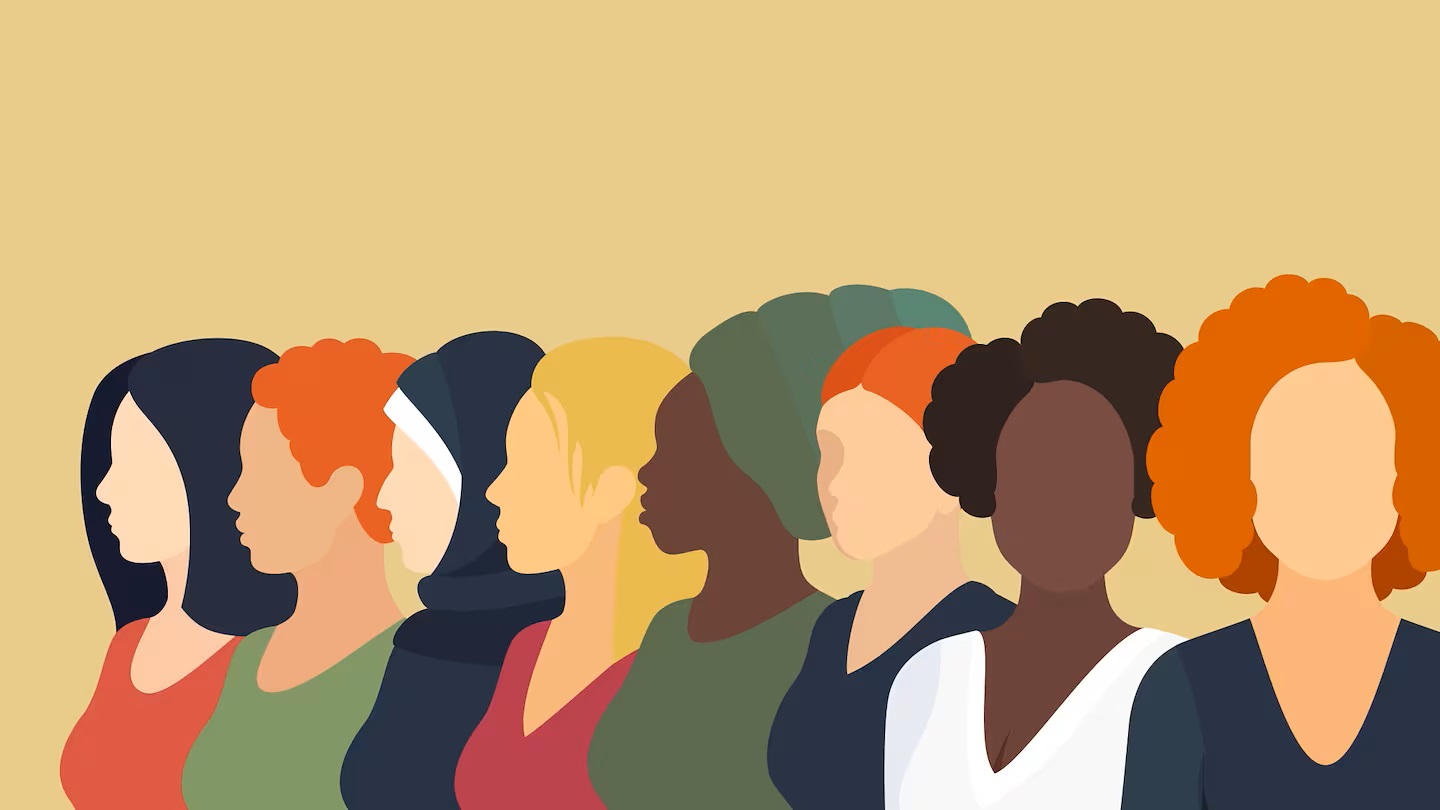
In the Middle East, where cultural norms and traditions often intersect with issues of gender equity, art is a significant medium for amplifying women’s voices and experiences. Women in the Middle East have historically faced several challenges due to aspects of cultural norms rooted in people’s way of thinking. Increasingly however, women in the region are asserting their presence through various forms of artistic expression. From painters and sculptors to poets and filmmakers, female artists are using their creative talents to break stereotypes, start conversations and strengthen gender equality. Taking the United Arab Emirates (UAE) as an example in the Arabian Gulf, there are many prominent women advocating that their work be given the recognition it rightly deserves. Some of these powerful emerging voices include: Christiana di Marchi, Nujoom Al-Ghanem, Surabhi Sharma, Aya Afaneh, Shazia Salam, Nabla Yahya, Alla Abdunabi, Lubnah Ansari, and the Soza Collective.
(1) Christiana di Marchi, for instance, has created and spead around the Middle East and Europe a special exhibition called “Penelope’s Syndrom”, in which:
The artist focusses on the role of political concepts including ‘Religion’ and ‘Nationhood’, which are meant as vehicles for a personal reflection about identity issues. These purely conventional concepts include some of the essential themes, the core questions, investigated by the woman and the artist.
(2) The last few decades have seen a surge of contemporary art in the Gulf—as a vehicle for, and reflection of, change. Powered by increasing access to education, technology and global platforms it is important to note that although women have been creating art in the region for centuries, the contemporary movement in art in the GCC is built on a new sense of purpose; to contribute to the national narratives of the GCC states for both domestic and international consumption. Additionally, the internet and social media platforms have enabled women artists to reach audiences beyond their local communities, amplifying their voices on a global scale.
Art has the unique ability to transcend language barriers and convey complex emotions and ideas. In the Middle East, women are increasingly harnessing this power through painting, photography, sculpture and performance art and, as a result, are helping forge the national identity into the future.
Endnotes:
Sources:
- https://www.lacma.org/art/exhibition/women-defining-women-contemporary-art-middle-east-and-beyond
- https://www.iodonna.it/attualita/costume-e-societa/2016/04/18/20-donne-che-cambieranno-il-medio-oriente/
- https://www.we-wealth.com/news/artiste-donne-medio-oriente-politica-istanze-sociali-arte
- https://www.terrasanta.net/2020/03/donne-di-minoranza-tre-artiste-contro/