



A string of articles and commentaries have been drafted depicting what that world would look like the day after the Israel-Hamas war ends and the true impact of the lives lost, the damage done — physically, emotionally and in terms of upending the pre-7 October Middle Eastern balance of realities — has been tallied. Some will be looking for justice. Others will be looking to hold those responsible to account. Others still will ignore the death and destruction and try to return to a world of blissful ignorance. In reality, the day after the war ends will be the start of yet another cycle of violence, irrespective of whether or not Hamas survives…unless there is a tidal change in the way people think and how they behave. This will not come from simply allowing the latest round of bloodletting to vanish from the radar. This type of change needs to be prodded and formed, teased and twisted. It needs international support and it must reflect centrist values—of the armies of people located in the centre of politics, not along its fringes. Extremists, of all colours, must be prevented from hijacking the discourse of change or we risk sleepwalking back to square one.
But what can be done that has not already been tried, tested and failed? The age of summitry has produced a class of serial negotiators who love the pomp and pleasures of working on solutions but lack the ability to deliver. Sanctions don’t work and arms embargoes from some suppliers often results in boom sales from others. But rather than fatalistically accepting that violence is synonymous with the Middle East and is cyclical, it is time to rethink ways to escape the labyrinth.
Two crucial things are being done: First, is the organisation of a Regional Peace Conference to Solve a Regional Issue. While Oslo, Madrid, Camp David (etc) have certainly played their role, the centre of gravity has shifted away from the US and Europe and is now firmly in the Middle East. Qatar and Egypt have become hubs of negotiations between Israel and Hamas, and the tempo is growing for the International Peace Conference announced by King Hamad Bin Isa Al Khalifa and endorsed by the Arab League at the Bahrain Summit in May this year. The conference will seek to develop a pathway to Palestinian statehood and recognition in the UN while addressing Israeli security concerns. In other words, whether or not there is much appetite for it among the combatants—this Conference will work towards the two-state solution. The only viable way forward. Stop the shooting, end the war and a cold, negative peace ensues. Develop a viable Palestinian state, comfortable in its borders with the right of self-determination, side-by-side with Israel, where trade flows and cultural interactions take place between equals and positive peace follows. Taking the first step, bringing conflicting parties together to solve, once and for all, their enduring hostilities, at the regional level with regional actors involved and regional interests at stake, stands a considerably better chance of success than pledges from afar. Proximity matters and Bahrain is an ideal venue for putting an end to Israel-Palestine inter-communal war.
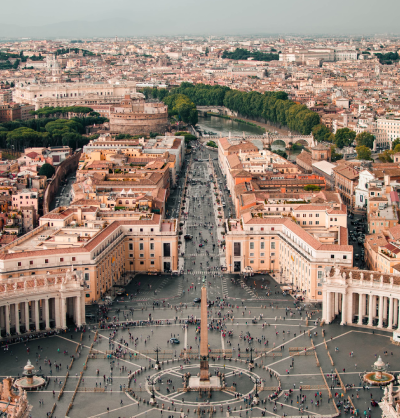
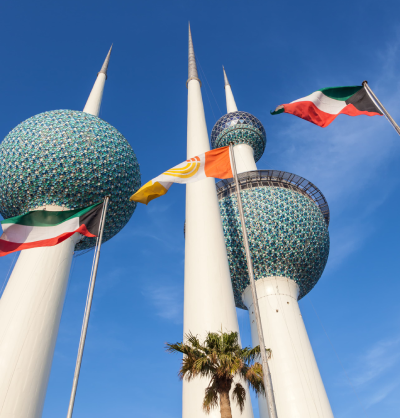
Second, it is time for Real, Functioning, Interfaith Dialogue. This is needed for the much sought-after change of thinking and behaviour. This interfaith dialogue may begin on the religious level but will rapidly seep into the cultural and social domains as well. The Vatican is an ideal place to start as Christianity has transformed from being locked in antagonistic relations with Judaism and Islam to now having an inbuilt mechanism of peace and reconciliation. It may have taken a millennium to arrive at this point in time, but here we are. And it has partners. As the countries of the Gulf Cooperation Council have developed, so have their contributions towards peace and understanding via interfaith dialogue. Each of the six members is making an impact: Bahrain’s King Hamad Global Centre for Peaceful Coexistence, Kuwait’s Wasatia [Moderation] Promotion Centre, Qatar’s Doha International Centre for Interfaith Dialogue, Oman’s Al Amana Centre, Saudi Arabia International Dialogue Centre and the UAE’s Permanent Committee for Human Rights (among many many others) all strive to delete hostility from faith-related discourses. Taking the principles of the Marrakesh and the Bahrain Declarations, and reminding the world of the diversity and cultural richness of the Middle East, getting interfaith dialogue on track has never been more pressing, more urgent, than right now.
*****
In the spirit of Shakespeare’s King Lear, ‘nothing comes from nothing.’ If there is no attempt, there will be no outcome. The modern Middle East has gone through a tremendous amount of pain. At the end of each round of violence, exogenous actors impose lofty, but often unrealistic, solutions; solutions that have tended to stem from a might makes right formula. In the spirit of giving agency back to local actors, it is time for peace to be given a chance for the region derived from the region. The day after the war ends is likely to be filled with tears and accusations, soul searching and fear. For that reason, it is vital to look to the day after that. To decide on the direction that is needed and the road that will take us, humanity, there.