


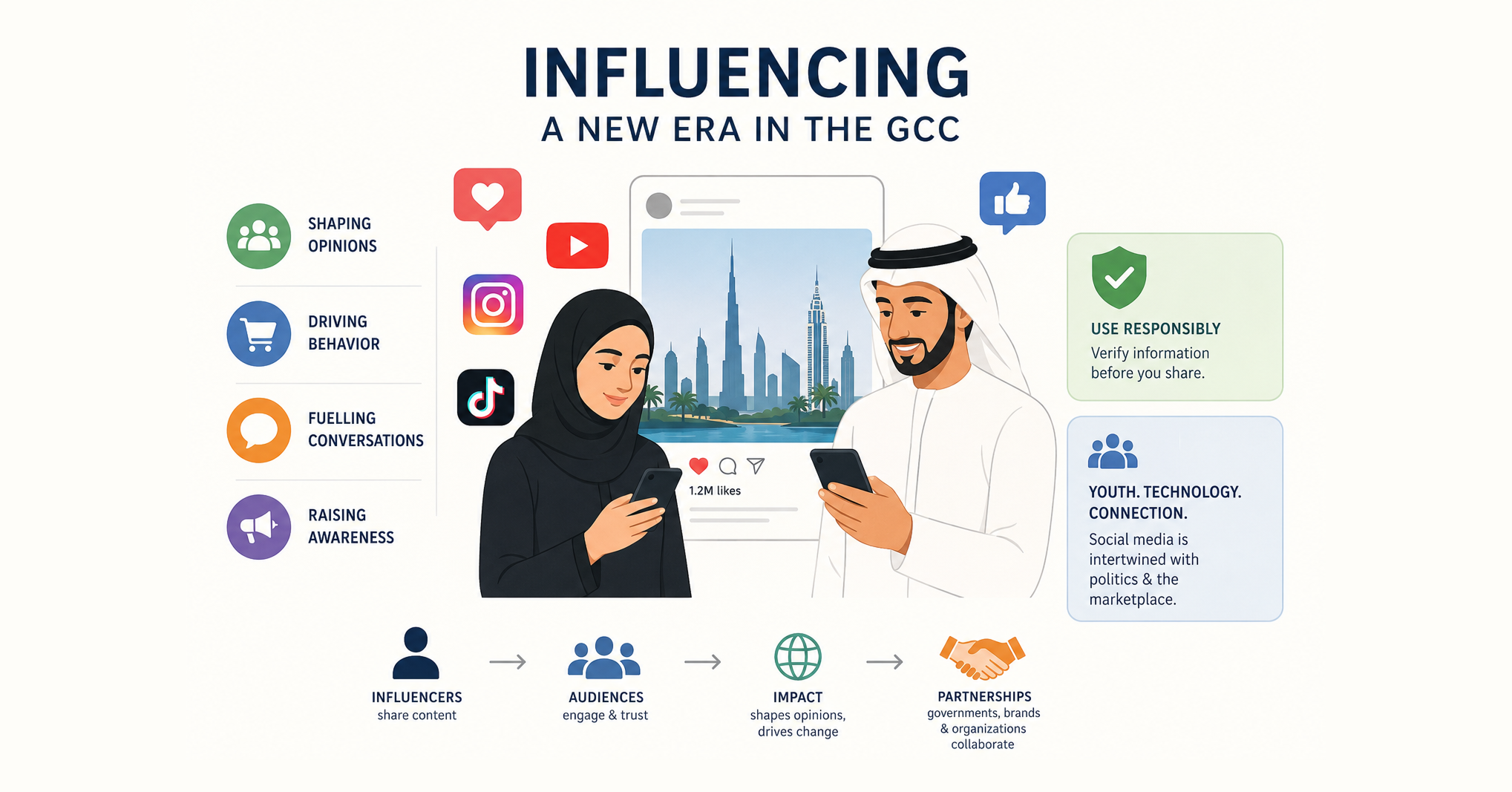


The rise of social media has led to a notable rise in the influence of social media personalities across the Gulf Cooperation Council (GCC). Their growing audiences have made them important voices in public conversations across the region. Their social media presence exerts a significant influence on public opinion, consumer behaviour, and the discourse that takes place online.
In recent years, however, social media has undergone a fundamental transformation. According to TEN-X, a Saudi-based marketing and communications agency, it is no longer simply a platform for individuals to share their daily lives; it has evolved into a space for personal brands and independent media platforms. The influence of social media has grown so much that it has become an industry in its own right. For instance, the influencer and content creation sector in Saudi Arabia was valued at $387 million in 2025 and is projected to reach approximately $3.6 billion by 2033, reflecting a compound annual growth rate of 32.2% (Middle East Campaign).
Content creators also play a significant role in politics and in raising awareness of current events. Across the GCC, social media influencers are increasingly serving as sources of information for people who consume news online, particularly younger generations. Their capacity to access and interact with significant audiences provides them with significant sway over public sentiment. Consequently, governments, organisations and private companies are increasingly partnering with influencers to communicate their messages to the public. Nevertheless, concerns about misinformation have also been raised due to the growing political influence of social media creators. The verification of news content for accuracy is important when consuming news on social media platforms due to the limited content moderation that is often in place.
Some of the region’s many influencers have gained international recognition for their cultural impact, while others have become prominent voices on political and current affairs issues. One such influencer is the Emirati Khalid Al Ameri, who has become a household name across the Middle East. He has gained popularity rapidly since launching his YouTube channel in 2011. Audiences are drawn to the generosity and positivity reflected in his content, and he now has 4.8 million Instagram followers. Through personal stories about life in the Middle East, Al Ameri shares his experiences and offers commentary on issues shaping the region. He is particularly renowned for his short comedy sketches, which showcase his unique style and occasionally feature brand endorsements.
Another prominent GCC influencer is the Bahraini YouTuber and filmmaker, Omar Farooq. He has amassed over 8.6 million YouTube subscribers, 4.3 million TikTok followers, and 5.7 million Instagram followers. Farooq has gained widespread popularity throughout the Arab world, using his platforms to raise awareness of humanitarian crises, including the conflict in Sudan, in partnership with the UNHCR. He has also produced content highlighting Bahrain’s official security and safety initiatives. In 2023, Farooq was named on the Forbes 30 Under 30 list, and in December 2025, he was awarded the Medal of National Action by Bahrain’s King Hamad bin Isa Al Khalifa during the National Day celebrations in recognition of his creative work and its impact. He is a prime example of how young people can use the digital age to campaign for causes they believe in and share their views with a wide audience.
Farooq and Al Ameri represent just two examples within the growing landscape of influencers across the GCC. The significant power that influencers possess to shape opinions reflects the strong connection between young people and technology in the modern era. Social media is deeply intertwined with both politics and the marketplace, making it essential for organisations to integrate it into their strategies and operations. As technology continues to evolve, the influence of social media creators is likely to grow. It will be interesting to see how future generations use these platforms to shape society.