

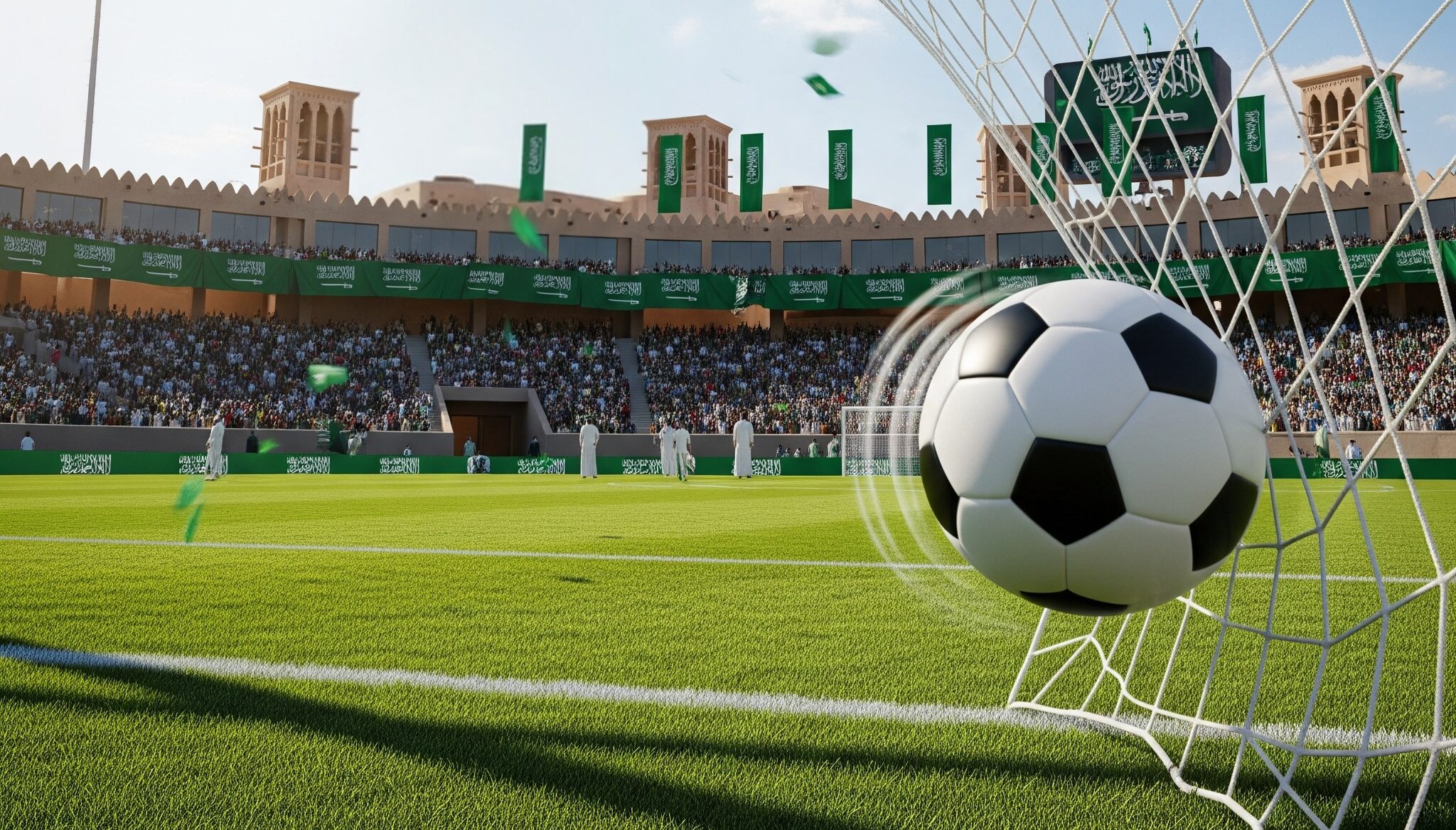


It began with a goal in extra time. A strike by Marcos Leonardo in the 112th minute sent shockwaves across the footballing world. Under the direction of Simone Inzaghi, Al Hilal had just completed a stunning 4-3 comeback against Manchester City at the FIFA Club World Cup 2025. For the Saudi club, it was more than just a win over Europe’s most dominant team. It was a turning point; a symbolic and strategic moment that exposed how dramatically global football is shifting.
Inzaghi, who had only recently taken the reins in Riyadh after his departure from Inter Milan, found himself at the heart of a tactical and institutional project far more ambitious than many in Europe had realised. Al Hilal’s tactical discipline, technical quality, and collective spirit were not an anomaly but the expression of a league — Saudi Arabia’s Pro League — that is no longer a mere curiosity on the football map, but a maturing system with global aspirations and the means to pursue them.
What distinguishes the current Saudi football project from past experiments in China or even Qatar is its consistency, its integration within a broader national strategy, and its appeal to younger players. This is not just about marquee signings in the twilight of their careers. When Mateo Retegui, fresh off a Golden Boot-winning season in Italy’s Serie A with Atalanta, signed with Al-Qadsiah at just 26, the football world has begun to reassess its assumptions. The Saudi Pro League is no longer poaching veterans. It is attracting prime-age, first-tier talent. Retegui is not alone. Colombian forward Jhon Durán left the Premier League at 21 to join Al-Nassr, while emerging South American stars like Kaio César and teenage prodigies from Brazil and Argentina have also made their way to Saudi clubs.
This shift is not coincidental. It is the result of deliberate and well-financed strategic planning that links sport to national development. The Vision 2030 programme launched by Crown Prince Mohammed bin Salman sees football not only as entertainment, but as soft power, as industry, and as a vehicle for international recognition. Hosting the FIFA World Cup in 2034 will be a key milestone, but the groundwork is already being laid. Investments in infrastructure, the establishment of youth academies, and the recruitment of elite coaching and managerial staff are all part of a broader ecosystem that views sport as both a global language and a tool of diplomatic relevance.
Al Hilal’s performance at the Club World Cup is significant not simply because of the victory over Manchester City or the near-upset against Fluminense in the semifinals. It is meaningful because it signals that the Saudi model is now capable of producing performances that challenge the status quo in global football. The match against Pep Guardiola’s team was not a one-off miracle, but the outcome of months of preparation, careful recruitment, and a style of play that speaks the same modern football idiom as Europe’s best.
Saudi Arabia is not alone. Qatar and the UAE are pursuing complementary paths. Qatar Sports Investments has long backed Paris Saint‑Germain, propelling the club to Champions League glory and reinforcing Qatar’s status as a sports powerhouse. marquee European clubs. But Qatar’s investment extends beyond PSG: with Aspire Academy and major domestic teams like Al‑Sadd and Al‑Rayyan, the country has built a layered ecosystem underpinning its regional influence. Meanwhile, Emirati clubs such as Al-Ain, Shabab Al-Ahli, or Al-Wasl are embedding competitiveness and infrastructure into their league, supported by rising investment and youth development schemes.
For Europe, this development presents both a challenge and an opportunity. The major domestic leagues—Serie A, La Liga, the Bundesliga, and even the Premier League—can no longer rely solely on heritage, tradition, or UEFA competitions to retain their gravitational pull. Increasingly, the financial incentives, infrastructural quality, and professional environments offered by Saudi clubs are convincing younger players to forgo the old pilgrimage route through Europe. In doing so, they are changing the dynamics of talent flows, and perhaps the very geography of footballing excellence.
It would be a mistake to treat this as a passing phase. While previous waves of international investment in football, particularly in China, collapsed due to internal inconsistencies or shifting political priorities, Saudi Arabia appears determined to avoid those pitfalls. The kingdom has rooted its football vision within a wider economic and societal transformation. Its goals are long-term, and they involve more than just sporting success. They include tourism, urban development, international prestige, and the cultivation of new industries. Football is not a distraction. It is a pillar.
Looking ahead, the transformation driven by Al Hilal, the Saudi Pro League, and their Gulf counterparts could produce a fundamental realignment in the global football order—one that extends beyond the pitch and into the geopolitical and economic architecture of the sport. If the current trajectory holds, the next decade may witness a multipolar football system, where Riyadh, Doha, and Abu Dhabi stand alongside London, Madrid, Milan and Munich not as aspirational imitators, but as equal centres of influence.
This would have several cascading effects. First, the global talent pipeline may begin to fragment. Young players from Latin America, Africa, and even Europe might increasingly view Gulf clubs not as a detour or end-of-career destination, but as a first-choice developmental path—offering top-tier facilities, high salaries, and meaningful international exposure. The traditional European “stepping stone” model could be weakened, especially if Gulf clubs succeed in forming stronger regional competitions, attracting global broadcast deals, or even integrating more deeply into intercontinental tournaments.
Second, football’s economic geography could shift. With sovereign wealth funds backing club acquisitions and infrastructure at an unprecedented scale, the financial logic of the sport is already being rewritten. Revenue generation through tourism, media, branding, and technology in the Gulf may gradually outpace slower-growth European markets constrained by regulation, legacy debt, and saturation. The implications for UEFA and FIFA will be significant: calls for revised tournament formats, more inclusive governance, and new pathways for club and national team competition may become unavoidable.
Third, and perhaps most profoundly, the cultural narrative of football could change. For over a century, the sport has been shaped by Western ideals—its heroes, aesthetics, rivalries, and storytelling. But as Gulf states invest not just in clubs and players but also in media platforms, fan engagement, and football education, they are beginning to write new scripts. Football as an expression of Arab modernity, of post-oil national identity, of global South aspiration—these narratives may come to occupy the same space once dominated by European romanticism and South American flair.
In this unfolding scenario, the 2034 World Cup in Saudi Arabia may prove to be not just a sporting event, but a symbolic inflection point. A moment when global football, as both a business and a cultural force, begins to pivot.