


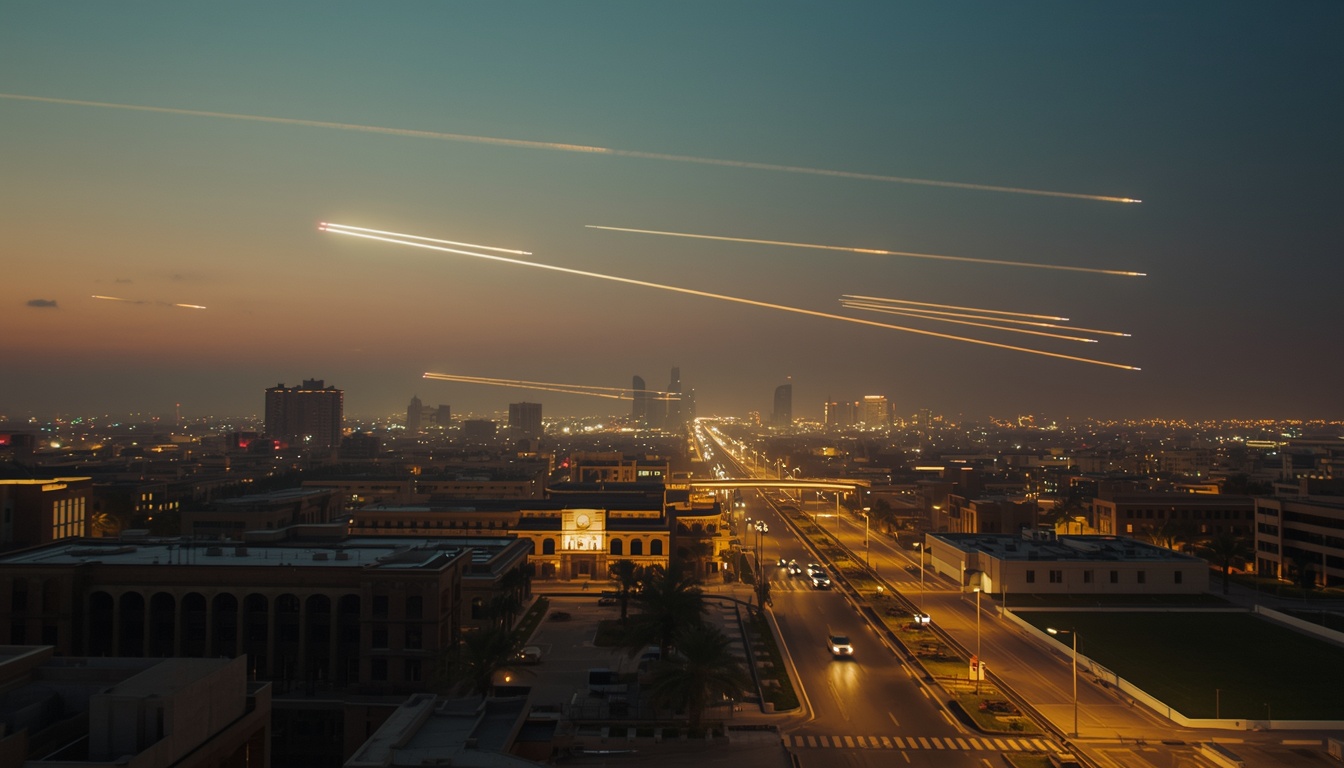


Following the US-Israeli joint airstrikes against Iran on 28 February, Tehran’s response came in the form of multiple raids on the Gulf Cooperation Council (GCC) states. No country was spared. Light trails brightened the skies over Manama, Kuwait City, Muscat, Riyadh, Doha, and Abu Dhabi. They were Iranian missiles and the infamous Shahed drones — well known in the Ukrainian steppes — targeting US military bases, embassies, and civil infrastructure.
The US and GCC countries’ air defence systems intercepted most of the vectors. A few hit their objectives, including hotels and airports. Remarkably, the most targeted state since the start of the war was not Israel — it was the UAE.[1]
Within four days of war, Tehran launched more than 800 drones and 186 missiles against the Emirates. According to the UAE’s Defence Ministry, 57 drones and one missile hit the country, leaving three people dead and about 70 wounded. The rest of the vectors were either intercepted or landed at sea.[2]
Key targets included the airports of Abu Dhabi and Dubai, the luxurious Burj Al Arab hotel on Dubai’s Palm Jumeirah man-made island, and the bunkering hub of Fujairah. The port sits next to the Strait of Hormuz and is strategic for refuelling activities.
Iran hit similar targets across the other GCC countries: ports, hotels, energy terminals. Every site within reach of the IRGC’s missiles is a potential objective. But US bases and embassies come first.
Ballistic missiles targeted the US Navy’s 5th Fleet in Manama, the Ali al-Salem airbase in Kuwait, and the Al Udeid airbase in Qatar, where US forces are stationed. Two drones struck the US embassy in Riyadh on 3 March, causing a fire at the diplomatic compound in Saudi Arabia. A day earlier, a drone hit the US embassy in Kuwait.[3] Iran also targeted a hotel in Manama, claiming it hosted US forces.[4] The attacks prompted the US State Department to pull out all non-essential staff from Bahrain, Qatar, the UAE, Jordan, and Iraq.
Tehran’s raids also targeted the GCC energy infrastructure. Iran attacked the liquefied natural gas (LNG) facilities of QatarGas in Ras Laffan and Mesaieed. The offensive led the firm to halt production, which represents a fifth of the global LNG supply.[5] Saudi Arabia also halted operations at the Ras Tanura plant, the largest oil refinery of Saudi Aramco, after debris from intercepting two Iranian drones hit the site.[6]
Iranian drones also struck a fuel tank at Oman’s Duqm commercial port.[7] Muscat had acted as a mediator in US-Iran talks over a nuclear deal before the US attack. However, these diplomatic efforts did not spare the Sultanate from the Islamic Republic’s raids.
Regional Chaos—The IRGC’s Goal
Iran’s choice of targets testifies not just to its retaliatory tactics but to its asymmetric warfare strategy: widen the conflict across the region, hit tankers at sea, and break the flow of oil and gas that crosses the Strait of Hormuz daily. The Islamic Republic has employed these moves ever since its inception in 1979, although with varying degrees of intensity.
With the regime cornered, Tehran is devoting all its efforts to wreaking chaos across the region, a condition in which it strives. The IRGC has honed its tactics in regional turmoil, playing its hand of havoc through webs of militias operating across Lebanon, Iraq, Syria, and Yemen.[8]
The regime is well aware that GCC countries dread instability as it cripples energy-based economies. Although the monarchies have pursued strategies to implement non-hydrocarbon economic sectors, the results are not yet robust enough to withstand prolonged oil and gas-based revenue disruptions.
With energy prices spiking and tankers blocked at sea, Tehran hopes to push the Gulf countries to ask their US ally for a swift end to the conflict. However, there is a roughly even chance this will backfire. The UAE is considering strikes on Iranian missile sites, while Qatar has intensified its crackdown by arresting Iranian Revolutionary Guard cells in Doha.[9]
The Iranian regime is thus playing its ultimate card: opening wounds throughout the Gulf and letting the rivers of oil, money, and blood drain from the region. This might invite even more airstrikes from neighbouring countries. But for the regime, the highest risk is worth its only goal, survival.
Resources
- https://www.axios.com/2026/03/03/uae-iran-missiles-strike-israel
- Ibid
- https://time.com/7381884/iran-missiles-dubai-palm-gulf/
- https://www.aljazeera.com/news/2026/3/3/is-iran-expanding-attacks-to-target-energy-and-civilian-sites-in-the-gulf
- https://qna.org.qa/en/news/news-details?id=qatarenergy-ceases-lng-production-following-military-offensive&date=2/03/2026
- https://www.bloomberg.com/news/articles/2026-03-02/saudi-arabia-s-ras-tanura-refinery-shuts-down-after-drone-attack
- https://www.reuters.com/world/middle-east/drone-hits-fuel-tank-omans-duqm-port-2026-03-03/
- https://www.cfr.org/articles/irans-regional-armed-network
- https://www.wsj.com/livecoverage/iran-israel-us-strikes-2026/card/qatar-arrests-cells-working-for-iran-s-revolutionary-guards-uPIzJBKYvcQhfgPnf9KQ