


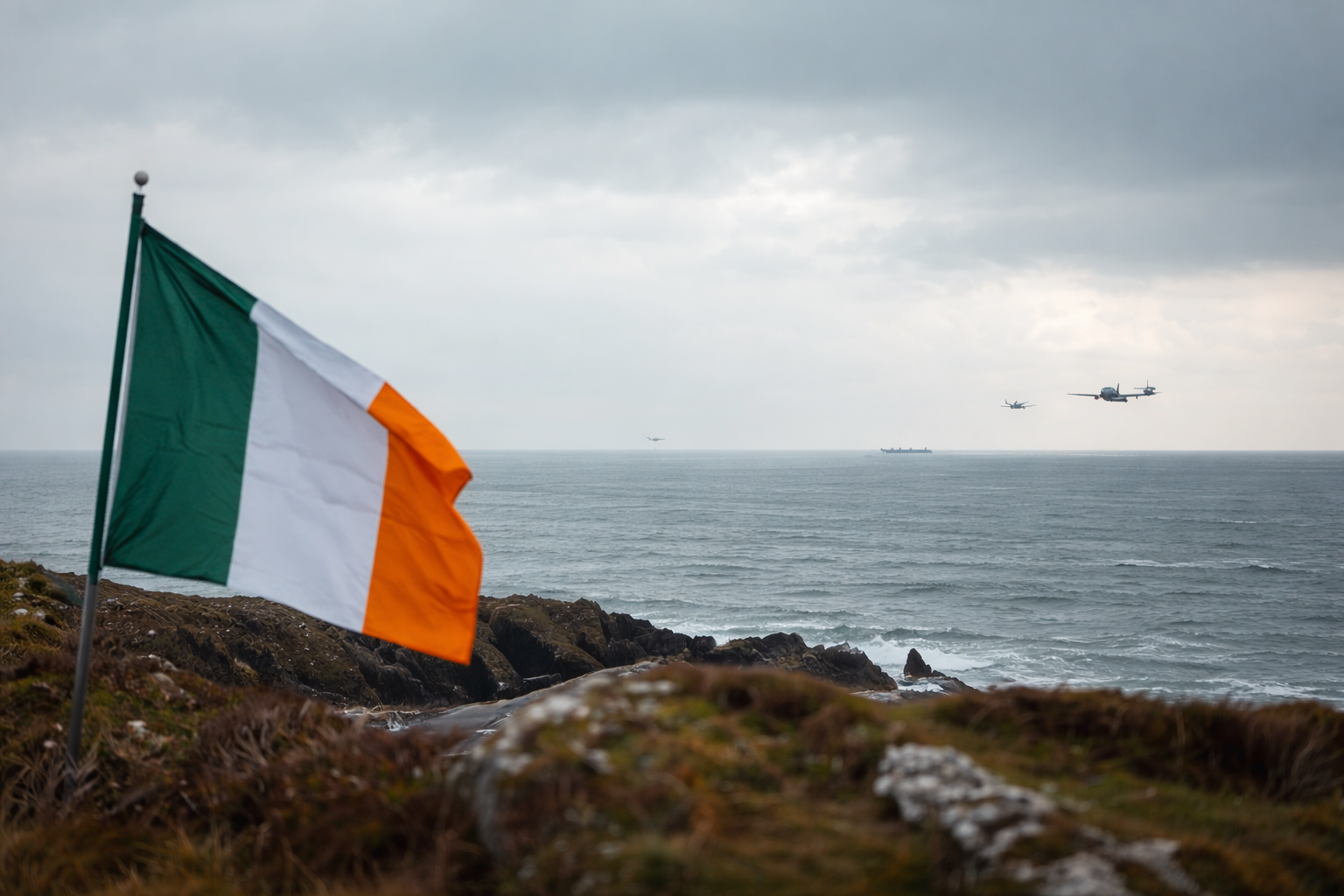


Ireland’s neutrality was first declared in 1939, in response to the outbreak of World War II, and has been maintained ever since. Rather than it remaining a truism, there has been a decades-long debate surrounding the true authenticity of this label of neutrality, given the country’s outward partiality within the international landscape. However, regardless of whether Ireland’s passive neutrality aligns with a true conception of the word, this effectively means that Ireland has no formal military alliances, nor do they have any foreign military bases on their soil.
Recently, discussions surrounding Irish neutrality have shifted from a semantic one of whether Ireland is neutral, to questioning whether Ireland should be neutral. The notion of Irish neutrality under threat first emerged on joining the European Economic Community (EEC) but has become increasingly salient in recent years. Particularly since Russia’s 2022 invasion of Ukraine, Ireland’s neutrality has emerged at the forefront of both public and political debate. Taoiseach Micheál Martin has claimed that neutrality must be subject to some degree of evolution, and officially, Ireland has expressed full support for Ukraine, only stopping short of providing any lethal military support. Critics of neutrality in the current climate tend to view it as an expression of passive malevolence, but still, neutrality in Ireland seems to retain strong majority support amongst the Irish public.
Regardless of support, the growing support for Irish de-neutralisation brings to question how neutrality currently impacts Irish foreign policy, and similarly, what it would mean in practical terms if Ireland were to renege on this position.
Catalytic Alliances
A reasonable assumption is that Ireland would not simply end its neutrality without any expressed intentions of replacing this policy with alliances of some capacity. A highly viable outcome within this scenario would be Irish integration into NATO. Currently, Ireland is one of only four EU countries to have opted out of NATO membership together with Austria, Cyprus, and Malta. All four of these countries have done so largely on the basis of their respective neutrality. Additionally, there has been recent precedent set by ex-neutral EU members joining NATO. Notably Sweden and Finland both rescinded their tradition of neutrality following the war in Ukraine. Given that the war also caused the spike in the salience of uncertainty surrounding Irish neutrality and its current appropriateness within Irish foreign policy, a decision to renege Irish neutrality seems to go hand-in-hand with at the least a discussion of NATO membership.
De-neutralisation would also very likely have implications for Ireland’s positioning within other transnational bodies – most directly, the EU. Throughout the period of Ireland’s EU membership, neutrality has shaped a large amount of their involvement and behaviour within the Union. Currently, via neutrality, Ireland is not bound by the EU’s mutual defence clause (Article 42.7) due to the safeguard clause of the article which prevents aspects of Member States’ defence policy (in Ireland’s case, neutrality) from being tarnished by their EU membership. However, if Ireland were to give up its neutrality, they would theoretically be fully bound by Article 42.7.
Ireland’s involvement in other EU projects would also likely be affected by their loss of neutrality. Projects such as PESCO (Permanent Structured Cooperation), where Ireland is currently only opted in to non-offensive projects, would not strictly require offensive Irish military involvement. Still, it is very likely that without neutrality, Ireland would begin to see increased international pressure to increase their military presence in these projects.
Symbolic Implications
While the material consequences of Irish neutrality have been central to discussions on foreign policy, its symbolic significance has been equally relevant. As such, the aforementioned heightened alliances, or any other subsequent military alliances brought about within a de-neutralised Ireland, could have a number of symbolic implications on matters pertaining to Irish foreign policy. Neutrality has long operated as a form of soft power, allowing Ireland to punch above its weight in global diplomacy and peacekeeping. A move towards military alignment would likely have consequences that extend well beyond the logistical scope of security cooperation. It would also challenge a carefully cultivated international identity: that of Ireland as a peace-oriented state within the international context.
One of the most noticeable embodiments of this soft power asset lies in Ireland’s role in UN peacekeeping operations. Ireland is the only country to have maintained an unbroken presence on UN and UN-mandated peace missions since 1958. It currently has substantial deployments in peacekeeping missions in Lebanon, Syria, The Golan Heights, Jordan, Mali, and the DRC, amongst others. Furthermore, Irish Defence Force officers hold several key positions in the UN’s Department of Peacekeeping Operations in New York. This reputation is supported by Ireland’s neutral military status, which enhances trust among international actors, most notably host countries with with active peacekeeping missions. While revoking Irish neutrality may not immediately lead to withdrawal from these missions, over time it could very likely undermine Ireland’s credibility as a genuinely impartial actor.
Further symbolic consequences would likely be felt in Ireland’s longstanding relationships including with Palestine. Ireland has traditionally positioned itself as one of the most steadfast supporters of Palestine in the West, often diverging from more cautious or pro-Israeli stances taken by its peers. Neutrality can be viewed as a facilitator of Ireland’s unique stances, allowing a distinct moral space to be occupied without the complications of alliance politics. As a result, Ireland has earned a degree of credibility in the region that is rare among Western nations. If Ireland forms military alliances with countries perceived to be hostile to Palestinian interests, it risks eroding diplomatic capital.
In this context, the symbolic weight of neutrality should not be understated. It is not simply a policy of non-participation but a pillar of Ireland’s international persona, affording it a moral authority that few states of its size enjoy.
Viability
It is important to note that this discussion hinges on the assumption that a non-neutral Ireland is a politically viable outcome. In reality, this prospect may be significantly overstated. While neutrality is not overtly enshrined in the Irish Constitution, any formal abandonment – such as joining NATO or entering a mutual defence pact – would require a referendum, specifically in cases where treaty obligations or shared foreign policy frameworks were involved. Politically, such a move remains highly unlikely. Neutrality is deeply embedded in Irish political culture and public salience, with recent polls showing consistently high degrees of support among Irish voters for the current policy of neutrality between 63-75%. More realistically, as Micheál Martin has suggested, Ireland’s neutrality may evolve incrementally – drifting toward closer international cooperation while avoiding formal, military shifts. For now, while neutrality attracts consistent commentary, Ireland is far from crossing any thresholds into full military alignment.
Ireland and the GCC in Comparative Perspective
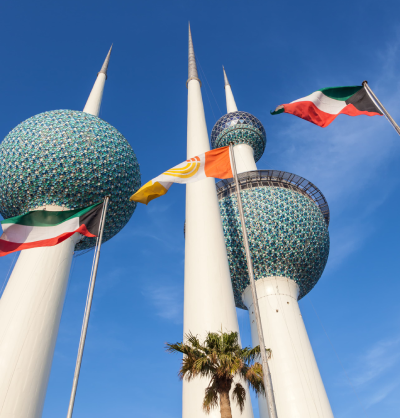
A comparative lens can also be applied by considering Ireland’s neutrality alongside the foreign policy strategies of the Gulf Cooperation Council (GCC) states. While GCC countries are not neutral in the classical European sense, some – particularly Oman – have pursued forms of strategic insurance that prioritise mediation, diplomatic flexibility, and diversified partnerships over rigid bloc alignment. Much like Ireland, these states leverage diplomatic credibility and soft power to punch above their weight internationally, hosting peace talks, mediating regional conflicts, and maintaining dialogue with rival powers. However, unlike Ireland, most GCC states balance this diplomatic posture with explicit security guarantees, often hosting foreign military bases or maintaining defence partnerships with major powers. This contrast highlights the distinctiveness of Irish neutrality: whereas GCC safeguarding operates within a security-dependent framework, Ireland’s approach relies more heavily on normative legitimacy and institutional trust. Analysing these similarities highlights the various ways that neutrality and non-alignment can be used by small and medium-sized states to maximise their influence in a competitive international system, depending on factors such as geography, threat perception, and historical experience.
Sources
- https://www.jstor.org/stable/20557825
- https://www.bbc.co.uk/bitesize/articles/zvxs46f
- https://www.bbc.com/news/world-europe-61397478
- https://www.jstor.org/stable/30001725
- https://www.ireland.ie/en/dfa/role-policies/international-priorities/peace-and-security/neutrality/
- https://muse.jhu.edu/pub/423/article/810439/summary?casa_token=xWUkZH7rqO8AAAAA:lnSw53S9ro11Dmc9XNH6UUX2FG3OIUqTpKr1YzTRyQLhS-vlbP86rgOYaypaXIu_7Mt9kC2S
- https://www.irishtimes.com/ireland/2025/02/01/irelands-neutrality-under-attack-shifting-geopolitics-bring-pressure-to-change/
- https://www.irishtimes.com/opinion/2025/02/21/irelands-neutrality-is-widely-regarded-as-absurd-and-complacent/
- https://www.irishexaminer.com/opinion/commentanalysis/arid-41570671.html
- https://verfassungsblog.de/neutrality-and-the-irish-constitution/
- https://www.ireland.ie/en/dfa/role-policies/international-priorities/peace-and-security/peacekeeping/
- https://ecfr.eu/publication/ambiguous-alliance-neutrality-opt-outs-and-european-defence/
- https://www.irishtimes.com/ireland/2025/04/19/poll-shows-irelands-attachment-to-neutrality-is-strong-but-nuanced/