


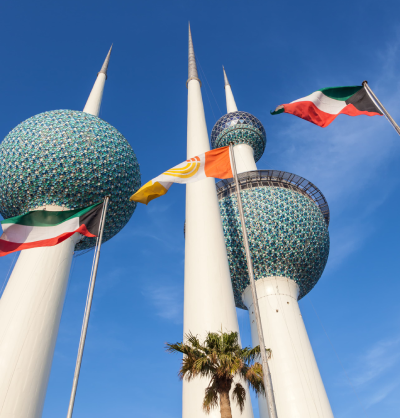

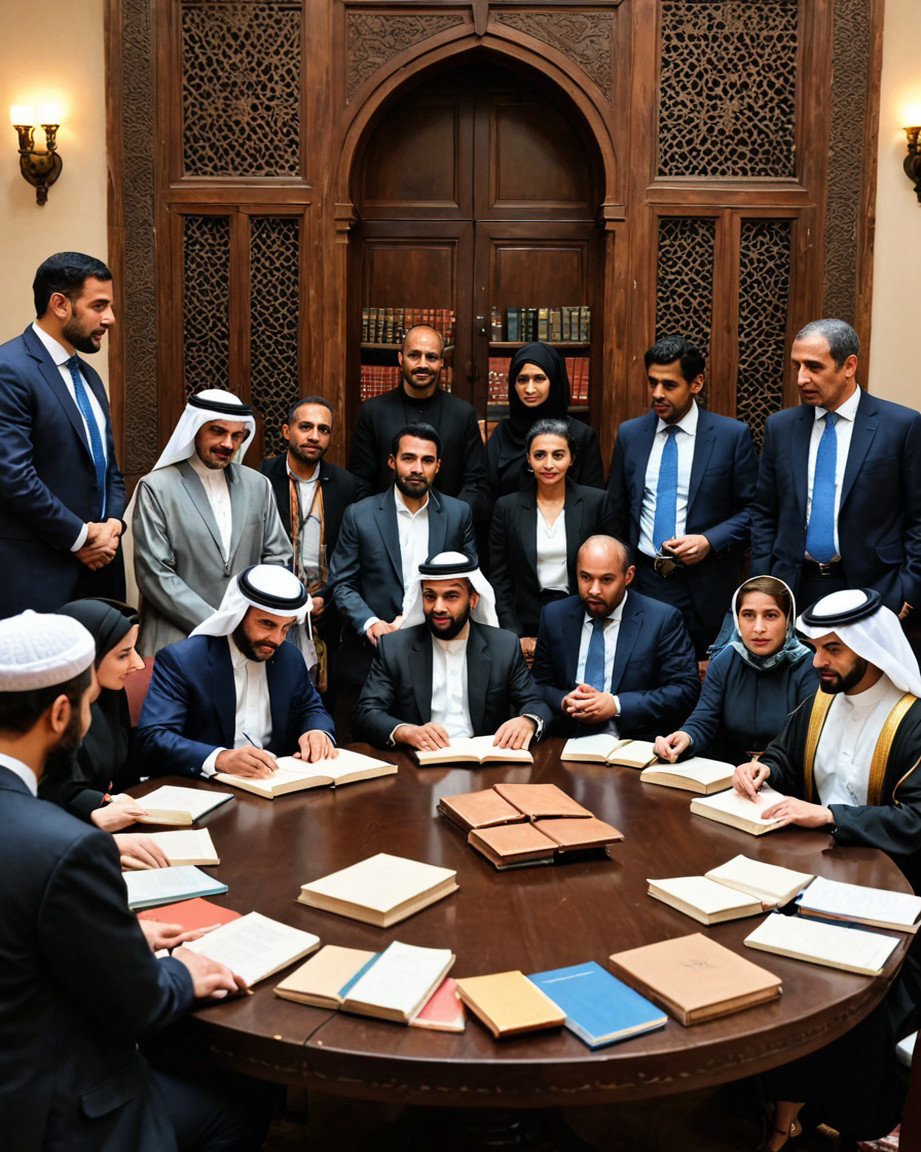


In December 2024, the meeting of the GCC Supreme Council, composed of the Heads of State of the six Member of the Organisation, founded in 1981, was held. The 45th meeting of the leaders clarified the position of the 6 Gulf states with respect to the many challenges of the International Community. Climate change, innovation, the situation in Gaza, relations with Iran, and the Organisation’s global vision were some of the many topics covered in the Political Legislative Document adopted at the end.
On the environmental front, the Leaders reaffirmed the commitments of the Paris Climate Agreement by recalling, among others, the prominence of the United Arab Emirates (UAE) hosting the 28th Conference of the Parties to the Agreement (COP) in 2023. It is precisely what is called a “commitment to future generations” that underlies the UAE’s choice to host the UN Conference on Water in 2026 and a more general “applause for the many activities of member states in the field of recycling reuse and pollution reduction.” All within a framework of energy transition defined as essential, but necessarily “balanced” so as not to eliminate energy sources, but to innovate their use while reducing emissions.
Innovation in production processes and digital transition underpin statements inherent to cybersecurity, which is increasingly central to global policies. In this regard, Saudi Arabia with its National Strategy 2024 -2028 has taken de facto leadership in the field among Gulf countries with projected turnover more than $6 billion in 2029.
On the complex Palestinian situation, however, the Leaders expressed disappointment with Israel’s behavior described as “unjustifiable” and far removed from internationally recognised rules on self-defence. In this vein, the Six openly spoke of “genocide, ethnic cleansing and crimes against humanity” calling for concrete interventions by the international community within the framework of Humanitarian Law. On the point, recalling three UN Security Council resolutions (2735, 2712, 2720), the Supreme Council stressed on the one hand the importance of a ceasefire, praising Qatar’s mediation work, and on the other hand the essentiality of the release of all hostages and the return of displaced people to their homes. The Palestinian issue was also a reason to manifest a more general commitment of the Gulf countries to the implementation of international law. Indeed, in this direction, the Document recalled the International Court of Justice’s order of 24 May 2024, on the cessation of Israeli attacks and thanked South Africa for its commitment before the highest international court.
Also, with respect to Iran, the six leaders stressed the importance of respecting international norms, particularly those referring to sovereignty and delimitation of marine spaces, which, in the case of the three islands — Greater Tunb, Lesser Tunb, Abu Moussa — disputed between the UAE and Iran, appeared to be ignored by Tehran. In this regard, again evoking the cardinal principles of international law, the Six hoped that Iran would begin “to abide by international rules, including the principle of non-interference in the affairs of others and good neighbourliness” hoping that it would cease its research activities on enriched uranium.
In addition to offering keys to the situation in Iraq, for which they called for the preservation of Arab cultural roots, Syria, on which they condemned Israel’s action in the Golan Heights and on Afghanistan, Lebanon, Libya, Somalia and Sudan, the Six also discussed the international role of the GCC. On the situation in Ukraine they reiterated that the Council remains convinced of the importance of the cardinal principles of international law, already recalled for Iran, among them territorial integrity and non-interference. Finally, on international cooperation, they stated that there is satisfaction with the first Summit with the European Union held in October 2024 and that this inter – regional cooperation is not limited to Europe, but rather has been extended to the Community of Latin American and Caribbean States, the Benelux and the Nordic Five. On the bilateral level, cooperation continues with the U.S. but also with the BRICS group of countries, including Russia.
It was, therefore, a summit with a broad agenda useful for understanding the position of the Organisation, and thus of its 6 Members, on major international dossiers. What emerges on the political level is a wise equidistance from the current blocs, with the GCC-EU partnership and with the U.S., but also praise for South Africa and a wish for cooperation with the other BRICS Group states. There is, however, an overt confidence in the international legal system, which is not taken for granted and is as important as ever in these years of global chaos.