


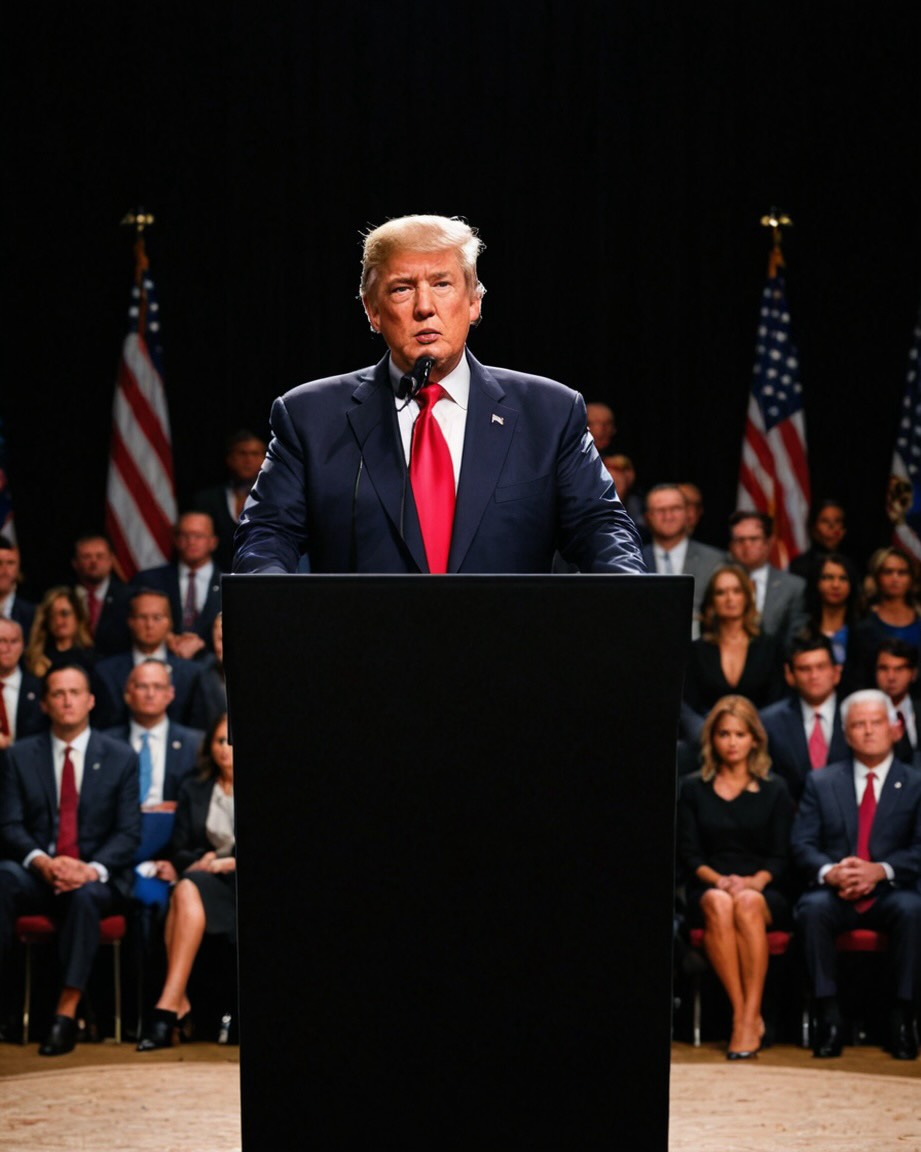


Donald Trump, and his incoming administration, are in the global spotlight after the President-elect’s historic political comeback. The first President of the United States (US) in 132 years, since Grover Cleveland to be re-elected to a non-consecutive term as President. As Gulf leaders analyse the potential economic, energy, and security impact of Trump’s second presidency, the configuration of his cabinet and advisor appointments provides some early hints. This underscores the importance of this transition, given the region’s reliance on sound US relations and ongoing challenges such as energy market pressures and regional security threats.
Just days after his election victory in November, Trump was photographed with Yasir Al-Rumayyan, the governor of Saudi Arabia’s Public Investment Fund (PIF), a key player in the country’s Vision 2030 economic diversification initiative. The ringside conversation at the Madison Square Garden UFC fight in New York has been interpreted by some as an early indicator of Trump’s desire to cement relations with Saudi Arabia, possibly reaffirming the strategic alliance between Washington and Riyadh. Al-Rumayyan’s position as a principal architect of Saudi investments abroad, especially in the technology and energy sectors, highlights the economic component of this relationship.
The Arab Gulf’s seasoned leadership fully appreciate Trump’s default to transactional diplomacy—a business-first approach. With these optics in mind, it raises the question: will Trump’s engagement with Gulf states focus on mutual strategic goals or be driven by political and personal alliances? Trump’s cabinet nominees and advisors will greatly influence this question and guide his foreign policy agenda, which could have ripple effects in the Gulf.
Trump surrounded himself in his first term with key appointments widely seen as hawks on Iran, including John Bolton and Mike Pompeo. The former has since turned on Trump and campaigned against him, while Pompeo has demonstrated loyalty, he has been exclude from the incoming administration. Nonetheless, the President-elect’s announcement of his intent to nominate Florida US Senator and neoconservative traditionalist Marco Rubio is a signal of continuation or even an acceleration of a hard-line, sanctions-driven approach to Tehran, reflecting the Gulf Cooperation Council’s (GCC) alignment with US interests in countering Iranian influence.
The incoming National Security Advisor, Congressman Mike Waltz is further evidence of this. A former George W Bush administration Defence Department official and counterterrorism advisor to then Vice President Dick Cheney, his hawkish-rooting in his approach to Middle East geopolitics will be profoundly felt in Trump’s inner-circle, especially as it relates to countering Iranian influence. John Ratcliffe’s announced appointment as the next CIA Director is also significant. As the former Director of National Intelligence in Trump’s first term, he previously supported a hardline approach to Iran and enhanced intelligence coordination with allies, which again aligns with Gulf priorities in countering Tehran’s activities
There does however remain speculation of the inclusion of more isolationist advisors on Trump’s team, leading to potential uncertainty of Gulf security arrangements that in part rely upon American military support. Pete Hegseth’s nomination for Secretary of Defence is perhaps an indicator for this hypothesis. A relative political outsider, military veteran and former Fox News host, he is known for his strong advocacy of the ‘America First’ policy. Hegseth’s leadership at the top of Pentagon might prioritise bolstering US military readiness while urging Gulf states to assume greater responsibility for regional security. The future of his nomination however is far from certain having been plagued with an array of misconduct allegations.
Any such shifts could drive Gulf states to strengthen their own independent defence capabilities or intensify ties with alternative partners like China. On the economic front, the Gulf will be watching to see what Trump decides about key decisions related to trade and energy. Those in the next Trump administration supportive of his long-standing ‘America First’ mantra might try to optimise US energy exports. After all in hist first term there remained a focus on American energy independence, advocating policies that boosted US oil and gas production. If these strategies are replicated, this would almost certainly mean more energy-industry competition. A rise in US oil and LNG exports could undercut Gulf market share, pushing producers to diversify petrochemical export strategies and fast-track non-oil revenue generation projects, such as Saudi Arabia’s Vision 2030 and the UAE’s green energy programmes.
The bright side is Trump’s business-friendly policies and possible investments in Gulf-related projects could nurture more private sector engagement. Additionally, the Gulf’s sovereign wealth funds, including Saudi Arabia’s PIF, could seek to broaden investments, forming new partnerships with the US in infrastructure and technology. But the push for energy transition presents a dual challenge. While the Gulf has wisely launched ambitious green energy programmes, it is still dependent on hydrocarbon revenues. Trump’s scepticism of climate initiatives, real or imagined, could dampen global efforts to decarbonise and buy some time for Gulf oil exporters. There was perhaps an early indication of this by virtue of the COP29 conference in Baku, amid growing speculation the next US administration would once again withdraw from the Paris Climate Accords.
While Trump’s return to 1600 Pennsylvania Avenue presents opportunities for the Arab Gulf countries, it is not without many uncertain variables. The President-elect’s pragmatic and business-oriented approach to diplomacy could benefit the region with possible economic opportunities. On the other hand, his mercurial style and focus on ‘America first’ isolationist interests could also complicate the GCC’s longstanding relationship with Washington as a reliable ally.
The GCC has exhibited a reliable track-record balancing geopolitical headwinds. Such a balance will be likely exercised with their economic influence and regional power to work with the incoming Trump White House, while also keeping one eye on contingency measures to mitigate any policy shifts that could challenge their own strategic interests.