





Abstract: Following Donald Trump’s victory in the 2024 US Presidential Election, the Middle East has seen a variety of reactions reflecting the region’s significant interest in US foreign policy. This article fleshes out some of the main opinions from the Middle East and seeks to show some of the differences in approaches that are likely to be followed when it comes to working with Washington.
Keywords: US, Middle East, Donald Trump, foreign policy, Israel, GCC, Iran, Peace, Gaza
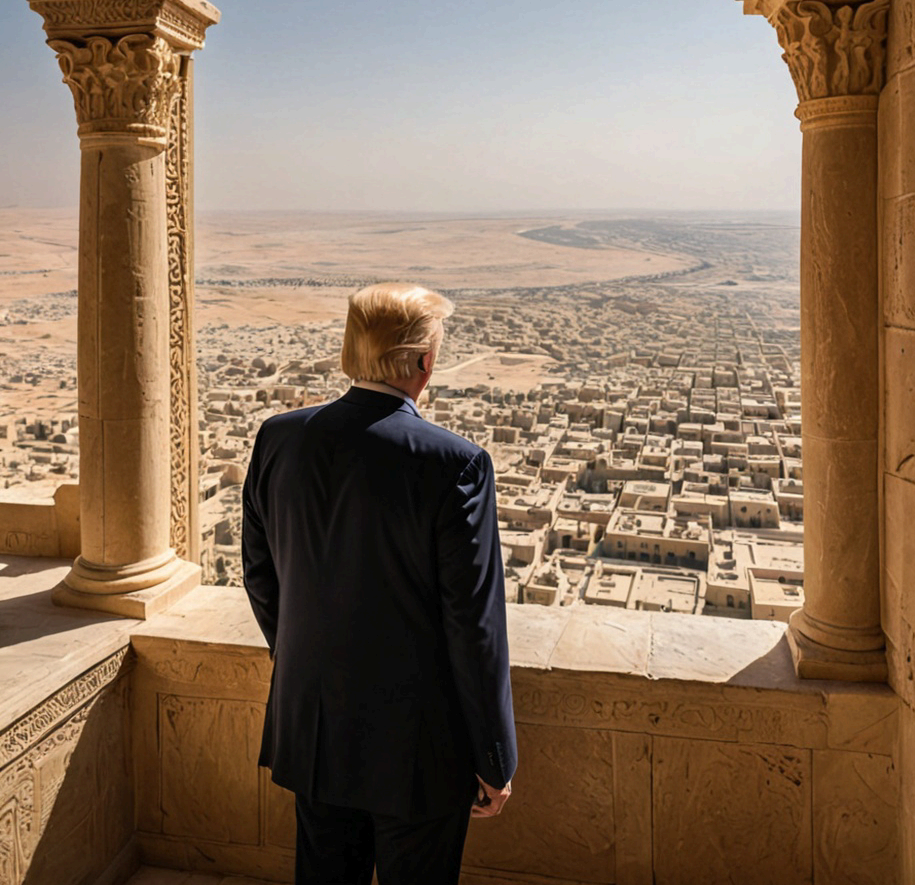
In the wake of Donald Trump’s success in the 2024 US Presidential Election, the world has been abuzz with reactions, particularly from those whose destinies are closely intertwined with the US. Among these, the Middle Eastern countries, especially Israel and several Gulf states, have been quick to react—reflecting a special form of anticipation related to the strategic calculations of the US’ foreign policy direction under Trump 47.
Israel’s Prime Minister, Benjamin Netanyahu, was among the first world leaders to extend congratulations to President-elect Trump. Netanyahu described the win as ‘history’s greatest comeback,’ a phrase not only reflecting personal political admiration but also signalling the hopeful continuity of robust US-Israel relations. This sentiment was echoed by members of Netanyahu’s cabinet, including figures like National Security Minister Itamar Ben-Gvir, who celebrated the outcome on social media. The significance of this victory for Israel was underscored by Trump’s immediate post-election actions as he dedicated 20 minutes to speak to Netanyahu. The conversation likely touched on the ongoing conflicts in Gaza and Lebanon, where Trump has pledged to bring peace.
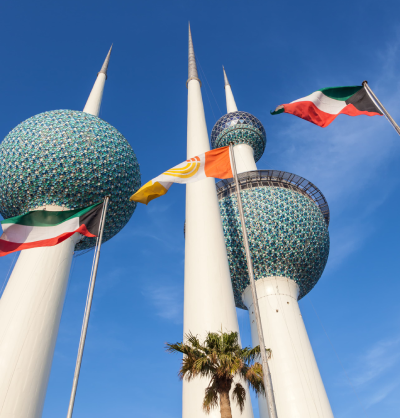
The reaction across the Gulf states may be said to be of measured enthusiasm. Leaders from all six Gulf Cooperation Council (GCC) countries congratulated Trump, signalling an intent to deepen economic and security ties. The list of congratulations was vast but included the highest authorities from across the bloc, including: Bahrain’s King Hamad Bin Isa Al Khalifa and Crown Prince and Prime Minister Salman Bin Hamad Al Khalifa, Kuwait’s Emir Meshal Al-Ahmad Al-Jabbar Al-Sabah and Prime Minister Ahmad Abdullah Al-Ahmad Al-Sabah, Oman’s Sultan Haitham Bin Tariq Al-Said, Qatar’s Emir Tamim Bin Hamad Al-Thani and Prime Minister Mohammed Bin Abdulrahman Bin Jassim Al-Thani, Saudi Arabia’s King Salman Bin Abdulazziz Al-Saud and Crown Prince and Prime Minister Mohammed Bin Salman Bin Abdulazziz Al-Saud and the UAE’s President Mohamed Bin Zayed Al-Nahyan, Vice President, Prime Minister and Ruler of Dubai Mohammed Bin Rashid Al-Maktum and Vice President and Deputy Prime Minister and Chairman of the Presidential Court Mansour Bin Zayed Al-Nahyan). There is a sense of guarded optimism stemming from Trump’s previous efforts to work towards more sustainable peace in the region, his help to contain Iran and deal with some of the peripheral challenges such as Afghanistan [Trump has already indicated that he will ‘fire’ those responsible for the hasty 2021 exit]. In the immediate neighbourhood, both Jordan and Egypt have — like the GCC — voiced hopes for stability and peace. Egypt’s President Abdel Fattah El-Sisi and Jordan’s King Abdullah II bin Al-Hussein congratulated Trump but, like the GCC leaders, emphasised the need to address the Palestinian issue and end Israel’s war in both Gaza and Lebanon.
Iran has remained silent regarding Trump’s victory—an unsurprising approach given their tumultuous relationship during Trump’s first term which was marked by the US scuppering of the Joint Comprehensive Plan of Action (JCPOA, Iran nuclear deal), Washington’s implementation of a tough sanctions regime, heightened tensions over Iranian militias in the Middle East and the targeted assassination of Quds Force leader Qasem Soleimani. Iran is most likely anticipating a more aggressive US policy that may even support Israeli strikes against its military industrial complex including its nuclear facilities.
The election of Donald Trump sparked a scrum of reactions across the Middle East. Israel is optimistic, the GCC states are cautiously hopeful and Iran is — for lack of a better term —terrified. While it remains to be seen how the Trump 47 Administration will set the US’ priority list, it is important to underline that the days of debating strategic retrenchment or the pivot to Asia is in the past. The Middle East has once again surged to prominence in the American voters’ psyche and the region is seen as a key node in US — and indeed NATO/EU — strategic thinking. Trump will likely pursue maintaining a strong, sustained US presence in regional geopolitics. However, as a word of caution, the Middle East remains a complex tapestry of alliances and rivalries where Trump’s policies will be watched closely for their impact on peace, security, and economic ties. US rivals will be quick to fill any vacuums and so Washington must walk a fine line and balance its multifaceted interest.