





Nearly five years ago – on 27 March 2021 – China and Iran signed a 25-year cooperation agreement. This agreement came as Iran and its Gulf Cooperation Council (GCC | Bahrain, Kuwait, Oman, Qatar, Saudi Arabia and the UAE) neighbours, began the lengthy process of de-escalation–a process that lasted two additional years. In 2023, under Chinese auspices, Saudi Arabia and Iran normalised their relationship, returned their ambassadors and began to engage. China has been strengthening its long-term relationships with Gulf countries by establishing strategic partnerships and multi-decade economic frameworks. Comprehensive strategic partnerships covering political coordination, energy, infrastructure, and trade have been established with Saudi Arabia and the UAE, while Qatar has signed multi-decade LNG supply agreements with Chinese firms. Bahrain, Kuwait and Oman have also formalised strategic partnerships with China, which continues to engage with the GCC collectively through frameworks aimed at trade, investment and technology cooperation. A prospective China-GCC free trade agreement is also under discussion. These initiatives demonstrate China’s broader strategy of long-term engagement in the Gulf, which aligns with its approach in Iran.
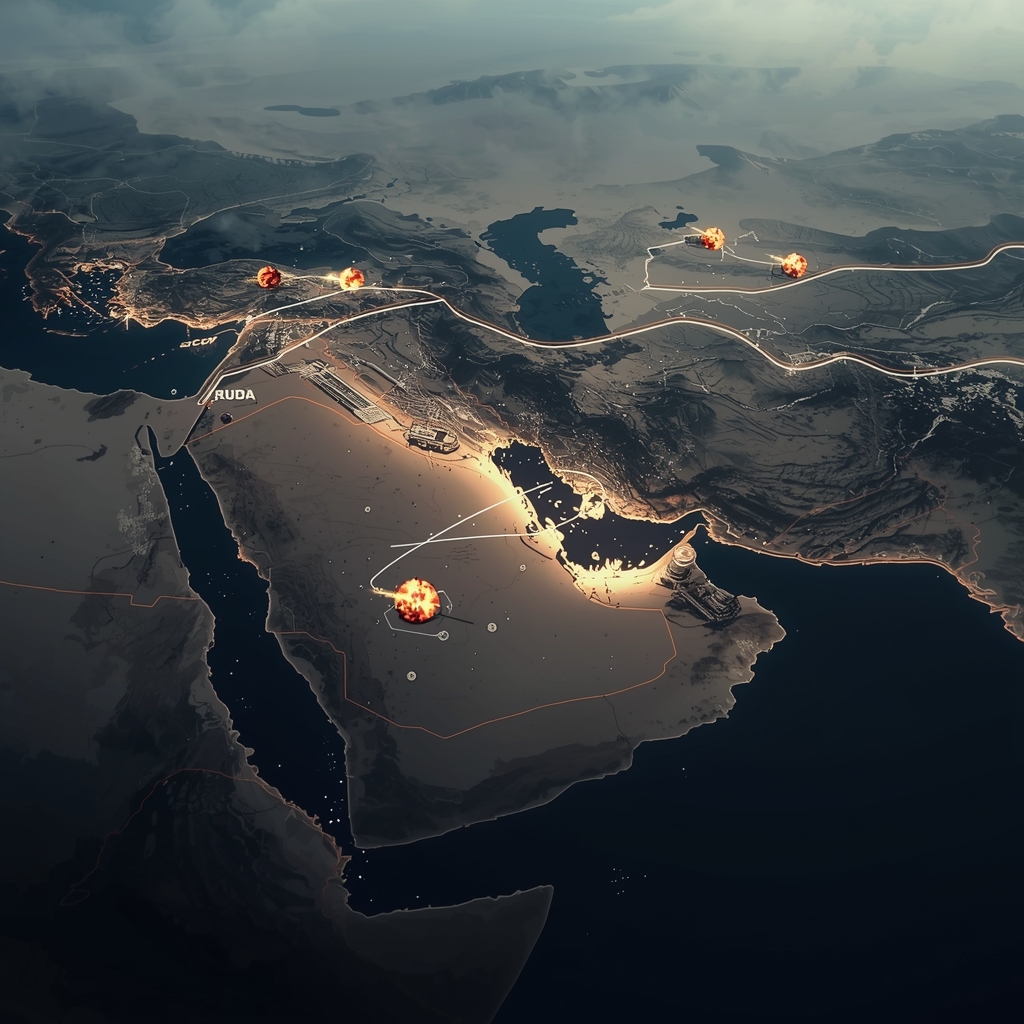
Now, the Iranian targeting of the GCC as collateral in the US/Israel-Iran war has done more than undermine regional peace–it is drawing the lines in the sand and forcing the GCC to ask questions about who is a friend, who is a foe and what comes next.
This may be an uncomfortable position for China since it is attempting to strike a balance between Iran and the GCC while also calibrating whether it seeks to preserve the status quo or see the expansion of its influence in vacuum areas around the world. With its influence steadily growing, Beijing has begun to prioritise its alliances and partnerships–and it increasingly values them. So, rather than leaping into the geopolitical swirls that currently engulf the Gulf it seems to be waiting for a convergence of geopolitical conditions such as mistakes in US regional calculi and the fracturing of the current regional security complex. For the time being however, China is willing to take things slow and has adopted a wait-and-see approach.
But the Middle East of March 2026 is testing China since it relies on energy imports from the region, especially from Iran, Qatar, Saudi Arabia and the United Arab Emirates. These states supply a significant share of China’s oil and gas imports and have become increasingly integrated into Chinese trade networks. Stability in the Gulf carries far greater economic weight than any form of ideological alignment with Iran even if Tehran is offering China the continued, uninterrupted transit rights of the Strait of Hormuz. In fact, ideology counts for very little in setting China’s strategic priorities. Secure energy flows is its bottom line; China’s own economic security trumps.
With the Middle East teetering towards a general war, Beijing is unlikely to align with Iran and is likely to press ahead with its relationship to the GCC. It may not agree with the US/Israel war against Iran but it may also loathe the idea that the GCC should be collateral damage as Tehran lashes out. It is, after all, bad for business.
In this environment, China’s choices are likely to be guided by pragmatic actions rather than diplomatic symbolism. Any regional escalation that threatens shipping routes, energy production or the economic viability of its partners would directly undermine its priorities. Consequently, China is highly motivated to prevent further destabilisation while avoiding visible alignment with any actor involved in the conflict. At the same time, it is becoming increasingly difficult to maintain productive relationships with both Iran and the Gulf states when their security interests diverge so sharply. If Iran continues to take actions that threaten the Gulf’s economic infrastructure or maritime security, China may quietly recalibrate its partnerships towards those actors that guarantee stability and reliable energy flows. This does not mean abandoning Tehran completely, but it does suggest that the practical weight of China’s regional relationships will be more in favour of the states that support the wider regional order.
Ultimately, rather than rushing to fill the geopolitical gap, Beijing is more likely to observe how the regional balance evolves while protecting its core interests. However, if the Middle East were to descend further into confrontation, China would be forced to play a more active role in safeguarding regional stability.
Sources
- https://www.mdpi.com/2071-1050/15/2/1442
- https://www.nytimes.com/2026/03/09/business/china-trade-persian-gulf-iran.html
- https://chinapower.csis.org/china-belt-and-road-initiative/
- https://link.springer.com/chapter/10.1007/978-981-99-9633-9_1
- https://www.cambridge.org/core/elements/chinese-global-infrastructure/35932BF8AEADDEFF1E96B19B13300FAE
- https://www.reuters.com/world/china/china-does-not-agree-with-attacks-gulf-countries-says-foreign-ministry-2026-03-11/