




The worst nightmares are those in which one is lucid enough to realise they can do nothing to stop the painful sequence of events unfolding around them. Since the US and Israel struck Iran, European countries have been living in exactly such a nightmare.
Iran’s Islamic Revolutionary Guard Corp (IRGC) has unleashed a cynical, unlawful missile and drone campaign against the Arab Gulf states, deliberately aimed at paralysing the global economy and inflicting intense suffering on millions of people who are not directly involved in the Israel/US-Iran war. Europeans are also being affected and are among the most exposed to the ongoing energy shock.
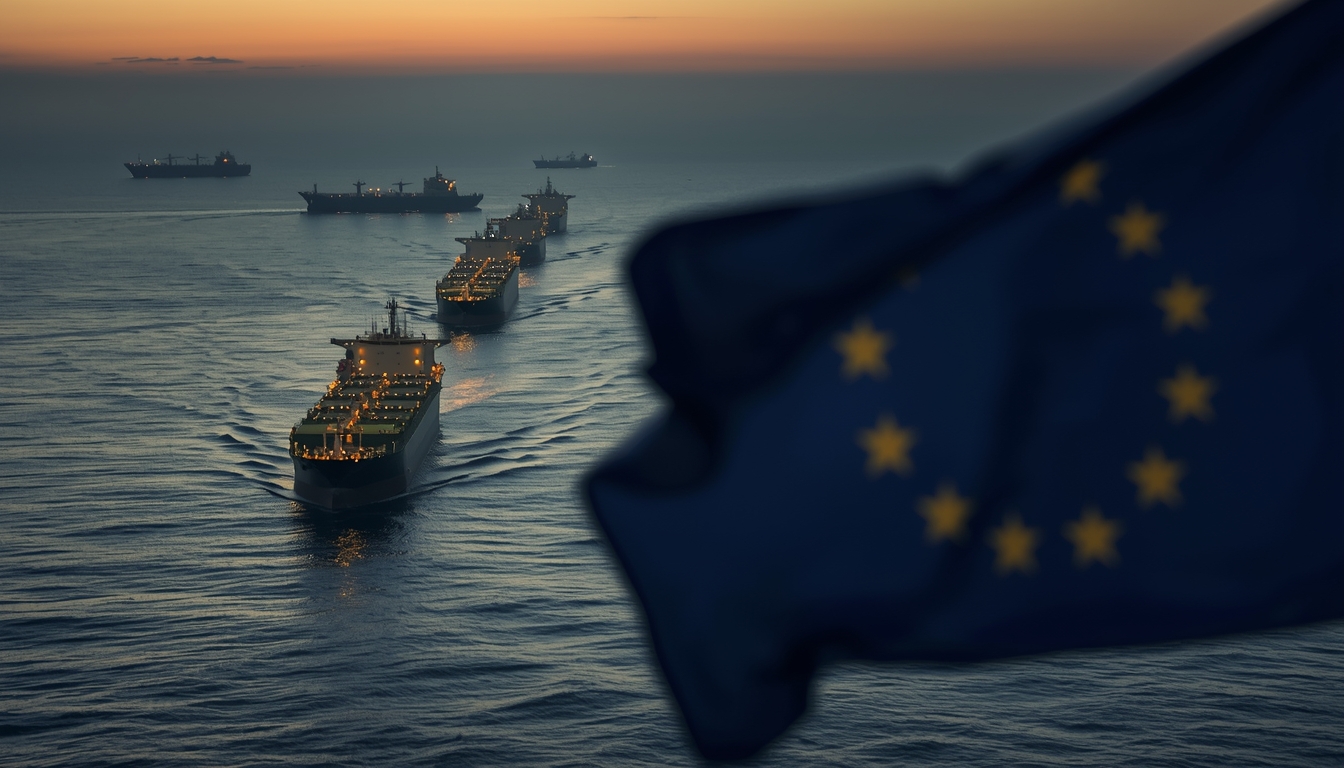
The blows have come in rapid succession. Brent crude and TTF gas prices nearly doubled in the first few days alone; once the Strait of Hormuz was confirmed impassable, the shock rippled through to urea fertilisers, helium, and aluminium. The latest blow came with the announcement by QatarEnergy’s CEO that an IRGC missile strike on South Pars has knocked 17% of LNG production offline. Repairs will take three years, and force majeure will be invoked on long-term contracts with several countries, including Italy and Belgium.
Meanwhile, sovereign debt refinancing rates across much of Europe have risen sharply. France and Italy in particular already face elevated default risk and must devote a significant share of their annual budgets to debt service.
It is also worth noting that European industry has been operating under siege for years. In traditional sectors like automotive, factories are being lost to emerging economies; in high-tech, startups and capital are migrating to the US market. The numbers are stark: in 2025 alone, just among German automakers, 48,700 jobs disappeared.
Most European analysts now point to high energy costs as the principal driver of this dual decline. The Hormuz blockade and the strikes on Qatar have widened the price gap between US and European gas. And, if Trump — seeking to suppress domestic prices ahead of elections — was to block US LNG exports to Europe, that gap would become unbridgeable.
A Looming Russian Offensive?
Were the damage confined to higher costs of living and eroded industrial competitiveness — as in past energy shocks — it might still be manageable. But the damage runs far deeper.
Since 2022, Europe’s systemic adversary — Vladimir Putin’s Russia — has kept an army of 800,000 troops mobilised in Ukraine—along the EU’s eastern borders. The Russian economy has been retooled for war production. As a net hydrocarbon exporter, Russia has seen its per-barrel revenue nearly triple in recent weeks. Europe and Ukraine, both net importers, now face a severe resource deficit.
The fear haunting every European chancellery is that Putin will exploit this moment to bring the conflict directly onto EU soil — in Estonia, for instance. A hybrid warfare campaign is already underway on social media, promoting the fiction of a Russian-speaking “Republic of Narva” within Estonian borders. In Russian strategic doctrine, this is the standard prelude to sabotage and disruption operations, followed by open military intervention. Russian restrictions on mobile internet access — in place for roughly two weeks — have been read by some analysts as a harbinger of forced mobilisation, echoing the pattern of 2022.
A third digital warning sign is the relentless disinformation campaign — run through bot farms and complicit European media — urging Europeans to resume buying Russian oil and gas, on the premise that Russia would offer below-market prices. The goal is to persuade German, French, or Italian citizens that cutting ties with Russia was the true cause of inflation, sapping any public willingness to defend Estonia or another vulnerable partner when the moment of attack arrives.
Russia, which proved entirely incapable of either restraining or shielding the IRGC — to the profound disappointment of some GCC states which had not followed the EU’s sanctions strategy over the past five years — is now seeinly retreating from the international stage (re: Venezuela, Iran and now Cuba) and staking everything on a direct confrontation with Ukraine’s allies.
No European country could currently withstand the drone and missile swarms that have targeted Ukrainian civilians for five years, or that Gulf populations have painfully experienced over the past weeks. The material shortfalls are plain: air defence and counter-drone systems are critically undersupplied. The psychological gap is equally serious: most European publics have yet to internalise that such attacks could happen to them.
Europe is therefore not merely risking a sovereign debt crisis in France or deindustrialization in Germany. It is risking an actual war on its northeastern border — one it would have to fight at a severe disadvantage.
Deescalation at All Costs
Against this backdrop, European governments have very little freedom of manoeuvre. They must bring hostilities to an end, and as quickly as possible, under conditions that allow Gulf extraction to resume and Hormuz transit to reopen. The ultimate fate of the Islamic Republic is a secondary concern. As the German Chancellor stated plainly before Parliament: ‘At this moment, there is no convincing explanation of how this operation can succeed. Washington did not consult us and considered European assistance unnecessary. Ladies and gentlemen, we would have advised against proceeding down this path in the way they are currently doing. […] We share common goals with the United States, but we will never be ashamed to say when our views and interests diverge. Either a partnership can tolerate that, or it is not a partnership.’
French, Italian, and Greek officials have similarly signalled that they are willing to participate in a mission to reopen Hormuz — but only following a ceasefire or under a UN mandate. The same position was reaffirmed at the G7 with the backing of Canada and Japan.
Europeans cannot afford to help Trump call Tehran’s bluff. They lack the time, the fiscal space, and the border security to do so. De-escalation is the watchword. If Europe cannot actively bring it about, it at least hopes that external pressure — from China, India, Pakistan, and other Asian powers that felt the energy shock earlier and harder — will produce it anyway. Several of those countries are already implementing emergency measures.
Medium-Term Advantages
There are, of course, many unknowns. The Islamic Republic could refuse any definitive peace agreement and keep Hormuz under permanent threat, much as the Houthis have done with the Red Sea. It is also possible that the Arab Gulf states, unwilling to spend the coming decades in fear of Iranian disruption, will press Trump to see the war through to the end — however that end might be defined. But if European preferences prevail — if Trump disengages and regional parties conclude it is reasonable to freeze the conflict — Europe may find itself with unexpected geopolitical weight.
The Trump Administration has, after all, left a trail of animosity and distrust among the US’s traditional allies that will take years to repair. Europe, in its various configurations — the EU, the E5, the “coalition of the willing” — is emerging as a less burdensome, more predictable partner, one that consistently favours soft power even as it undertakes an ambitious programme of defence reinvestment. In recent weeks alone, India, Australia, and the Philippines have sought economic or security agreements with European capitals. In the Gulf, there has been genuine appreciation for the quiet but effective support provided by certain European partners: the UK for Bahrain, France and Italy for the UAE.
No one is claiming to supplant the US in its global role, let alone oppose it. But at a moment when the US is riven by internal divisions — and by an identity crisis deep enough to fracture the Trump coalition itself — Europeans have every reason to fill whatever void Washington leaves behind with a more balanced, rules-based approach: one that the US itself may well find worth emulating before too long.