




The geostrategic importance of the Arctic has significantly increased over the past decades, turning this once-remote region into a focal point among major international powers. Greenland, predominantly within the Arctic Circle, has been making headlines since re-elected US President Donald Trump repeatedly expressed his aspiration in acquiring it. Trump deemed the island as essential for the ‘protection of the free world’ and needed for US ‘national security,’ intensifying both international interest and indignation. Greenland’s Prime Minister Mute B. Egede has vehemently opposed to Trump’s aspirations, stating that ‘Greenland is ours’ and that Washington’s approach was ‘completely unacceptable.’ So, what exactly makes Greenland strategically important?
Greenland’s increased importance primarily stems from three critical aspects: its abundant natural resources, strategic defence location, and emerging maritime routes due to climate change. Greenland holds vast natural resources, making it strategically important both economically and geopolitically. While the island currently relies heavily on imported fossil fuels, it aims to transition to 100% renewable energy by 2030, mainly through expanding hydropower, which could also attract foreign industrial investment like Alcoa. Greenland possesses 25 of the 34 critical raw materials essential for green technologies, including rare-earth elements (REE) vital for defence and renewable energy sectors. With China’s near-monopoly on rare-earth elements production and the resulting vulnerability of US supply chains, Greenland presents a critical alternative to mitigate strategic dependence on Beijing. According to the Geological Survey of Denmark and Greenland (GEUS), the island has an estimated 36.1 billion tonnes of rare earth elements, and it is estimated that it could, alone, meet up to 25% of global rare-earth demand in the future. Despite holding great potential, extraction of mineral resources in Greenland encounters some serious challenges, including extreme weather conditions, ice-covered terrain, limited infrastructure, and high operational costs. Additionally, Greenland has adopted an environmentally conscious approach, demonstrated by its 2021 ban on uranium mining and on oil drilling, which further restricts the potential extraction of certain rare-earth elements.
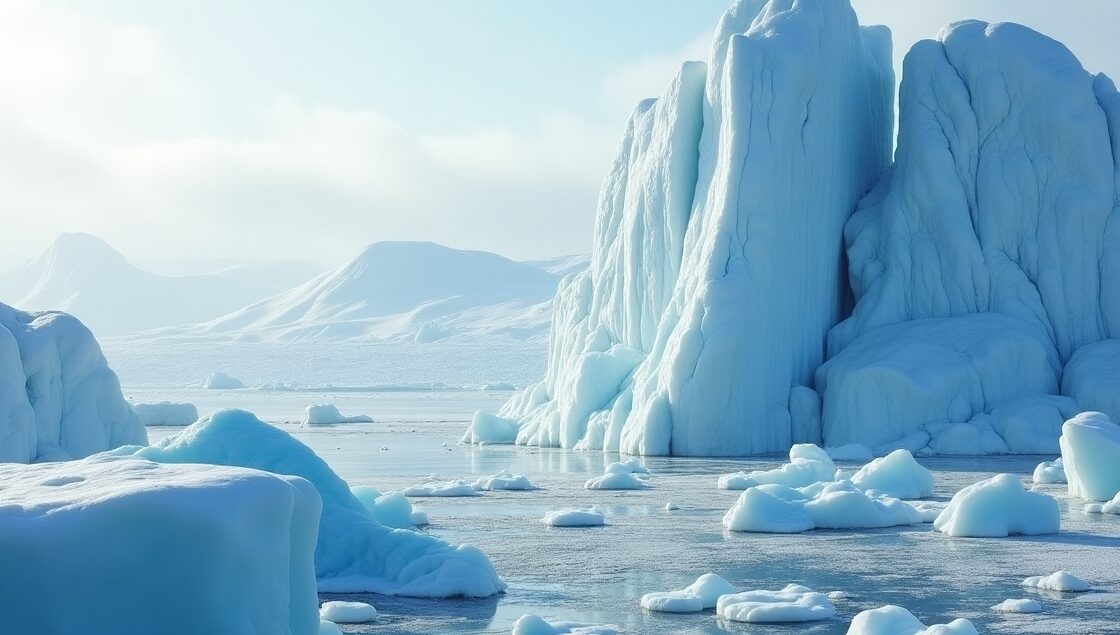
Additionally, Greenland holds about 10% of the world’s freshwater. As ice melts due to climate change, this resource is becoming commercially viable. This has brought to initiatives as Project Greenland that has the purpose of both mitigate melted glaciers water to get lost into the ocean and its contribution to the rising of sea-level, and bring water to water-scarce regions such as MENA countries, Europe, Texas, and California. In fact, Project Greenland is not the only one planning on exploiting the water and ice market, multiple Greenlandic companies have been trying to develop this business and look for partnerships with GCC countries and especially the UAE. In 2024, 22 tonnes of ice were delivered to Dubai by Arctic Ice as a ‘luxury product’ destined to fancy hotels and restaurants.
Greenland’s territory has been of great importance for NATO and the US. The American military Pituffik Space Base (former Thule Air Base), established following agreements between the US and Denmark, serves as an essential NATO’s asset in surveillance systems, missile early recognition, and defence. Additionally, Pituffik serves as a logistical hub and supports operations involving satellite communications, weather monitoring, and polar research activities. Furthermore, Greenland’s strategic position within the GIUK (Greenland-Iceland-United Kingdom) gap, a critical maritime chokepoint connecting the Arctic Ocean and the Atlantic, is fundamental for maritime security. The GIUK gap is particularly tempting for Russia, that through this route could bypass traditional chokepoints making it harder for NATO to track and counter its movements.(1)
Global warming has opened new possibilities for maritime routes that pass through the Arctic, making the journey from Western Europe to East Asia shorter and offering alternatives to the Suez Canal. In fact, time travel through the northern corridor would be approximately reduced between 30% to 40% compared to the Suez Canal Route, consequently offering notable savings in fuel consumption and voyage costs. Conversely, countries highly dependent on Suez Canal revenues, particularly Egypt, face significant economic implications if shipping traffic shifts toward the NSR. Egypt is already facing monthly revenue losses of around $800 million (USD), mostly due to the Houthis targeting vessels in the Red Sea and redirecting traffic towards other paths.(2)
From 2010 to 2023, cargo volumes transported through the Northern Sea Route surged dramatically, rising from 2.1 million tons to 36.2 million tonnes. The melting of ice has sparked the interest of countries such as Russia and China, that have agreed on a collaboration back in November 2024 that aims at developing new Arctic shipping routes. China seems to be particularly interested in expanding its role in the Arctic, its aspiration has been evident for more than a decade, but in 2018 the auto-proclaimed ‘near-Arctic State’ came up with an Arctic Policy and the aspiration to build a ‘Polar Silk Road,’ aiming at exploiting Greenland for both scientific research and the expansion of economic activities.(3) Greenland’s newly introduced restrictive policies aimed at safeguarding the environment have decreased Chinese presence in the island in favour of the Russian Arctic. China and Russia are not the only ones who have decided to invest in an Arctic Policy, the UAE has also invested in critical infrastructure in the Arctic, especially ports and shipping routes.(4) The UAE’s approach has been very cautious and strategic, undertaking a soft partnership with Russia, investing in its projects involving the Arctic. Once again, the US’s ‘absolute necessity’ of maintaining control over Greenland can be understood in the context of its strategic competition with other major international players.
Greenland’s strategic position in the heart of the Arctic, the abundance of different valuable resources, as well as the opportunities for new routes as consequence of global warming, put it at the centre of economic opportunity, geopolitical competition, and environmental transformation.