




The Arabian Peninsula, at the crossroads of millennia-old trade routes, has long been a hub of cultural and economic exchanges between Europe, Asia, and Africa. Despite Roman influence extending across vast areas of the Middle East, Arabia, with its historical allure and immense wealth, was never fully brought under Roman control. Examining this absence of dominance provides valuable insights into the historical interaction between Mediterranean civilisations and Arabia, shedding light on the contemporary relationship between Europe and the Arab world.
For the Romans, Arabia represented a strategic and commercial territory. Known for its exclusive production of incense, myrrh, and spices, Arabia Felix (modern Yemen) was a legendary land, nicknamed ‘Happy’ for its prosperity. These goods, essential for Roman religious rituals, medicine, and luxury, reached Europe through complex trade routes crossing the Arabian Peninsula.
Land routes such as the Incense Road connected southern Arabia to the Mediterranean, passing through key cities like Petra and Al-‘Ula. The latter, known in antiquity as Hegra, was an important commercial hub of the Nabataean Kingdom. While Al-‘Ula was never conquered by the Romans, it was part of a trade and exchange system that Rome indirectly benefited from through its control of the province of Arabia Petraea.
Today, Al-‘Ula is among the most significant archaeological center in Saudi Arabia and one of the Peninsula’s most important historical sites. With its Nabataean rock-carved tombs and the ruins of its commercial past, Al-‘Ula stands as a symbol of the region’s rich historical heritage and a bridge between ancient civilisations and the modern world.
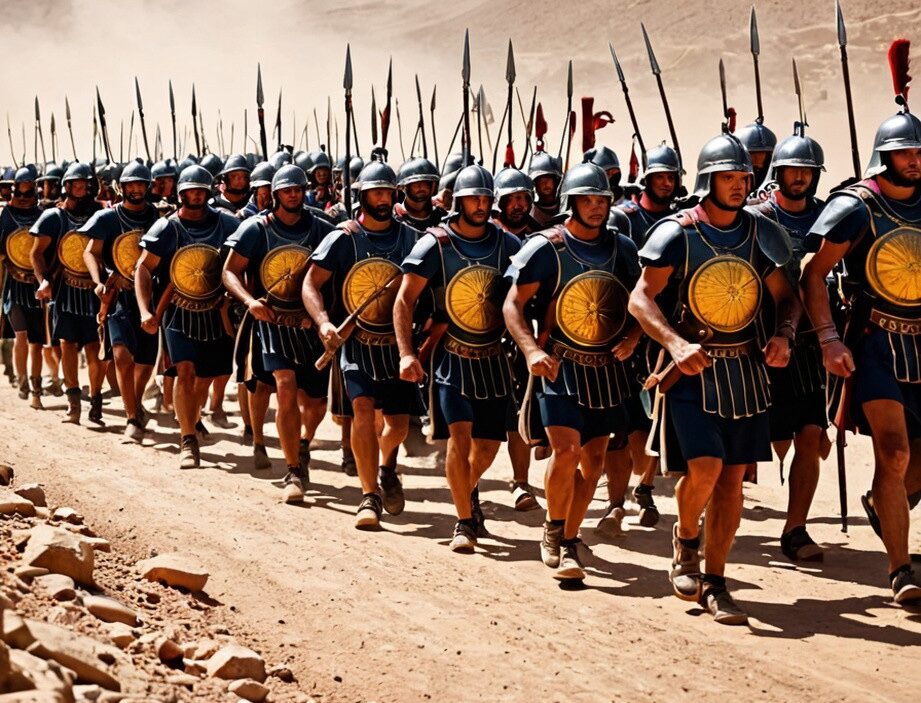
In 26 BCE, Emperor Augustus, aware of the economic importance of Arabia Felix, sent the governor of Egypt, Aelius Gallus, to subjugate the region and incorporate it into the Empire’s borders. Gallus led an army of 10,000 legionaries, supported by Nabataean guides and a fleet navigating the Red Sea coast.
From the outset, the campaign faced severe challenges. The desert’s extreme climate, with its suffocating heat and scarcity of potable water, strained the troops. Diseases such as dysentery and fever decimated the army. Additionally, the Nabataean guides, intent on preserving their independence, deliberately led the Romans into hostile desert regions, far from supply sources and their supporting fleet.
After months of gruelling marches, Gallus and his forces finally reached Ma’rib, the capital of the Sabaean Kingdom. However, the troops, exhausted and severely weakened, failed to breach the city’s imposing walls, which were defended by well-organised forces. After just six days of failed attempts, Gallus ordered a retreat. The journey back was equally devastating, with most of the forces lost. What was intended to bring glory and wealth to Rome ended in humiliation, and Gallus was removed from his position.
In the seventh century, Rome’s successors, the Byzantine Empire, faced new challenges arising from the Arabian Peninsula. With the rise of Islam and the expansion of the Caliphate, the Byzantines progressively lost control of key territories in the Middle East, including those consolidated during Roman rule.
Muslim armies, well-adapted to the harsh desert climate and highly organised, leveraged their mobility and strong religious motivation to defeat Byzantine defences. This marked the end of direct Roman influence in Arabia and vast areas of Syria, Palestine, and Egypt. The fall of these territories demonstrated that the logistical and military limitations that had prevented Rome from conquering Arabia Felix continued to affect its successors centuries later.
The Romans’ and their Byzantine successors’ failure to conquer Arabia was not merely a military shortcoming but a testament to the Peninsula’s autonomy and resilience. Al-‘Ula and other archaeological sites in the region stand as enduring witnesses to a long history of cultural and commercial exchange, highlighting the historical ties between Europe and the Arab world. Understanding these connections helps lay the groundwork for a contemporary dialogue between Europe and the GCC, built on a shared heritage and a vision for the future.