



Abstract—Recent developments across the Middle East showcase significant efforts to enhance regional infrastructure, economic stability, and sustainability. Kuwait’s launch of the Iraq Route aims to boost connectivity between the Gulf and Europe, offering a resilient alternative to maritime trade routes and positioning Kuwait as a key logistics hub. Similarly, the Abu Dhabi Sustainability Week 2025 reinforced global partnerships for sustainable energy, with groundbreaking agreements like the trilateral energy initiative between Italy, Albania and the UAE, alongside investments in renewable technologies. Meanwhile, Oman’s ongoing governance and economic reforms, including the ratification of a national budget and structural adjustments in banking, military, and legal sectors, underscore its commitment to modernisation, economic diversification, and regional competitiveness.
Keywords—Trade infrastructure, GCC, global logistics, geopolitics, Abu Dhabi Sustainability Week (ADSW), sustainability, green hydrogen, decarbonisation.
Game-Changer—The New Iraq Route and Rebalancing Global Trade
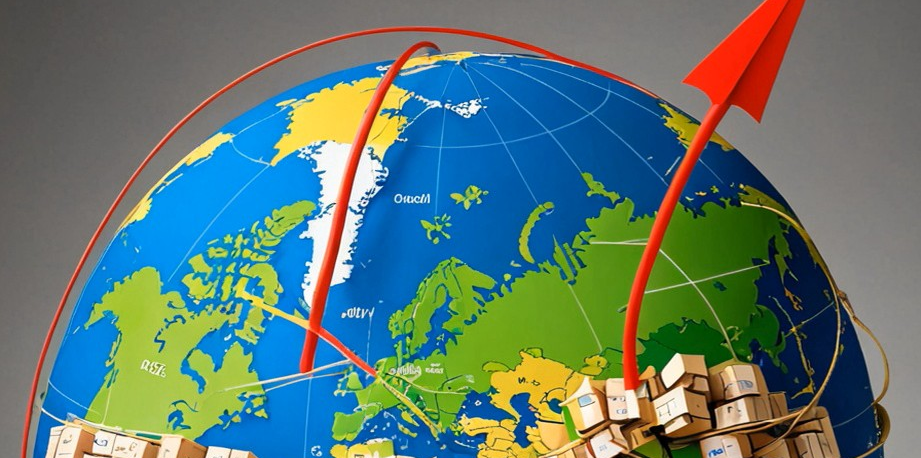
The Communications and Information Technology Regulatory Authority (CITRA) in Kuwait announced the launch of a new strategic initiative aimed at enhancing regional connectivity and diversifying trade routes. The Iraq Route, a new gateway for connectivity and transit, has the potential to significantly improve Kuwait’s position as a transit hub between the Middle East and Europe. This route could offer a viable alternative to traditional maritime trade routes, providing faster and more secure overland transportation options for goods and services. By linking Kuwait to Germany via Iraq, this route could serve as an important land bridge for trade, reducing reliance on congested maritime routes that are vulnerable to disruptions.
The Iraq Route is particularly crucial for mitigating challenges in global trade, as it offers a more direct and resilient connection between the Gulf and European markets. The launch is seen as part of Kuwait’s broader effort to diversify its trade infrastructure and improve logistical efficiency, aligning with the country’s Vision 2035 goals of enhancing its role as a regional trade and connectivity hub. With Iraq strategically positioned between Kuwait and key European markets, this new gateway could facilitate smoother transit of goods, reducing times and costs. Additionally, it may help to alleviate some of the risks associated with maritime shipping, such as piracy or geopolitical tensions in critical waterways like the Strait of Hormuz. As tensions in the region occasionally affect shipping routes, the Iraq Route offers an alternative that could ensure the continuity of trade flows while also promoting stronger economic ties between Kuwait, Iraq, and Europe.
In the context of global trade, this move is not just a boost for Kuwait, but also for Iraq, which stands to benefit from improved infrastructure and increased economic activity. Tapping into this new route allows Kuwait to bolster its competitiveness in the global logistics market, positioning itself as a more influential transit hub. Meanwhile, Iraq moves closer to becoming a more integral player in regional trade, benefiting from enhanced infrastructure and increased economic activity that strengthens its role as a connector between the Gulf and Europe. The new gateway also signals Kuwait’s commitment to modernising its infrastructure and expanding its economic footprint.
In an increasingly complex geopolitical landscape, the Iraq Route presents a strategic opportunity for Kuwait to stay ahead of evolving global trade patterns. Thanks to it, Kuwait can bolster its agility and resilience, ensuring its continued relevance and competitiveness as global trade shifts. This development enforces the country’s position as a significant trade centre, which helps to understand both market changes, geopolitical uncertainties and their great flexibility.
Abu Dhabi Sustainability Week 2025: Global Partnerships for a Sustainable Future
The Abu Dhabi Sustainability Week (ADSW) 2025 reaffirmed its status as one of the most influential global events for dialogue and action on sustainability and energy transition. World leaders, innovators, and companies collaborated to define new pathways toward a greener future.
During the event, prominent figures, including Giorgia Meloni, Italy’s Prime Minister, discussed how to balance economic growth, energy security, and environmental sustainability. The central theme was the fairness of the energy transition, ensuring no one is left behind, with a focus on inclusive policies for developing countries. Technological discussions explored innovations in key sectors such as solar, wind, green hydrogen, and energy storage. The sessions emphasised the importance of integrating these technologies into existing infrastructures, a crucial step to accelerate decarbonisation.
A key highlight was the signing of the trilateral agreement between Italy, Albania, and the United Arab Emirates. This project involves constructing an underwater infrastructure in the Adriatic Sea that will connect Albania and Italy, allowing the transport of renewable energy produced in Albania. With a total investment of around one billion euros, the agreement involves the Italian grid operator Terna and the Emirati company Taqa. The initiative will strengthen Italy’s energy security, promote green energy development in Albania, and confirm the UAE’s role as a strategic partner in the global energy transition.
Several other significant agreements were signed during ADSW. Among them, the partnership between Enel and Masdar stands out, involving an investment of 1.7 billion euros to develop new renewable energy projects in Spain, focusing on wind, solar, and storage. Additionally, a memorandum of understanding was signed between Italy and Saudi Arabia for collaborations on green hydrogen and carbon capture. New pilot projects for improving building energy efficiency were also unveiled, developed in collaboration with Aldar Properties. A competition for startups highlighted groundbreaking ideas in fields such as urban agriculture and sustainable materials. The winning startups received funding and international visibility, demonstrating that innovation and sustainability can go hand in hand.
The Abu Dhabi Sustainability Week 2025 solidified its role as a global platform for collaboration and innovation. Agreements such as the Italy-Albania-UAE trilateral partnership show that strategic alliances and concrete actions can bring the world closer to a sustainable future. However, the success of these initiatives will depend on their effective implementation and alignment with global climate goals.
Governance, Economy, and Legal Modernisation in Oman
In a series of meaningful developments that highlight Oman’s ongoing governance and economic reforms, HM Sultan Haitham bin Tariq issued 9 Royal Decrees, addressing a broad spectrum of crucial issues. Among the most prominent of these decrees was the ratification of the 2025 national budget, underscoring the Sultanate’s commitment to economic stability and growth. In addition, the Sultan also introduced new regulations aimed at refining the banking sector, with updates to banking norms that aim to enhance financial oversight and ensure the continued soundness of the country’s financial system. This is complemented by reforms to the functioning of the Central Bank of Oman, ensuring it remains responsive to the needs of the modern economy while maintaining regulatory integrity.
Additionally, a Royal Decree approving changes to the structure of the Royal Court marks an important adjustment in the country’s administrative strategy, aligning it more closely with the goals of national development. Along with these structural updates, the promotion of senior military officials, including the promotion of certain individuals to the rank of Major General, reflects the Sultan’s ongoing focus on reinforcing Oman’s security system in response to regional and global challenges. In the legislative domain, Oman’s Joint Committees reached a consensus on three critical draft laws, including the introduction of an individual income tax. This move underlines a shift towards more diversified revenue sources, marking a substantial departure from the country’s previous reliance on oil revenues. The committees also worked on the financial law and the establishment of special economic and free zones, aiming to attract investment and foster economic diversification in line with the Sultanate’s Vision 2040 objectives. Furthermore, the Sultan issued two royal decrees concerning key social and legal issues. The first addresses updates to the penal code, ensuring that Oman’s legal framework aligns with modern international standards. The second decree focuses on the relationship between landlords and tenants across residential, commercial, and industrial properties, with the aim of enhancing the regulatory environment in the real estate sector and protecting the rights of both parties.
Taken together, these measures represent a comprehensive effort by the Sultanate to modernise its governance, strengthen its economic foundations, and provide a clear path towards sustainable development. As Oman positions itself to drive a rapidly changing geopolitical and economic landscape, these decrees highlight the Sultan’s determination to guide the country through a period of transformation, marked by legal reform, economic diversification, and enhanced institutional capacity.
Sources
- https://kuwaittimes.com/article/23171/kuwait/other-news/citra-launches-new-intl-gateway-for-faster-secure-connectivity/
- https://rssfeeds.timesofoman.com/article/153618-hm-the-sultan-issues-9-royal-decrees
- https://rssfeeds.timesofoman.com/article/153791-joint-committees-reach-consensus-on-3-draft-laws
- https://rssfeeds.timesofoman.com/article/153814-hm-the-sultan-issues-two-royal-decrees-18
- https://it.euronews.com/green/2025/01/15/italia-albania-ed-emirati-arabi-uniti-firmano-un-accordo-per-condividere-le-energie-rinnov
- https://abudhabisustainabilityweek.com/
- https://www.governo.it/it/articolo/lintervento-del-presidente-meloni-allabu-dhabi-sustainability-week/27490