






Abstract: The LEAP25 conference, held in Riyadh from 10-13 February 2025, marked a pivotal moment in Saudi Arabia’s pursuit of global leadership in digital transformation. This 4th edition of the LEAP Technology Conference, under the theme Into New Worlds, attracted global technology leaders, investors, and professionals, underscoring Saudi Arabia’s role as a key hub for technological innovation aligned with Vision 2030. Meanwhile, the Gulf region faced economic uncertainty as US tariff threats created volatility in stock markets. Increased tariffs on Chinese imports and goods from Mexico and Canada raised concerns over global trade disruptions, particularly affecting Gulf economies reliant on oil exports and international trade. Despite the volatility, Saudi Arabia showed resilience, driven by a diversified economy and robust domestic investments. While some sectors, like telecommunications, performed well, others, such as logistics, struggled. The geopolitical tensions underscored the region’s vulnerability to global economic shifts. Moreover, the extreme weather events of the last few years in the UAE are highlighting the urgent need for comprehensive disaster preparedness and climate adaptation strategies. With climate change increasingly influencing the region’s weather patterns, the UAE is now focusing on long-term reforms in urban planning and infrastructure to address the growing challenge of natural disasters.
Keywords: LEAP25, Digital Transformation, Fibre Optic Networks, Submarine Cables, Saudi Arabia, Cybersecurity, Advanced Computing, Hong Kong, Gulf stock markets, US tariffs, Chinese imports, Mexico and Canada tariffs, Inflation, Global demand, Saudi Arabia stock index, Telecommunications sector, SAL Saudi Logistics Service, Fiscal position, United Arab Emirates (UAE), Record-breaking rainfall, Widespread flooding, Extreme heat, Infrastructure damage, Evacuations, Urban planning, Natural disasters, Climate change challenge.
LEAP25 in Riyadh: What Happened and What Prospects It Opened
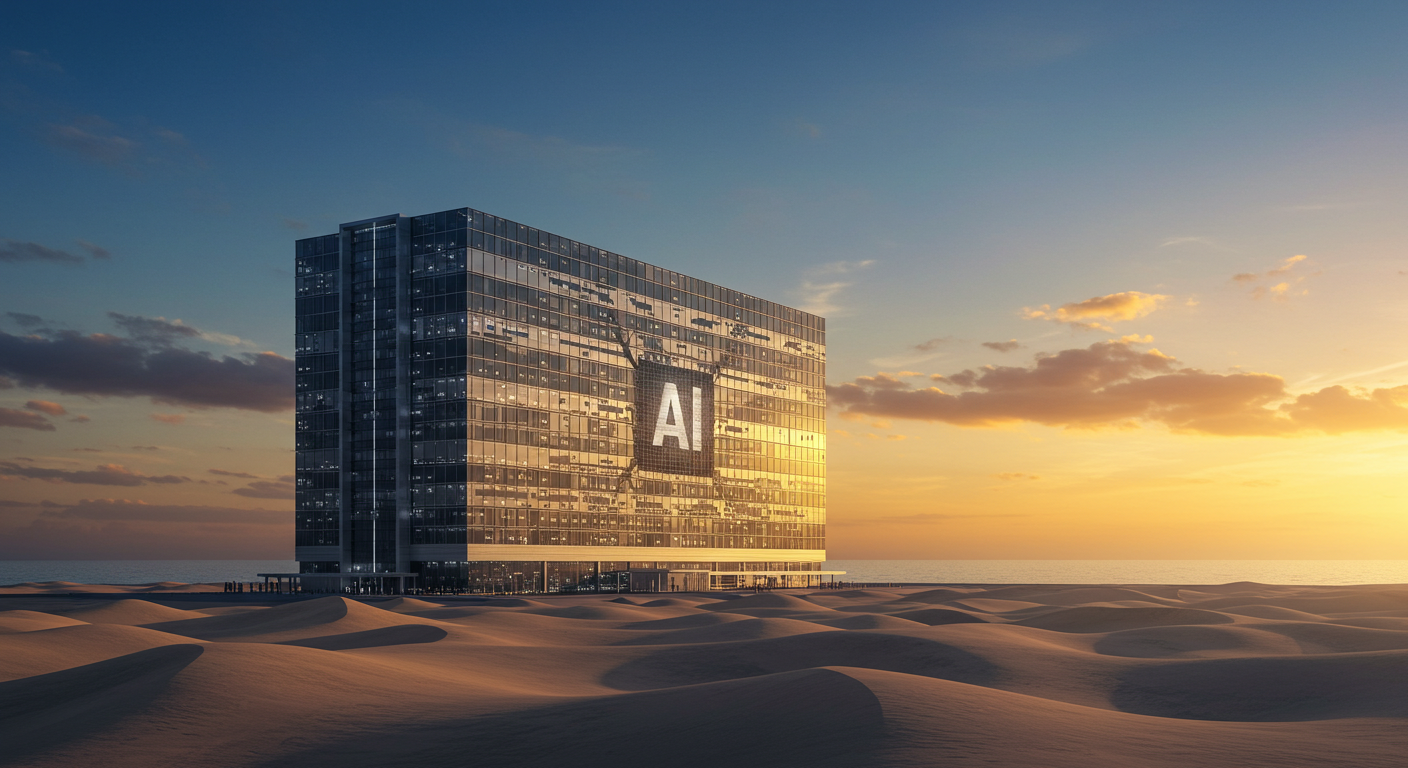
LEAP25, held from 10-13 February 2025, at the Riyadh Exhibition and Convention Center in Malham, marked the 4th edition of the LEAP Technology Conference and a turning point for Saudi Arabia in its path towards global leadership in the digital sector. Under the theme Into New Worlds, the event attracted technology leaders, investors, and international professionals, solidifying the country’s image as a key hub for digital transformation in line with the goals of Vision 2030.
One of the main highlights of LEAP25 was the announcement of investments totalling approximately $25 billion, primarily allocated to the development of Artificial Intelligence technologies and digital infrastructures. Specifically, the Ministry of Communications and Information Technology (MCIT) reported investments of $14.9 billion on the first day alone, primarily focused on AI, while an additional $7.5 billion was announced on the second day for the enhancement of data centres, fibre optic networks, and submarine cables, confirming the country’s ambition to build state-of-the-art infrastructure.
Flagship projects in this expansion include the $5 billion plan by DataVolt and NEOM to establish the first sustainable AI data centre in OXAGON, designed to reach a capacity of 1.5 GW and become a global hub for advanced computing. Similarly, Alfanar announced a $1.4 billion initiative to construct four new data centres, further consolidating the country’s digital transition. Other companies, such as Saudi Arabia Railways, announced targeted investments ($51 million) for a private fibre optic network, while SkyFive allocated $100 million to advanced air mobility solutions.
Although not all announced figures have been confirmed as directly linked to LEAP25, projects from major international companies, including Amazon Web Services and IBM, highlight the growing interest in Saudi Arabia as a strategic hub for innovation. The event also featured in-depth sessions on AI, machine learning, cybersecurity, and many other fields, with a packed agenda of renowned speakers.
A significant development concerns the future expansion of LEAP: Faisal Al-Khamisi, Chairman of the Board of the Saudi Federation for Cybersecurity, Programming, and Drones, announced that in 2026, two editions of the conference will be held — one in Riyadh and another in Hong Kong — highlighting the ambition to extend the Gulf region’s international reach. The decision to pair Saudi Arabia with a leading Asian metropolis like Hong Kong underscores the goal of fostering a global dialogue on emerging technologies, AI, and digital infrastructure.
Ultimately, LEAP25 has strengthened Saudi Arabia’s leadership in the global high-tech landscape, thanks to substantial investments, strategic partnerships, and a growth horizon that extends beyond regional borders, confirming the conference’s significance as a catalyst for innovation and development.
Gulf Stock Markets Face Uncertainty Due to US Tariff Threats
February 2025 saw increased volatility across Gulf stock markets, driven by investor unease over US President Donald Trump’s latest tariff threats. The markets were subdued on 19 February as traders digested the implications of proposed tariffs, including a 10% tax on Chinese imports and 25% tariffs on goods from Mexico and Canada. These policy moves have stirred concerns that the global economic landscape could be further destabilised. The Gulf states, which depend heavily on international trade and oil exports, are particularly vulnerable to such geopolitical shifts. While the immediate impact on sectors like energy and trade logistics is evident, the broader sentiment reflects fears that prolonged tensions could aggravate inflation, disrupt supply chains, and reduce global demand. Investors are especially wary of the unpredictable nature of the U.S. administration’s approach, as tariffs could escalate quickly, further straining regional economic stability.
Saudi Arabia’s stock index managed to gain 0.1%, providing some relief among the general uncertainty. The rise was supported by a 5.5% gain in Mobily, which reported a significant increase in annual earnings and announced plans to increase dividends. Mobily’s positive performance demonstrates the resilience of some sectors in Saudi Arabia, although general market sentiment remains cautious. Analysts point to Mobily’s ability to overcome operational challenges in the telecommunications sector by leveraging strong domestic demand and government infrastructure investment. However, the situation is not as optimistic in all sectors. SAL Saudi Logistics Services, for example, reported an 8.5% drop in the value of its shares. Analysts attribute this decline not only to disappointing earnings, but also to broader operational challenges. The company’s difficulties demonstrate how structural issues, such as evolving business strategies, are having a more profound impact than temporary market fluctuations.
Despite these mixed signals, Saudi Arabia appears to be more isolated from global trade tensions than other Gulf countries. The country’s robust economic diversification strategy, guided by Vision 2030, has led to increased domestic investment and less dependence on oil revenues exclusively. In addition, the Saudi government’s strong fiscal position enables it to deal with external shocks more effectively than its neighbours, whose economies are more dependent on foreign trade and foreign investment. However, with evolving trade tensions, the region’s future will remain closely tied to both global economic changes and national strategies for weathering this unpredictable landscape.
Flooding in the UAE: Record Rainfall Sparks Concerns
Last year, the United Arab Emirates (UAE) faced an unprecedented weather event as the country experienced record-breaking rainfall, resulting in widespread flooding across all seven emirates. This was a rare and unexpected event for a region that typically grapples with extreme heat and arid conditions. This sudden deluge led to devastating consequences, including casualties, severe infrastructure damage, and widespread disruption to daily life. The heavy rainfall and subsequent flooding appear to be part of a broader pattern linked to climate change, as increasing global temperatures lead to more extreme and unpredictable weather events.
The most severely affected areas included Ras Al Khaimah and Al Ain, where landslides disrupted local roads and transport systems, further complicating rescue operations. The UAE’s advanced infrastructure, including the Dubai Metro and intercity bus services, was also paralysed for some time, worsening the challenges faced by both local residents and emergency responders. The floodwaters not only damaged homes and businesses but also led to power outages and water supply disruptions in certain areas, adding to the stress of the affected population. In response to the disaster, the UAE government launched extensive rescue operations to assist those trapped by the rising waters. Emergency teams were mobilised across the country to provide aid, evacuate stranded residents, and clear debris. This flooding highlighted a gap in preparedness for such extreme weather events, which are expected to become more frequent in the face of climate change.
This event serves as a stark reminder of the increasing risks posed by climate change, even in regions historically considered immune to such phenomena. Although the UAE has made strides in building resilient infrastructure and diversifying its economy, the new climate change issue underscores the urgent need for more comprehensive disaster preparedness strategies, particularly in the face of increasingly unpredictable weather patterns. In the last few months, the country is facing new calls for long-term reforms in urban planning, infrastructure development, and climate adaptation policies to mitigate the impact of future natural disasters. As the UAE is still recovering of what happened last year, it must reckon with the reality that climate change is no longer a distant threat, but an immediate challenge requiring urgent attention and action.
Sources
- https://www.mcit.gov.sa/en/news/saudi-arabia-solidifies-its-position-regional-and-global-hub-ai-149b-investment-leap25
- https://www.leaders-mena.com/leap25-expands-groundbreaking-investments-on-2nd-day-surpassing-7-5-billion-in-tech-ai/
- https://www.whitehouse.gov/fact-sheets/2025/02/fact-sheet-president-donald-j-trump-imposes-tariffs-on-imports-from-canada-mexico-and-china/
- https://www.mobily.com.sa/wps/portal/web/personal
- https://sal.sa/home
- https://www.reuters.com/markets/most-gulf-markets-rebound-us-tariff-fears-2025-02-18/?utm_source=chatgpt.com
- https://www.reuters.com/markets/major-gulf-markets-subdued-trumps-tariff-threats-2025-02-19/?utm_source=chatgpt.com
- https://www.reuters.com/markets/gulf-markets-end-mixed-trumps-tariff-threats-2025-02-19/?utm_source=chatgpt.com
- https://edition.cnn.com/2024/04/17/weather/dubai-rain-flooding-climate-wednesday-intl/index.html