



Abstract: In Spring 2025, Qatar positioned itself as a global cultural hub through a series of ambitious museum exhibitions that highlight its use of art as soft power. Shows at Mathaf, the Museum of Islamic Art, and the National Museum of Qatar explored themes of identity, resistance, and global solidarity, while also deepening local cultural narratives. This cultural strategy aligns with the broader transformation across the Gulf Cooperation Council (GCC), where nations are investing heavily in digital infrastructure, artificial intelligence, and education to drive economic diversification and global competitiveness. These parallel developments formed the backdrop to President Donald Trump’s May 2025 Gulf tour, during which the US secured over $2 trillion (USD) in economic and defense deals with Saudi Arabia, Qatar, and the UAE. The visit emphasised strategic partnerships in AI, military cooperation, and regional diplomacy, reinforcing US influence while supporting the Gulf’s modernisation goals. Together, Qatar’s cultural diplomacy, the GCC’s digital push, and deepening US-Gulf ties signal a reshaping of regional identity and power through art, technology, and strategic alliances.
Keywords: Cultural Diplomacy, Soft Power, Global South, Identity, Qatar Museums, Contemporary Art, Heritage, Cross-cultural Exchange, Digital Transformation, Cybersecurity, Digital Infrastructure, Workforce Development, Economic Diversification, Smart Governance, Fintech, STEM Education, Digital Economy, Artificial Intelligence (AI), AI Cooperation, Defense, Donald Trump, Arab Gulf, Red Sea Security, Trump, Gulf, Agreements, Saudi Arabia, Diplomacy, Iran.
Doha’s Cultural Rebirth: How Qatar’s Museums Are Shaping Global Narratives in Spring 2025
The Spring 2025 exhibitions at Qatar Museums represent a carefully curated cultural initiative that highlights Doha’s goal to position itself as a soft diplomacy actor and a global hub for artistic discourses. This season of exhibitions – spanning institutions like Mathaf: the Arab Museum of Modern Art, the Museum of Islamic Art, and the National Museum of Qatar – underscore Doha’s broader strategy of using culture as a conduit for international engagement.
The milestone of this season’s programming is Mathaf’s exhibition, Your Ghosts Are Mine: Expanded Cinemas, Amplified Voices, which brings together the works of more than 40 filmmakers from the Arab world and the Global South. By showcasing stories of displacement, identity, and resistance through experimental film and sound, Qatar shows its global sociopolitical care. This is not only a reflection of solidarity with other parts of the Global South but also a calculated effort to create cultural affinities that overcome geographic borders. Mathaf’s parallel show, Qatar, Close to My Soul, furthers this aim through intimate visual narratives by residents and citizens that collectively chart the emotional and aesthetic of contemporary Qatari identity. In a more introspective yet equally strategic move, the solo retrospective Wafa al-Hamad: Sites of Imagination recognises the legacy of one of Qatar’s pioneering female artists. Al-Hamad’s work, deeply rooted in memory, architecture, and symbolism, signals an important institutional commitment to documenting local artistic lineages. By linking national history to the present, Qatari museums ensure that the modern identity of the state is shaped not only through global connections, but also through internal reflection and cultural preservation. The National Museum of Qatar’s LATINOAMERICANO exhibition introduces a sweeping survey of Latin American art from the early 20th century to the present. This exhibition is significant not only for its artistic depth but also for what it reveals about Qatar’s foreign cultural policy: a deliberate orientation toward underrepresented global narratives that mirror the nation’s desire to establish new cultural partnerships beyond traditional Western institutions.
Meanwhile, the Museum of Islamic Art’s A Seat at the Table: Food and Feasting in the Islamic World offers an immersive, multisensory exploration of culinary traditions across Islamic civiliations. This exhibition cleverly ties together heritage, hospitality, and aesthetics—pillars of Qatari identity—with scholarly and artistic perspectives. It underscores the museum’s role as a space where the cultural past is reimagined to inform modern intercultural dialogue.
Collectively, these exhibitions serve as a microcosm of Qatar’s strategic cultural agenda. The nation leverages its museums as platforms for transnational conversations, drawing from a blend of domestic narratives and global artistic currents. In doing so, Qatar not only enhances its international image but also fosters internal cohesion through the arts. As a matter of facts, art is not simply a reflection of identity but an active tool in shaping geopolitical narratives and regional leadership.
How the GCC is Leading the Digital Revolution in the Arab World
The Gulf Cooperation Council (GCC) – Bahrain, Kuwait, Oman, Qatar, Saudi Arabia, and the United Arab Emirates (UAE) – is undergoing a deep digital transformation that is reshaping its economic, governmental, and societal landscapes. This transformation is driven by a set of strategic initiatives to reduce dependency on hydrocarbon revenues, enhancing governance efficiency, and positioning the region as a global leader in technology and innovation.
Central to the GCC’s digital strategy is the integration of Artificial Intelligence (AI). The UAE, for instance, has established the Ministry of AI and the UAE AI Council, underscoring its commitment to becoming a hub for AI and digital innovation. Similarly, Saudi Arabia’s National Strategy for Data & AI (NSDAI) aims to attract $20 billion (USD) in investment, train 20,000 data and AI experts, and establish 300 active AI startups by 2030. These initiatives reflect a concerted effort to harness AI’s potential to drive economic diversification and technological advancement.
Also, the GCC is investing heavily in digital infrastructure to support its transformation goals. The region is enhancing its digital connectivity achieving significant progress. This infrastructure development is complemented by efforts to bolster cybersecurity resilience, recognising the increasing threats in the digital age. A pivotal aspect of the GCC’s digital transformation is the development of a skilled digital workforce. The region is focusing on education and training to equip its citizens with the necessary skills to thrive in a digital economy. Initiatives include integrating STEM education in schools, offering postgraduate specialisations, and providing internships and training programs to foster digital talent. These efforts aim to create a labour force adept in emerging technologies, thereby supporting the region’s digital ambitions.
The GCC’s digital transformation is a multifaceted endeavour that encompasses AI integration, infrastructure development, cybersecurity enhancement, workforce development, and economic diversification. Through these concerted efforts, the GCC aims to position itself as a global leader in technology and innovation, ensuring sustainable growth and development in the digital age.
Trump’s Gulf Visit Strengthens US Ties with Arab Allies Through Major Economic and Strategic Agreements
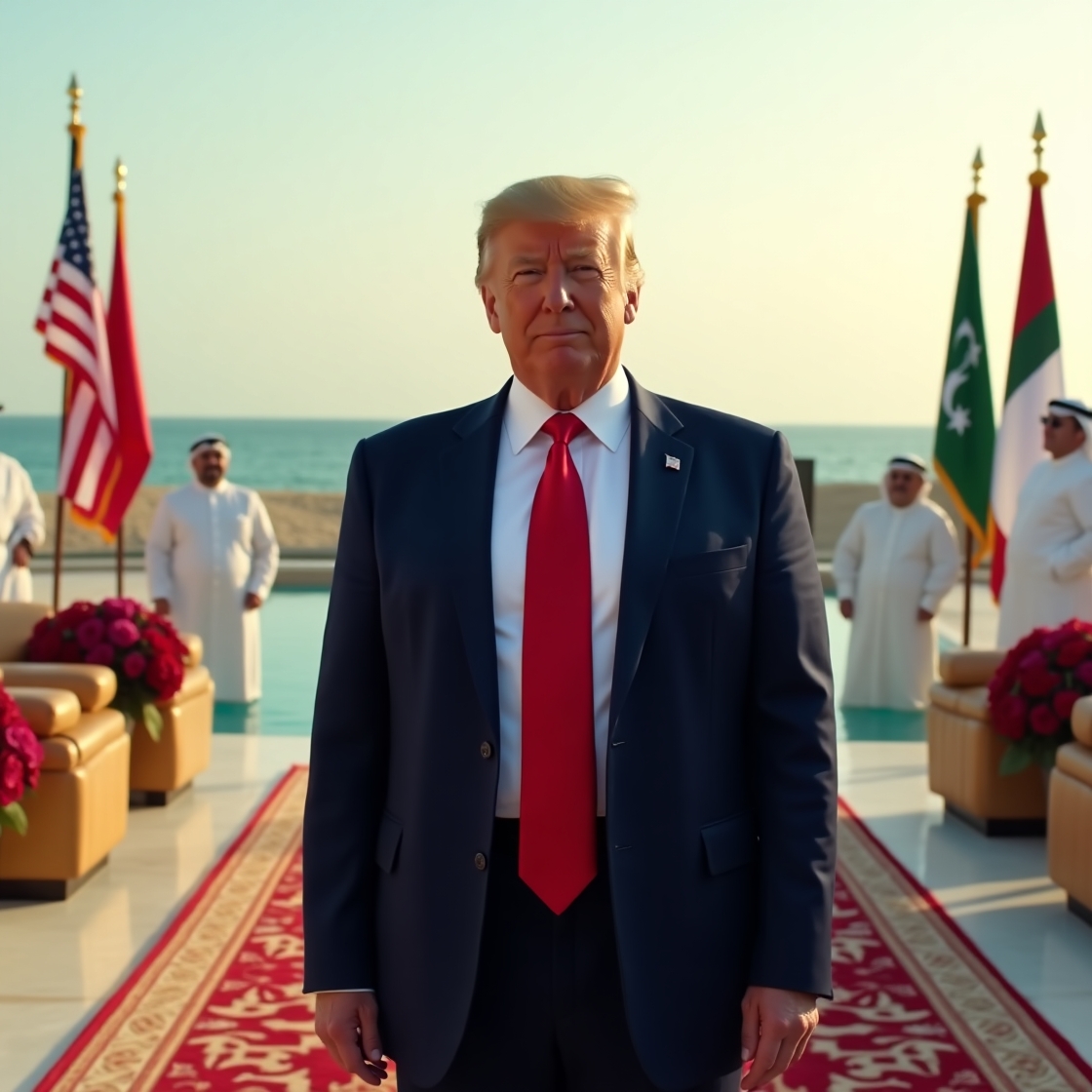
During his May 2025 tour of the Gulf region, President Donald Trump secured a series of high-profile economic and strategic agreements totalling over $2 trillion (USD), shifting US foreign policy tactics towards a transactional approach to economic and strategic interests. The tour included visits to Saudi Arabia, Qatar, and the United Arab Emirates, focusing on reinforcing US economic influence and deepening strategic partnerships with key Arab allies.
In Saudi Arabia, Trump announced a monumental $600 billion (USD) investment package encompassing defense, artificial intelligence, and infrastructure. This included a $142 billion (USD) arms deal, hailed by the White House as the largest in US history, and a multi-billion-dollar AI initiative involving companies like Nvidia and AMD.
In Qatar, agreements totaled $1.2 trillion (USD), featuring a historic $96 billion (USD) Boeing aircraft order and substantial defense procurements. Additionally, Qatar committed $10 billion (USD) to upgrade the Al Udeid Air Base, the region’s largest US military facility. The UAE pledged over $200 billion (USD) in joint ventures, including the creation of the largest AI-driven data centre outside the US and collaborative projects in green hydrogen and aerospace technology. A key focus was advancing artificial intelligence, highlighted by a preliminary agreement to import 500,000 of Nvidia’s top-tier AI chips annually.
Beyond economic ties, the visit carried substantial geopolitical weight. Trump reaffirmed US security commitments in the region and held closed-door sessions with Gulf monarchs to discuss ongoing threats posed by Iran, the situation in the Red Sea, and maritime security in the Strait of Hormuz. Gulf leaders expressed unified opposition to military escalation with Iran, advocating instead for diplomatic channels and economic containment.
On the diplomatic front, Trump encouraged Saudi Arabia to join the Abraham Accords – a normalisation framework between Israel and several Arab nations – although the escalating conflict in Gaza has significantly hindered progress on that front.
In a symbolically charged move, Trump announced that the United States would henceforth adopt the term “Arabian Gulf” in all official communications, replacing “Persian Gulf”. This decision, aligning with Arab perspectives in the regional identity dispute, triggered immediate condemnation from Iran, which called it a “deliberate provocation” and “an insult to history.”
Trump’s Gulf tour thus served multiple purposes: reinforcing US economic and technological engagement in the region, strengthening defense cooperation without escalating military tensions, and contributing to the evolving diplomatic dynamics of the Middle East. The visit highlighted a pragmatic approach focused on economic collaboration, regional security, and closer ties with key Gulf partners. In doing so, it reaffirmed the alignment between Washington and several Arab capitals, while underscoring the continued relevance of US presence in a region shaped by growing global competition.
Sources:
- https://qm.org.qa/en/stories/all-stories/spring-2025-exhibitions/
- https://thepeninsulaqatar.com/article/20/04/2025/qatar-museums-unveils-three-major-exhibitions-at-mathaf
- https://www.gulfarticles.com/gcc-2030-middle-east-economy/
- https://www.arabnews.com/node/2595664/business-economy
- https://www.weforum.org/stories/2025/02/oil-futures-gulf-gcc-global-decision-making/
- https://www.reuters.com/world/us-saudi-arabia-have-discussed-riyadhs-potential-purchase-f-35-jets-2025-05-13/
- https://www.reuters.com/world/middle-east/trumps-gulf-tour-reshapes-middle-east-diplomatic-map-2025-05-18/
- https://apnews.com/article/trump-persian-gulf-saudi-arabia-ce30874c27bc01426d93ad3c65a18844
- https://www.axios.com/2025/05/29/saudi-qatar-uae-oppose-iran-strikes-trump
- https://www.investopedia.com/us-agrees-to-sell-uae-advanced-ai-chips-made-in-america-trump-says-11736352
- https://arabcenterdc.org/resource/president-trumps-gulf-trip-post-visit-observations/