



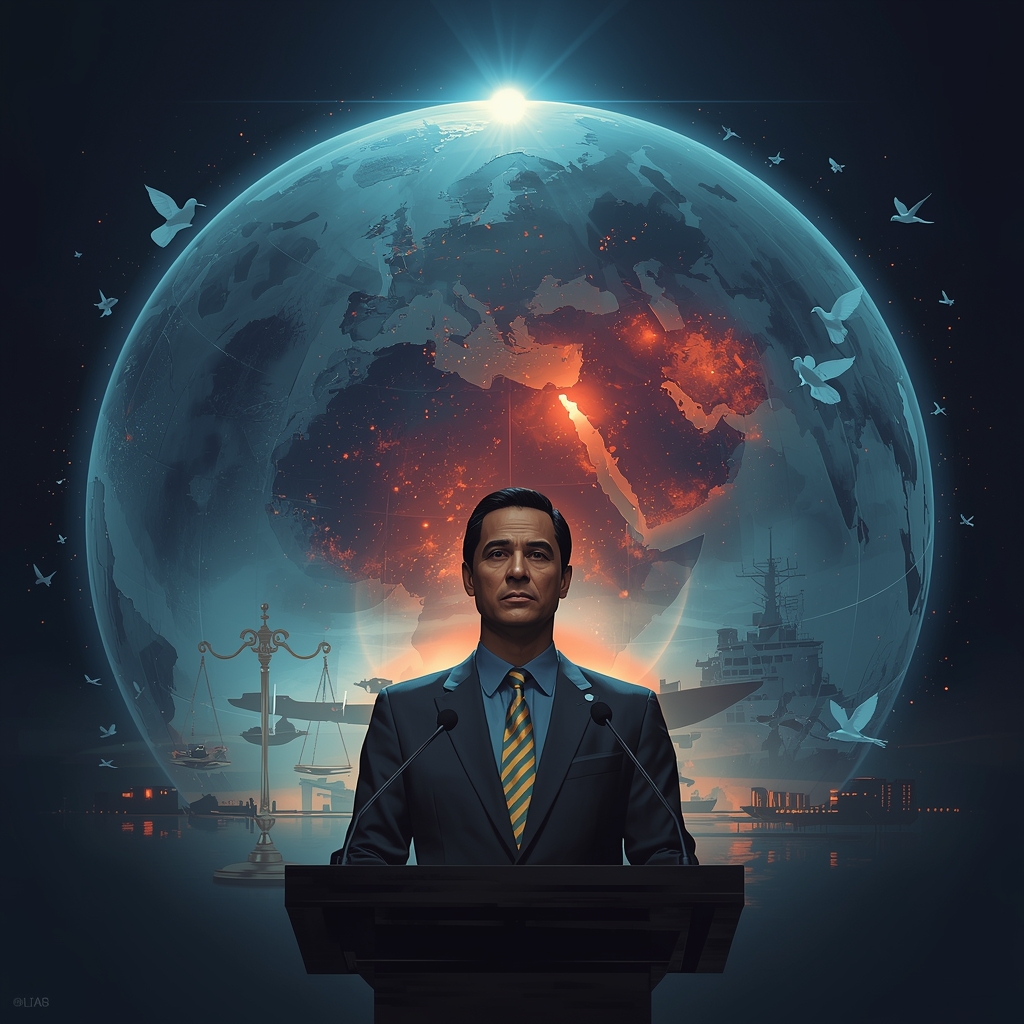


As hostilities in the Middle East continue to raise concerns about the region´s political, economic and security future, the diplomatic aftershocks of the conflict continue to reverberate worldwide, as far as South America.
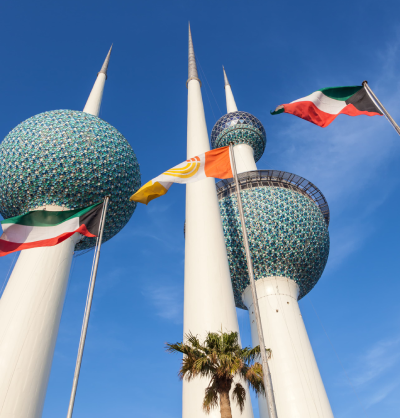
Brazil´s position regarding the conflict has been focused on reestablishing peace and dialogue, as it always does when positioning itself in international security crises. As stated by the country´s Ministry of Foreign Affairs (Ministério das Relações Exteriores), it has expressed “deep concern regarding the escalation of hostilities in the Gulf, which represents a serious threat to international peace and security, with potentially broad humanitarian and political impacts.” Taking a more measured, diplomatic stance, Brazil has raised concerns about the interpretation of Article 51 of the United Nations Charter (on self-defense) as only being applicable in a proportional measure when a country is physically attacked– a clear rebuke to the US-Israeli strikes against Iran– while also condemning Iran and expressing “solidarity with Saudi Arabia, Bahrain, Qatar, the United Arab Emirates, Iraq, Kuwait and Jordan” for the Iranian attacks against these states. The country has also called for the respect and protection of civilians under International Humanitarian Law.
Regarding Lebanon, Brazil has further condemned the ongoing Israeli strikes that have killed thousands, especially those that have continued after the 8 April 2-week-ceasefire was announced. It also highlighted that all parts of the conflict must “fulfill the terms of United Nations Security Council Resolution 1701 (2006)”.
It is important to point out that under Brazil´s 1988 Constitutional obligations, it is paramount for the country to support human rights, non-intervention, the equality of States, the peaceful settlement of disputes, among others (See Article 4). Indeed, the country´s Carta Magna, covers a plethora of fundamental rights as well and despite its many internal security and economic inequalities, tends to have a very focused and clear diplomatic position when calling for peace and security worldwide.
This puts Brazil in a unique situation when contributing to international naval missions, as it participates in peacekeeping or antipiracy missions, never in offensive actions. For instance, the South American country commanded for almost 10 years UNIFIL´s Maritime Taskforce (MTF) in Lebanon (until 2020) and has contributed regularly to the command of the Combined Taskforce 151 (CTF-151), an antipiracy taskforce under the Combined Maritime Forces (CMF), a 46-nation coalition led by the United States and headquartered in Bahrain. In fact, Brazil had just handed over the helm of CTF-151 to the United Kingdom on 23 February when the conflict between the United States/Israel against Iran broke out only a few days later. Luckily, the Brazilian CTF-151 contributing officers had already left the base in Bahrain when the base suffered its first retaliatory strikes from Iran.
All in all, Brazil has maintained a firm diplomatic stance regarding tensions in the Middle East, having condemned all sides that have resorted to the use of force in the conflict and continues to express grave concerns for the loss of human life, particularly the loss of civilians, calling for diplomacy and international law to prevail. Moreover, the country´s contribution in the past years to several missions in the Middle East further attest to its commitment to uphold, together with the broader international community, the underlying principles of peace and security that have guided nations under the post WWII UN framework.
Sources:
- https://www.gov.br/mre/pt-br/canais_atendimento/imprensa/notas-a-imprensa/escalada-de-hostilidades-no-oriente-medio
- https://www.gov.br/mre/pt-br/canais_atendimento/imprensa/notas-a-imprensa/continuidade-dos-ataques-israelenses-contra-o-libano
- https://www.defesaaereanaval.com.br/naval/marinha-do-brasil-responde-ao-dan-sobre-situacao-dos-miliares-que-estavam-no-ctf-151-no-bahrein