
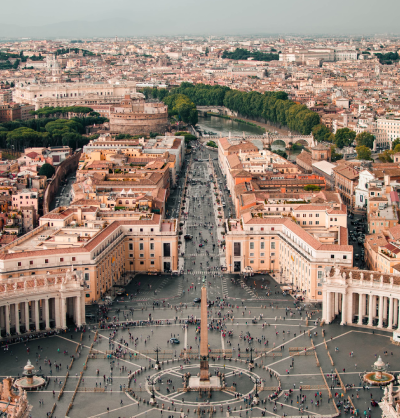
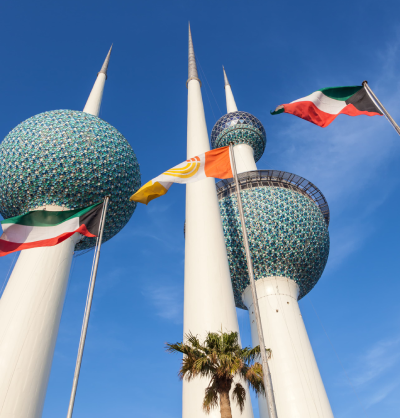

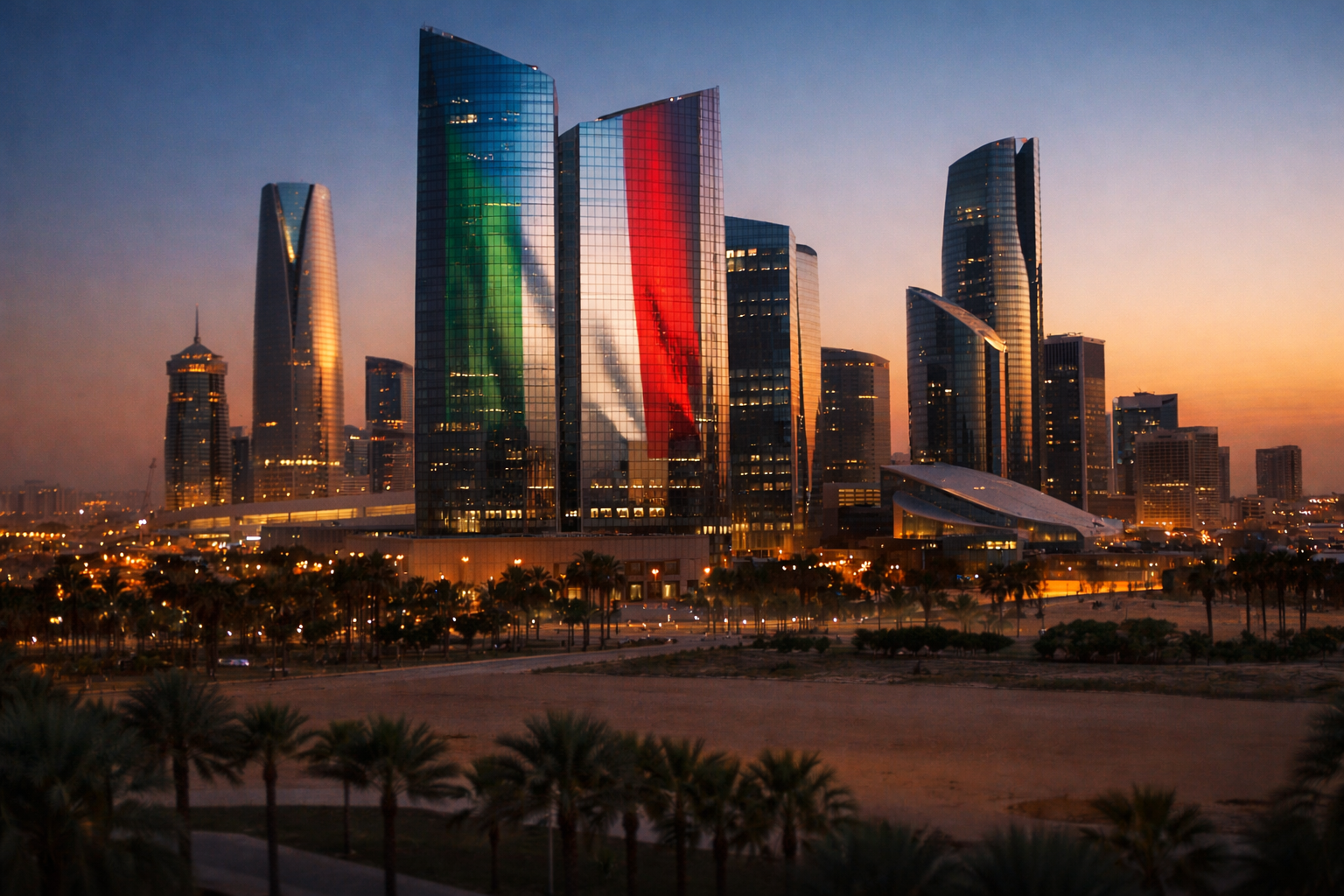


When Italian Prime Minister, Giorgia Meloni, landed in Riyadh (3 April), she became the first leader of an EU member state, a G20 economy, and a NATO ally to visit the Gulf since the outbreak of the US/Israel-Iran conflict on 28 February. The timing was strategic and it deserves serious analytical attention. The backdrop could hardly have been more urgent. The Strait of Hormuz was closed with oil flows disrupted across global markets and Qatar’s LNG exports to Italy suspended until at least mid-June. In this environment, waiting for multilateral consensus was a luxury Italy could not afford. In 48 hours, Meloni visited three capitals — Riyadh, Doha, and Abu Dhabi — each with a distinct set of objectives. In Riyadh, conversation centred on security frameworks and oil supply continuity. In Doha, focus shifted to LNG crisis management and the potential for Qatar to serve as a diplomatic channel while in Abu Dhabi, five strategic agreements were signed spanning energy, technology, defense, and industrial cooperation. The UAE had already pledged $40 billion in investments in Italy—ENI operates across every country on the itinerary. Meloni did not arrive empty-handed but with leverage.
What made this mission credible was not improvisation but accumulated capital. For decades, Italy has cultivated a dense web of industrial and diplomatic relationships across the Arabian Peninsula — through ENI’s upstream operations, Leonardo’s defence and aerospace partnerships, and Fincantieri’s naval and maritime engagements. This network gave Italy a genuine place in the room, not merely the political goodwill of an onlooker.
That standing was reinforced by Meloni’s public positioning on the conflict itself. Interviewed by Italy’s leading national broadcaster, she was unambiguous: the transatlantic alliance with the US remains fundamental, but allies who matter are precisely those capable of honest disagreement. She told President Trump directly that Italy does not agree with this war. Across the Gulf, where every government is watching Washington’s partners with calibrated attention, that posture carries real weight. It positions Italy neither as a passive follower of US policy nor as an adversarial voice but as a sovereign allied interlocutor capable of holding both loyalty and dissent simultaneously.
The mission attracted criticism in some European quarters, with charges that Meloni acted unilaterally and fractured EU solidarity. This critique does not hold up under scrutiny. The EU does not currently follow common foreign, energy or defence policies. The European Council has adopted no shared negotiating mandate for the Gulf in the context of this crisis. Meloni, therefore, did not violate any EU procedure. She operated, as member states routinely do, in the space that the absence of common policy necessarily leaves to national governments. It is the ordinary functioning of the EU institutional architecture in 2026. It is also worth noting that Italy was not the first mover in acting autonomously. Spain had already acted unilaterally — and in a manner that raises far more substantive questions about EU interests, given reports that Madrid accepted Iranian pressure regarding vessel transit through Hormuz. The logic that permits national action by larger Western European states does not suddenly dissolve when Italy acts.
The deeper point is this: had it been a French or German leader boarding the same flight, the analytical commentary would likely have celebrated it as evidence of the EU’s strategic autonomy. The substance of the diplomacy should be evaluated on its own terms, not filtered through domestic political attitudes toward its author.
That said, one legitimate observation stands. Italy’s credibility in the Gulf is not merely national — it is European. ENI, Leonardo and Fincantieri may be Italian owned but they are European in systemic significance. A framing that consistently articulated ‘Italian and European interests’ throughout each meeting would have reinforced the very continental leadership posture that Italy is capable of projecting, and strengthened the case that an active, engaged Italy in the Gulf works to the advantage of the broader EU — not just of Rome.
None of this means the work is done. Supply commitments made in a crisis context are political frameworks, not binding guarantees. Industrial agreements take time to translate into operative contracts. And one structural tension remains unresolved: Italy is signalling willingness to back Gulf security and supply defence systems while simultaneously staying outside the active conflict. That position is coherent today. Whether it remains tenable as the ceasefire takes effect and, possibly, there is a re-eruption of hostilities is an open question — one that will test the durability of every framework announced over the past week.
The credibility of this diplomacy will ultimately be measured by implementation. In a moment of genuine regional instability, Italy chose to act rather than wait — drawing on its relationships, its industrial network, and its diplomatic capital. That was the right instinct. Whether it was also the right strategy, the next 90 days will tell.