



The United Kingdom finds itself uniquely positioned following the outbreak of the war in Iran – a former world power slowly losing its globa; influence, torn between its alliance with the US — the so-called ‘Special Relationship’ — maintaining a neutral position as many of its European neighbours do and helping its allies in the Gulf after decades of warm relations with the Gulf Cooperation Council (GCC) members.
The ‘Special Relationship’ has become increasingly fraught in the last decade, starting with a divergence over Brexit, followed by the withdrawal from Afghanistan and the UK’s fading military strength. However, the Iran conflict has forced the already existing cracks in the anglophone alliance wide open due to the UK’s refusal to participate.
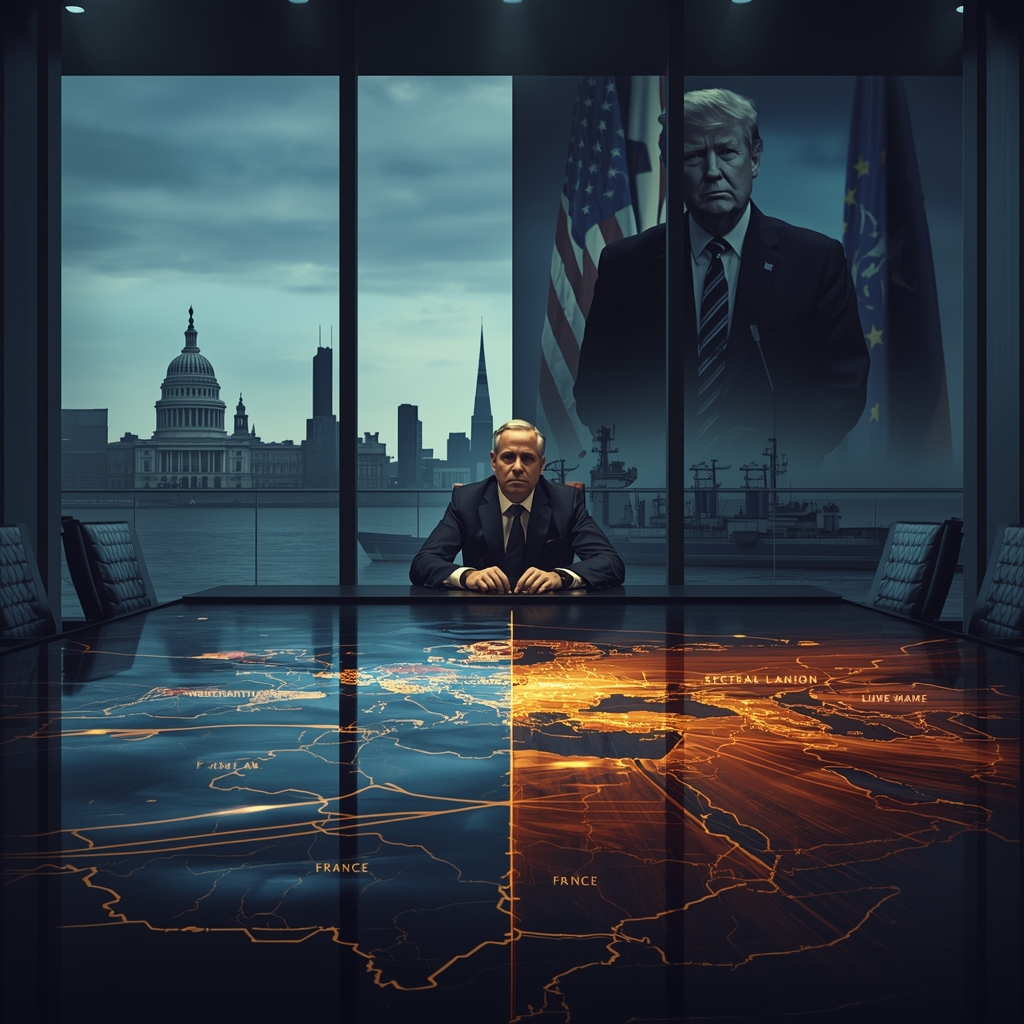
US President Donald Trump publicly attacked British Prime Minister Kier Starmer at least 14 times since the start of 2026, mainly over Starmer’s response to the US operation on Iran, although Trump has also criticised Starmer over the handling of the Chagos Islands. Trump’s remarks lay bare the changing sentiments between the two countries. While criticising Starmer, the US president described the UK as ‘once our Great Ally’ and ‘[our] oldest ally.’ The UK’s refusal to side with the US marks a break of decades of foreign policy and a new low point in the ‘Special Relationship.’ Trump himself noted this in interviews as early as 03 March, stating the relationship between the two countries is ‘not what it was.’
The conflict also jeopardised the UK’s trade deal with the US, which would see tariffs on steel and aluminium removed and tariffs on cars reduced from 27.5% to 10%. The deal, signed in May 2025, has since come under pressure from Trump and may be cancelled if Starmer does not back down on his refusal to join the war. It would be another economic blow to the UK if as economists recently suggested that the UK will be the hardest hit in the G7 from any recession triggered by the conflict. The back-and-forth between the two leaders and threats of economic punishment over the UK’s participation in the war certainly marks a deterioration of the ‘Special Relationship’ and a low point in their relationship.
Trump’s posturing and the shockwaves sent through the global market by the closure of the Strait of Hormuz have seemingly reminded the UK that it is in Europe, that it is part of the E5, and that EU member states are some of its closest allies. Even before the outbreak of the war in Iran, the British government had made it clear that the UK would be seeking closer cultural and economic ties with the EU, as evidenced with the it rejoining Erasmus+ scheme.
The UK’s refusal to be involved in any offensives aligns with the position of most European states. This, in combination with Starmer’s break with Trump and Trump’s threats to leave NATO, has pushed the UK even closer to its neighbours, seeking new economic, defence and security agreements. There are suggestions of the UK participating in the EU’s new Scaleup Europe Fund, and joint armament procurements with the EU after European countries agreed to rely less on the US for defence.
The finer details are expected to be negotiated at the second UK-EU Summit later this year, and, with the conflict unlikely to be resolved by then, the EU provides a valuable ally for the UK going forward. Starmer can now point to global instability and the breaking down of UK-US relations in the wake of the Iran conflict as reasons why the UK needs to turn back to Europe.
The UK has found its closest European ally in France. The two countries jointly chaired a Summit to discuss securing the Strait of Hormuz post-conflict, which saw the participation of some 40 countries. Following the Summit, Starmer and Macron announced a joint UK-French-led defensive mission to protect shipping in the Strait of Hormuz. The conflict in Iran has highlighted UK-French diplomatic and military cooperation on a global scale and a rebirth of the ‘Entente Cordiale’ following the rupturing of the Special Relationship. However, the UK risks losing its role as a key mediator in the Middle East to France as Macron also hosts deescalation talks with other countries such as China and those in the GCC.
In a post-Brexit world, the UK has increasingly sought to maintain its influence in the Middle East and improve relations with the GCC, with cultural exchanges and economic trade growing rapidly between the two. The UK has not completely forgotten about its GCC allies who have come under unprovoked attack by Iran during this war, although the British government has come under criticism at home and abroad for being slow to act in support of its GCC allies.
Shortly after the outbreak of war, the UK provided four RAF Typhoon fighter jets to GCC countries to be used in defensive missions, totalling 8 jets in Qatar. In a bilateral meeting in March, the GCC and the UK agreed that it was in both parties’ economic interests to ensure the free trade agreement between the GCC and the UK was finalised as soon as possible.
However, Britain providing a small number of assets and encouraging trade agreements to be finalised is not enough for a country that historically has some of the strongest ties with the Gulf countries. Relations now with the GCC are more important than ever. The UK must stand by its allies in the GCC and seize this opportunity of shifting world powers to reinforce economic and security relations with the Gulf countries.
The conflict in Iran also provides an opportunity for the UK to reassert itself as a player on the world stage by having a key role in negotiations and turning away from isolationist foreign policy that has hurt the country’s economy and global standing.
Sources:
- https://news.sky.com/story/all-the-times-trump-has-attacked-starmer-over-iran-war-as-pm-insists-hes-not-going-to-back-down-13524994
- https://www.politico.eu/article/donald-trump-keir-starmer-threatens-unpick-trade-deal-iran-war-opposition/
- https://www.politico.eu/article/donald-trump-says-uk-us-relationship-not-like-it-used-to-be-keir-starmer-iran/
- https://www.bbc.co.uk/news/articles/c62l6w03lwzo
- https://www.independent.co.uk/news/uk/politics/keir-starmer-donald-trump-iran-war-britain-europe-b2955061.html
- https://www.gov.uk/government/speeches/middle-east-update-oral-statement
- https://www.gov.uk/government/news/re-opening-the-strait-a-global-responsibility-prime-minister-set-to-tell-world-leaders
- https://www.gcc-sg.org/en/MediaCenter/News/Pages/news2026-3-15-1.aspx