






Abstract: This edition highlights significant initiatives in the Gulf that focus on sustainable energy, digital governance and regional solidarity. Oman is positioning itself as a global leader in the green hydrogen sector, leveraging its renewable energy resources and strategic location to become a major exporter by 2030, with substantial international investments and partnerships. Meanwhile, Abu Dhabi is working towards becoming the world’s first fully AI-native government by 2027, through a strategic partnership with Microsoft and Core42, which focuses on digital infrastructure, AI, and automation to enhance public services and governance. Finally, Bahrain expressed its deep solidarity with Kuwait by illuminating its landmarks in blue to mark Kuwait’s National and Liberation Days, symbolising the deep cultural, political, and historical ties between the two nations and emphasising regional unity and diplomatic collaboration in the Gulf.
Keywords: Oman, Green Hydrogen, Renewable Energy, Vision 2040, Clean Energy Hub, Solar Energy, Wind Energy, Duqm, Netherlands, PEM Electrolyzers, Salalah Hydrogen Plant, Energy Grid Connection (UAE), Europe & Asia, Abu Dhabi Government, AI-native Government, Department of Government Enablement (DGE), Microsoft, Core42 (G42 Company), Government Digital Strategy 2025–2027, Secure Cloud Infrastructure, AED 13 billion Investment, Cybersecurity, TAMM 3.0, Real-time Data Flows, Integrated Governance, Digital Transformation, Transparency, Technological Trends, Bahrain, Kuwait, Blue Illumination, Historical and Cultural Ties, Arab Identity, Kuwait’s Independence (1961), Liberation of Kuwait (1991), Geopolitical Landscape, Mutual Interests, International Solidarity, Regional Unity, Diplomatic Courtesy.
Oman Strongly Bets on Green Hydrogen
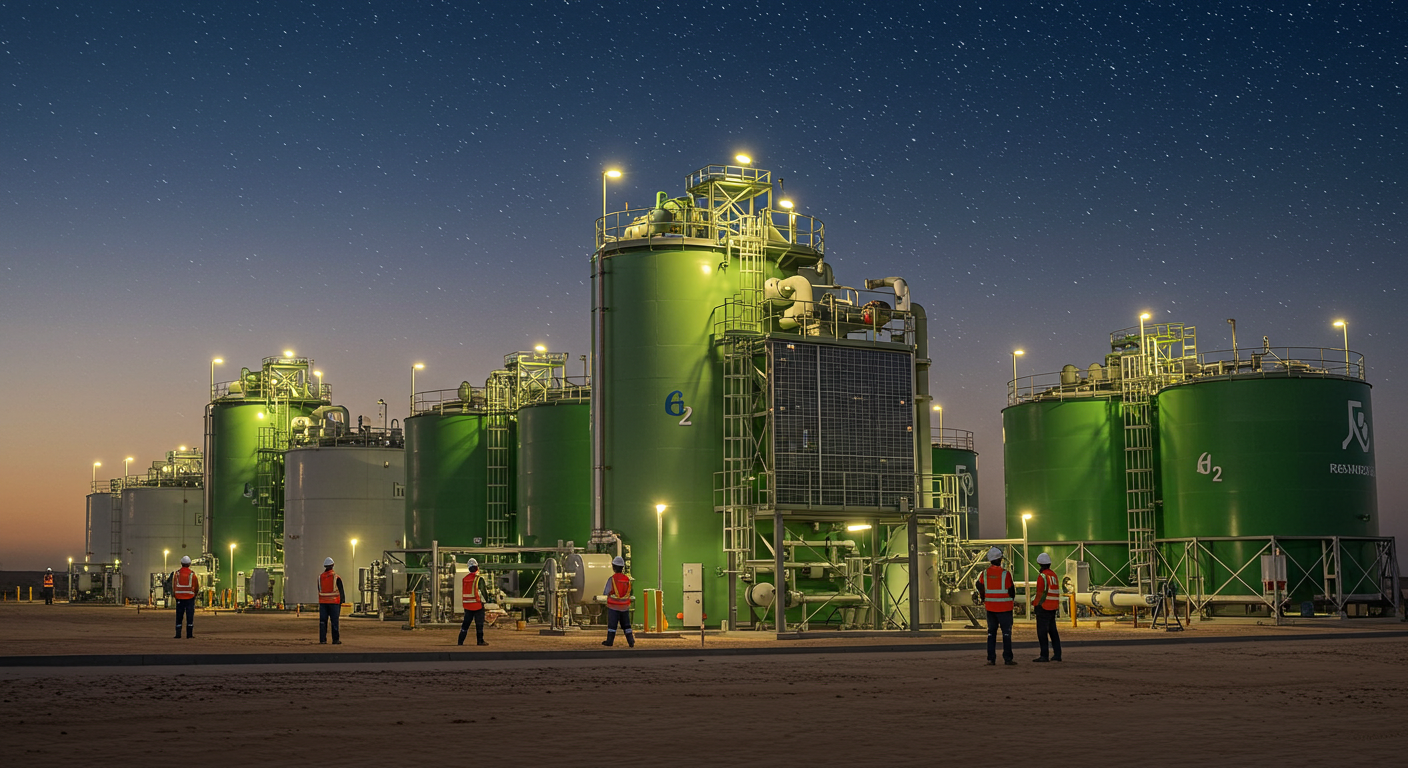
Oman is rapidly establishing itself as a global front-runner in the green hydrogen sector, with ambitions to become a key clean energy hub connecting Asia, Europe, and the Middle East. As part of its Vision 2040 strategy to diversify the economy and reduce dependence on oil, the Sultanate is capitalising on its abundant solar and wind resources, strategic geographic position, and political neutrality to attract international investment and scale up renewable energy infrastructure. The country aims to reach 30 GW of green hydrogen production capacity by 2030, backed by approximately $45 billion in investments. A major milestone is the designation of a 17 km² Green Hydrogen Zone in Duqm, where large-scale facilities for production, storage, and export are being developed. Hydrom, the government entity established to lead this transformation, has already awarded contracts for 2.5 GW of electrolyzer capacity, with the first operational plants expected by 2027.
International agreements are reinforcing Oman’s export strategy. In February 2025, the Sultanate signed a deal with the Netherlands to supply hydrogen to the Port of Rotterdam, while negotiations with Japan and South Korea are paving the way for large-scale ammonia exports. Strategic partnerships with global energy firms like BP, Shell, TotalEnergies, and Siemens Energy are accelerating deployment of cutting-edge technologies, including PEM electrolyzers and offshore wind integration. Renewable energy capacity, currently at 700 MW, is on track to reach 10 GW by the end of the decade, supporting flagship projects such as the Salalah Hydrogen Plant.
Duqm’s port is being adapted for hydrogen and ammonia logistics, with cryogenic storage systems and dedicated terminals under development. Regional cooperation is also expanding: Oman and the UAE signed an agreement to connect their energy grids, further enhancing export capabilities. While challenges remain—such as high initial production costs, infrastructure needs, and regional competition—Oman’s regulatory reforms, including tax incentives and the introduction of a national green hydrogen certification standard, provide a solid foundation for growth.
By 2030, Oman aims to produce over 1 million tonnes of green hydrogen annually, exporting the majority to Europe and Asia. The industry could generate up to 70,000 jobs by 2040 and play a central role in reshaping the nation’s economic model. With clear targets, strong governance, and growing international demand, Oman is poised to become the leading exporter of green hydrogen in the Gulf region and a key player in the global clean energy transition.
Abu Dhabi Launches $3.5 Billion (USD) AI-Driven Cloud Strategy to Become World’s First Fully AI-Native Government
As part of its broader ambition to become the world’s first fully AI-native government by 2027, the Abu Dhabi Government—through the Department of Government Enablement (DGE)—has launched a major strategic partnership with Microsoft and Core42, a G42 company specialising in sovereign cloud, AI infrastructure, and advanced digital services. This collaboration establishes a unified, high-performance sovereign cloud computing environment capable of handling over 11 million daily digital interactions across government entities, residents, businesses, and service delivery platforms. It represents a foundational element of the Abu Dhabi Government Digital Strategy 2025–2027, which outlines a comprehensive roadmap for transforming the emirate’s public administration through the application of artificial intelligence, automation, and secure cloud infrastructure. The strategy is underpinned by a substantial AED 13 billion ($3.54 billion) investment in digital infrastructure, and includes the deployment of more than 200 AI-powered solutions aimed at enhancing government efficiency, citizen experience, and environmental sustainability.
The sovereign cloud platform—powered by Microsoft Azure and integrated with Core42’s proprietary “Insight” controls framework—ensures full data sovereignty, regulatory compliance, and cybersecurity, while simultaneously enabling access to hyperscale cloud innovation. This architecture will serve as the backbone for a new model of public governance, where real-time data flows, predictive analytics, and AI applications support evidence-based decision-making and personalized service delivery. A key use case already demonstrating tangible outcomes is TAMM 3.0, Abu Dhabi’s one-stop digital government platform, which has dramatically reduced in-person visits by 90% and enabled over 73% of transactions to be completed instantly.
Beyond operational improvements, the initiative reflects a shift in strategic governance thinking—moving from siloed, reactive administration to integrated, proactive digital ecosystems. By unifying services in a secure and scalable environment, Abu Dhabi aims not only to modernize its own government operations but to define a new global benchmark for AI-integrated public sectors. The strategy includes objectives related to transparency, investor confidence, and workforce innovation, creating an environment that is both resilient and adaptable to emerging technological trends. Through this partnership, Abu Dhabi is consolidating its position as a regional and international leader in digital governance, setting the stage for long-term competitiveness and inclusive socio-economic development in the era of AI.
Bahrain and Kuwait: The Celebration of Regional Unity and Solidarity
In an extraordinary gesture of solidarity and fraternity, Bahrain illuminated its main landmarks in blue to celebrate Kuwait’s National and Liberation Days (25 February). This remarkable event, which took place in the heart of Bahrain’s capital, Manama, underscored the deep historical and cultural ties that bind the two states. The symbolic use of blue—often associated with tranquillity, loyalty, and unity—was a significant visual expression of the Bahrain-Kuwait relationship.
The diplomatic and cultural relations between the modern states of Bahrain and Kuwait date back to the early 20th century but are shaped by more enduring tribal relations and shared interests in trade, regional security, and a mutual commitment to preserving Arab identity in the face of external pressures. Over the years, both nations have built a strong, cooperative relationship, marked by collaboration in nearly all sectors: education, healthcare, energy, security and infrastructure.’
Kuwait’s National and Liberation Days commemorate the country’s independence from British protectorate status in 1961 and the liberation of Kuwait in 1991 from Iraqi occupation. For Bahrain, this is an opportunity to celebrate the resilience of its ally, while also emphasising the enduring bonds of kinship in the Gulf. Indeed, the act of illuminating Bahrain’s landmarks in blue has deep political and cultural resonance. Such displays of solidarity among Arab nations are not only a diplomatic courtesy but also a powerful message of regional cohesion and support in a time when the geopolitical landscape of the Middle East remains complex and volatile.
The implications of such an act of solidarity extend beyond mere symbolism. First, it reinforces the idea that the Gulf nations, despite their differences, continue to be united in their pursuit of mutual interests. The Middle East has often been fraught with conflicts and territorial disputes, but actions like Bahrain’s tribute to Kuwait signal a willingness to prioritise regional harmony over division. This event also highlights the importance of cultural diplomacy, which plays a critical role in bridging divides and fostering positive relations between neighbouring states. For Bahrain, this public display of support for Kuwait may also strengthen its position within the GCC, positioning it as a key player in efforts to maintain stability and cohesion in the region. Additionally, such displays of unity may help in enhancing public perception of both countries internationally. Actually, this solidarity could potentially serve as a model for other nations in the region and beyond, encouraging a collective approach to addressing regional challenges.
Sources
- https://hydrom.om/
- https://fuelcellsworks.com/2025/03/18/clean-energy/17-km2-earmarked-for-green-hydrogen-zone
- https://www.offshore-energy.biz/oman-set-to-launch-third-green-hydrogen-tender-in-early-2025/
- https://economymiddleeast.com/news/abu-dhabi-to-become-worlds-first-fully-ai-native-government-by-2027-in-partnership-with-microsoft-core42/
- https://www.cio.com/article/3853268/abu-dhabi-pioneers-ai-driven-governance-with-microsoft-and-g42-partnership.html
- https://www.gulf-insider.com/bahrain-lights-up-for-kuwaits-national-day/
- https://www.bna.bh/en/news?cms=q8FmFJgiscL2fwIzON1%2BDvNLx1xnYqYpJrONbRReKwE%3D